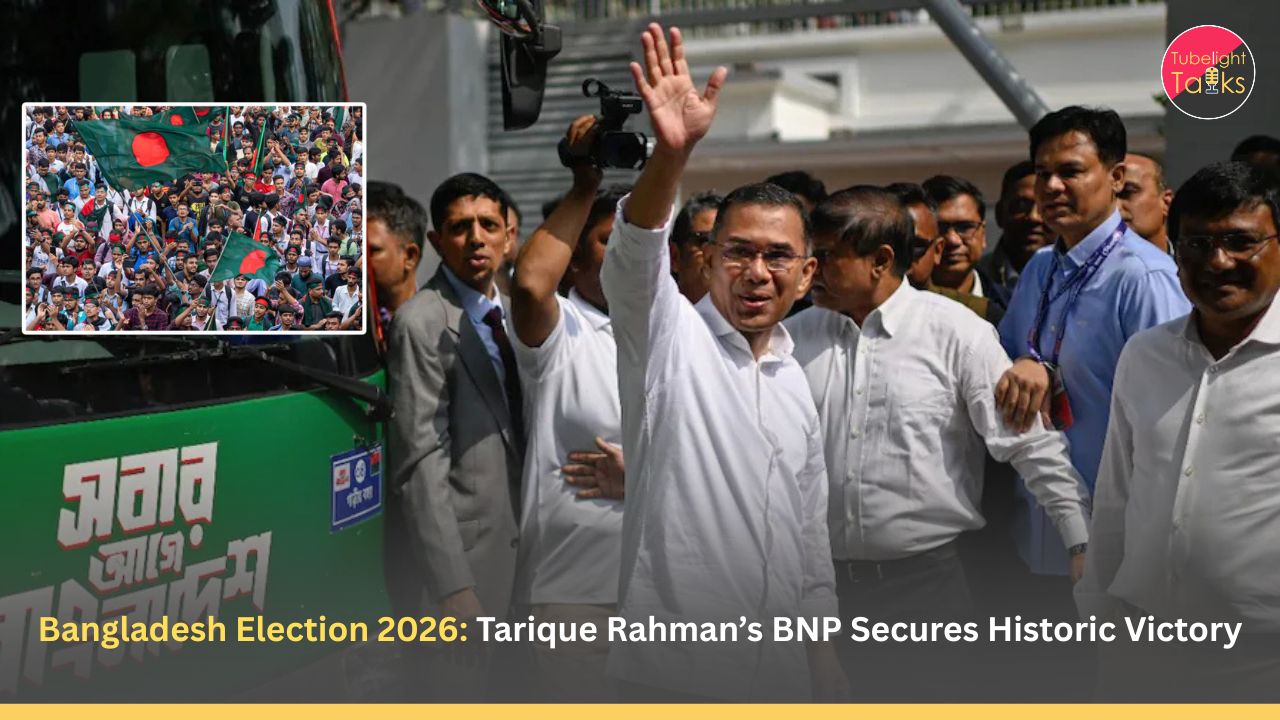
Bangladesh Election 2026: Tarique Rahman’s BNP Secures Historic Victory
Bangladesh Election 2026: In a dramatic political shift, Bangladesh’s opposition party—Bangladesh Nationalist Party (BNP)—has secured a historic win in the 2026 general election, ending nearly two decades of Awami League rule under former Prime Minister Sheikh Hasina. Led by Tarique Rahman, this victory marks a new era in South Asian politics and sparks debates on reform, stability, and regional diplomacy.
Landslide Victory: BNP Returns to Power
- BNP won 224 out of 300 seats, securing a parliamentary majority.
- Voter turnout was approximately 72.4%, with rural and urban youth playing a key role.
- The Awami League managed just 58 seats, a sharp decline from 2021.
Tarique Rahman addressed the nation from London via video link, stating:
“This is a victory of democracy, accountability, and the people’s long-suppressed voice.”
(Source: NDTV World News)
Tarique Rahman’s Return: From Exile to Leadership
The son of former PM Khaleda Zia, Tarique has long been a controversial figure:
- Accused in the past of corruption and money laundering
- Has lived in self-imposed exile in London since 2008
- Re-emerged as BNP’s key strategist and symbol of anti-incumbency
While legal experts debate his eligibility to assume the office of Prime Minister, BNP insiders confirm he will nominate a proxy PM, likely senior leader Mirza Fakhrul Islam Alamgir, until legal hurdles are cleared.
Fall of the Awami League: Reasons Behind the Shift
Key reasons for the ruling party’s defeat include:
- Allegations of authoritarianism and media suppression
- Rampant inflation and unemployment, especially post-COVID
- Widespread anger over crackdowns on opposition and civil society
- Failure to control corruption and bureaucracy
Exit polls showed that first-time voters and urban professionals turned sharply away from the ruling party.
Regional and Global Reactions
Prime Minister Narendra Modi congratulated Tarique Rahman on social media, calling for “a renewed era of regional cooperation.”
Meanwhile, China has remained silent, indicating strategic recalibration given BNP’s earlier pro-Western stances.
The U.S. State Department expressed optimism about “democratic restoration and inclusive governance in Bangladesh.”
Also Read: Bangladesh Tribunal Indicts Sheikh Hasina: A Deep Dive into the Crisis
Challenges Ahead for the BNP Government
- Restoring judicial independence and media freedom
- Restructuring the Election Commission and anti-corruption body
- Negotiating new trade and infrastructure agreements
- Addressing youth unemployment and education reform
With high public expectations and a fragile global economy, the BNP must act swiftly to avoid internal fragmentation and opposition backlash.
Can Political Change Alone Uplift a Nation?
While democratic transitions are vital, Sant Rampal Ji Maharaj Ji reminds us that real transformation begins within.
“No political system—be it democracy, monarchy, or communism—can bring peace unless society is spiritually awakened.”
— Sant Rampal Ji Maharaj
His teachings emphasize that:
- Corruption stems from spiritual ignorance
- True leadership arises from righteous conduct and scriptural wisdom
- A nation prospers when its people embrace truth, humility, and devotion to the Supreme God
The ultimate form of governance is when individuals self-govern through SatGyan—spiritual knowledge that aligns with God’s constitution.
🔗 Learn more: www.jagatgururampalji.org
🎥 Watch Satsangs: Sant Rampal Ji Maharaj YouTube
Call to Action
While BNP begins its political rule, you can begin your personal transformation.
Political reform must be matched by moral and spiritual reform.
A truly developed nation is one where citizens are compassionate, disciplined, and God-conscious.
FAQs on Bangladesh Election 2026
Q1. Who won the 2026 general election in Bangladesh?
The Bangladesh Nationalist Party (BNP), led by Tarique Rahman, won with 224 seats out of 300.
Q2. What led to the Awami League’s defeat?
Public dissatisfaction with authoritarian governance, economic hardship, and lack of transparency played key roles.
Q3. Can Tarique Rahman become Prime Minister?
Currently in exile and facing legal cases, he may nominate a proxy PM until the courts decide.
Q4. What is Sant Rampal Ji Maharaj’s view on politics?
He teaches that worldly systems fail without spiritual grounding. Only SatGyan and true devotion can create lasting peace.
Q5. How can spiritual knowledge help a nation?
It builds moral citizens, ethical leaders, and harmonious communities, ensuring long-term prosperity beyond politics.
Related Stories



Discussion (0)