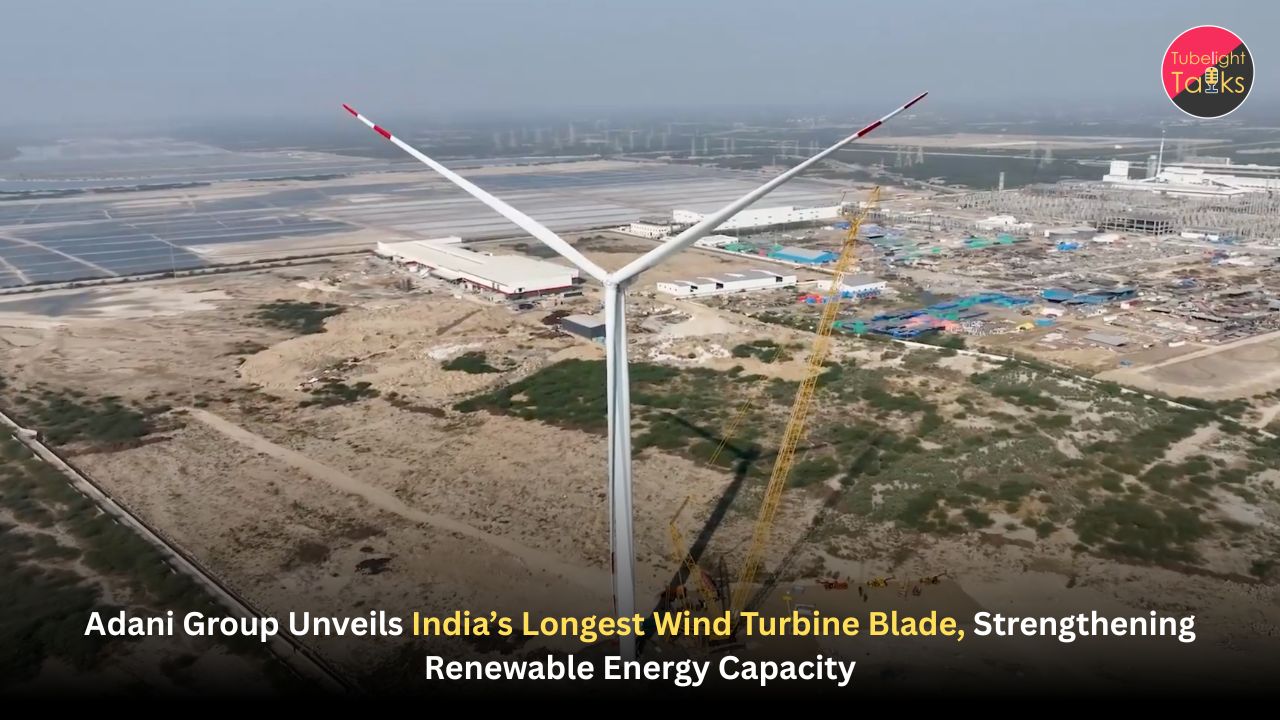
Adani Group Unveils India’s Longest Wind Turbine Blade
India’s renewable energy ambitions have gained a powerful new symbol with the unveiling of a 91.2-meter wind turbine blade manufactured by the Adani Group. Recognised as India’s Longest Wind Turbine Blade, this engineering milestone marks a significant advancement in domestic manufacturing capability. Larger turbine blades capture greater wind energy even at lower speeds, increasing electricity output and improving overall grid efficiency.
As the country accelerates toward ambitious clean energy targets, such breakthroughs represent strategic progress toward energy independence and environmental sustainability.
Why Blade Length Matters in Wind Energy
The science behind bigger blades
Wind turbine blades function by converting kinetic wind energy into mechanical rotation, which then generates electricity.
Longer blades:
- Sweep a larger area
- Capture more wind energy
- Operate efficiently at lower wind speeds
- Improve annual energy production
A 91.2-meter blade significantly expands the rotor diameter, enabling turbines to harness wind even in moderate wind conditions.
Increased energy output
The larger the rotor sweep, the more electricity can be generated from each turbine. This directly improves cost efficiency per megawatt-hour.
In simple terms: bigger blades mean more power from the same wind resource.
Engineering Excellence and Manufacturing Capability
A “Make in India” milestone
Manufacturing ultra-long wind turbine blades requires advanced materials, precise aerodynamics, and high structural integrity.
Producing such blades domestically reduces dependence on imports and strengthens India’s renewable supply chain ecosystem.
High-precision composite technology
Modern turbine blades are built using advanced composite materials that balance:
- Lightweight design
- Structural strength
- Weather resistance
- Long operational lifespan
The successful fabrication of a 91.2-meter blade demonstrates India’s maturing capability in high-end industrial manufacturing.
Also Read: Adani Health City, Ahmedabad: A New Integrated Medical Ecosystem Takes Shape
Strategic Importance for India’s Renewable Targets
Accelerating green energy transition
India has committed to expanding its renewable energy capacity significantly over the coming decade. Wind energy remains a critical pillar alongside solar power.
Higher-capacity turbines reduce the number of installations needed to achieve megawatt targets, optimizing land use and infrastructure costs.
Strengthening energy independence
Domestic manufacturing reduces foreign exchange outflow and builds long-term industrial resilience.
As global supply chains fluctuate, self-reliance in renewable components becomes strategically vital.
Why This Story Is Trending
The unveiling is trending because it blends:
- Renewable innovation
- Industrial self-reliance
- Climate responsibility
In a world racing toward clean energy solutions, milestones like this showcase India not just as a consumer of green technology – but as a producer and innovator.
Economic and Environmental Impact
Job creation
Large-scale blade manufacturing facilities generate skilled employment across engineering, logistics, and installation sectors.
Lower carbon footprint
Higher-efficiency turbines mean more clean electricity generation, directly reducing reliance on fossil fuels.
Each incremental innovation in renewable hardware contributes to long-term emission reductions.
A Deeper Reflection on Sustainable Progress
True development balances economic growth with environmental stewardship. In spiritual teachings shared by Sant Rampal Ji Maharaj, harmony with nature and responsible use of resources are emphasized as essential principles of life. Renewable energy innovation aligns with that philosophy – progress that does not harm the planet.
The 91.2-meter wind turbine blade represents more than engineering – it symbolizes a future where advancement and sustainability move together.
FAQs: Adani Gp India’s Longest Wind Turbine Blade
1. How long is the newly unveiled wind turbine blade?
It measures 91.2 meters, the longest manufactured in India.
2. Why are longer blades important?
They capture more wind energy and increase electricity generation efficiency.
3. Who manufactured the blade?
The Adani Group.
4. How does this support renewable energy goals?
It improves turbine efficiency and strengthens domestic manufacturing capability.
5. Why is this development significant?
It marks a major milestone in India’s clean energy and self-reliance journey.
Related Stories










Discussion (0)