Landmark CAPF Reform Bill Set to Redefine Leadership Structure in India’s Security Forces
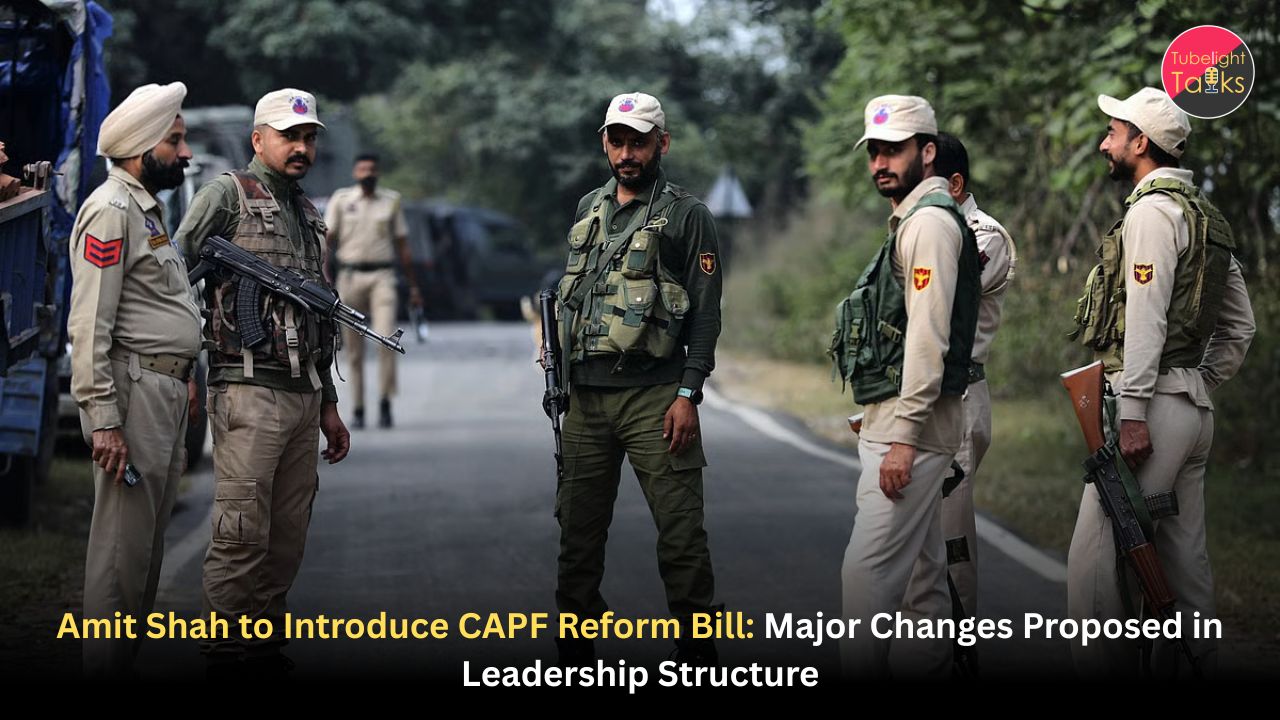
CAPF Reform Bill: India is on the brink of a significant transformation in its internal security architecture as Union Home Minister Amit Shah prepares to introduce a landmark bill in the Rajya Sabha. The proposed legislation seeks to establish a unified legal framework for the Central Armed Police Forces (CAPF), with a key provision earmarking senior leadership positions—from Inspector General (IG) to Director General (DG)—exclusively for Indian Police Service (IPS) officers.
This move is expected to have far-reaching implications for governance, operational efficiency, and institutional dynamics within India’s security forces.
Understanding the CAPF Reform Bill
What Are Central Armed Police Forces?
The Central Armed Police Forces include major security organizations such as CRPF, BSF, CISF, ITBP, and SSB. These forces play a crucial role in maintaining internal security, border management, counter-insurgency operations, and disaster response across the country.
Currently, leadership positions within these forces are filled through a mix of IPS officers and cadre officers promoted internally. The proposed bill aims to standardize this structure.
Key Proposal: IPS Officers in Top Roles
The most significant aspect of the bill is the reservation of senior leadership roles—from IG to DG—for IPS officers. This is intended to bring uniformity in command and align operational strategies across different forces.
Supporters argue that IPS officers bring broader administrative experience and inter-agency coordination skills, which are essential for handling complex security challenges.
Objectives Behind the Reform
Enhancing Coordination and Efficiency
One of the primary goals of the bill is to improve coordination among various CAPFs and between central and state agencies. A unified leadership structure is expected to facilitate better decision-making and faster response during crises.
Establishing a Legal Framework
Currently, CAPFs operate under different acts and administrative guidelines. The proposed umbrella law aims to bring all forces under a single legal framework, ensuring clarity in roles, responsibilities, and command hierarchy.
Also Read: Tribal Girl from Chandrapur Raises the Bar, Makes Maharashtra Proud
Concerns and Criticism
Impact on Cadre Officers
The proposal has raised concerns among CAPF cadre officers, who fear limited career progression opportunities if top positions are reserved for IPS officers. Many argue that officers who have served within the forces for decades possess valuable field experience that should not be overlooked.
Debate Over Autonomy
Critics also question whether the move could reduce the autonomy of individual forces by centralizing leadership. There are concerns that excessive standardization might overlook the unique operational needs of each force.
Political and Administrative Implications
Strengthening Central Control
The bill is seen as part of a broader effort to strengthen central oversight of internal security. By placing IPS officers in top roles, the government may aim to ensure greater alignment with national security policies.
Parliamentary Debate Expected
As the bill is introduced in the Rajya Sabha, it is likely to trigger extensive debate among political parties. Issues such as federalism, institutional autonomy, and administrative efficiency are expected to be key discussion points.
What This Means for India’s Security Landscape
If passed, the CAPF reform bill could reshape the command structure of India’s internal security forces. It may lead to more streamlined operations and improved coordination, but it will also require careful implementation to address concerns of fairness and morale among personnel.
The success of the reform will depend on balancing efficiency with inclusivity, ensuring that both IPS officers and cadre personnel contribute effectively to
Leadership and Duty
Sant Rampal Ji Maharaj emphasizes that true leadership is rooted in righteousness, humility, and service to humanity. According to His teachings, positions of authority should be used for the welfare of society rather than personal gain.
In the context of security reforms, these teachings remind us that effective governance is not just about structural changes but also about the ethical conduct of those in power. When leaders act with integrity and a sense of duty, systems naturally become stronger and more just.
FAQs: CAPF Reform Bill
1. What is the CAPF reform bill?
It is a proposed law to create a unified framework for Central Armed Police Forces and restructure leadership roles.
2. What major change does the bill propose?
It proposes reserving senior positions (IG to DG) for IPS officers.
3. Which forces are included under CAPF?
CRPF, BSF, CISF, ITBP, and SSB.
4. Why is this reform being introduced?
To improve coordination, efficiency, and establish a unified command structure.
5. What are the concerns regarding the bill?
Concerns include limited career growth for cadre officers and reduced autonomy of forces.
6. When will the bill be introduced?
It is expected to be introduced in the Rajya Sabha soon.
Related Stories









Discussion (0)