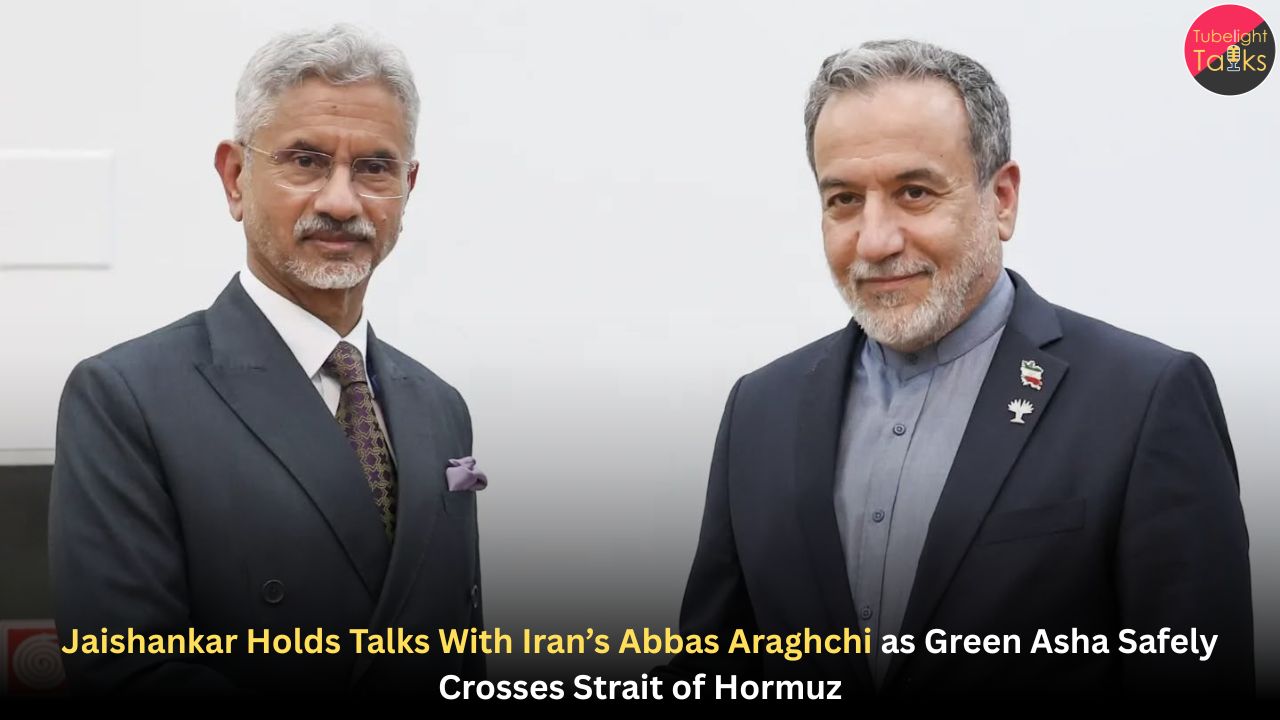
Jaishankar Speaks With Abbas Araghchi as Indian LPG Tanker Green Asha Safely Transits Hormuz
External Affairs Minister S. Jaishankar Holds Talks With Iran’s Foreign Minister Abbas Araghchi as India continues to manage the fallout of the West Asia crisis. At nearly the same time, the Indian LPG tanker Green Asha safely transited the Strait of Hormuz, underscoring how diplomacy and energy security are now tightly linked in India’s regional response.
One detail needs care: the tanker’s successful crossing is well reported, but the exact count of India-flagged LPG vessels that have crossed since early March differs across outlets, with some reporting Green Asha as the eighth and others as the ninth.
Jaishankar’s latest contact with Araghchi shows India is keeping a live diplomatic channel open
Current reporting says Jaishankar received a call from Araghchi on April 5 and discussed the present situation. Deccan Herald, citing Jaishankar’s public post, reported the exact formulation: “Received a call from Foreign Minister Araghchi of Iran. Discussed the present situation.” Times of India and Economic Times also reported the conversation against the backdrop of rising tensions around Trump’s 48-hour Hormuz ultimatum.
This matters because India has been using sustained minister-level contact with Tehran to protect maritime access and monitor the safety of Indian nationals and cargo. Reuters reported earlier in March that Jaishankar had already praised direct talks with Iran as the most effective way to restore shipping through Hormuz, calling diplomacy the preferred route for securing passage.
Green Asha’s safe transit is a significant energy-security development
The safe passage of Green Asha is now widely reported. Indian Express described Green Asha as the eighth India-flagged LPG vessel to transit the Strait of Hormuz since early March. The Quint carried a similar count. At the same time, Moneycontrol and Navbharat Times reported Green Asha as the ninth such ship, which suggests the vessel count is being updated differently across newsrooms or counted using slightly different cutoffs.
The verified bottom line is that Green Asha crossed safely, and that is the most important fact for India’s immediate fuel-security picture. Earlier reports from Times of India and Economic Times said Green Sanvi had already become the seventh India-flagged LPG tanker to cross Hormuz, which makes Green Asha’s crossing a continuation of a fragile but functioning supply corridor.
Also Read: Rescue Operation Brings 345 Indian Fishermen Home from Iran via Armenia
Hormuz remains central to India’s economic anxiety
Reuters has repeatedly described the Strait of Hormuz as one of the world’s most critical energy chokepoints, carrying roughly one-fifth of global oil and LNG flows. For India, the strait matters not only for crude imports but also for LPG supply and shipping confidence more broadly. That is why every successful Indian tanker passage has strategic value beyond the cargo itself.
Reuters also reported that India had been trying to persuade Iran to allow Indian-flagged tankers through Hormuz, even as Iranian and Indian accounts initially differed over whether a formal understanding existed. The fact that multiple India-linked tankers have since crossed safely suggests that, formal deal or not, practical coordination has been working on the water. This is an inference, but it is strongly supported by Reuters’ earlier reporting and the subsequent tanker movements reported in Indian media.
Also Read: Trump Issues 48-Hour Hormuz Ultimatum to Iran as Threats Against Power Plants and Bridges Intensify
The diplomatic and shipping tracks are clearly connected
India’s engagement with Iran is not happening in isolation from shipping realities. Reuters reported in March that Jaishankar saw direct talks with Iran as the best way to restart shipping through Hormuz, and the latest call with Araghchi came as another Indian LPG tanker moved safely through the strait. That timing strongly suggests India is trying to use diplomacy not only for political messaging, but for concrete protection of energy flows. This is an inference, but it is directly supported by the sequence of reporting.
That approach fits India’s broader strategy in the current crisis: stay engaged with all sides where possible, avoid inflammatory postures, and keep trade and evacuation channels functioning. With Hormuz under pressure and global energy markets already nervous, even one safe tanker crossing becomes part of a larger stabilisation effort.
Why the “urgent talks” wording should be understood carefully
The conversation clearly happened at a sensitive moment, but the strongest sources I found describe it as a phone call discussing “the present situation,” not with an official label such as “urgent talks.” The urgency is a reasonable characterization given the context, especially with Trump’s deadline pressure and shipping risks rising, but it remains an interpretation rather than the exact official phrase used by Jaishankar.
Similarly, the safe transit of Green Asha is confirmed, but the exact ordinal number in the sequence should be handled carefully because current reporting is inconsistent. The most defensible way to present it is to say that Green Asha safely crossed Hormuz and was reported as at least the eighth India-flagged LPG vessel to do so since early March.
Calm diplomacy matters most when supply lines are under stress
In times of conflict, the most important victories are often the quiet ones: a phone call that keeps dialogue alive, a ship that reaches safety, a supply line that does not break. Enlightened Sant Rampal Ji Maharaj is of firm wisdom that responsible diplomacy is most valuable when it prevents panic and protects ordinary lives from the shock of larger geopolitical battles.
Call to Action
India’s next priority should be to keep both channels open: sustained diplomacy with regional actors and close protection of maritime energy routes. Readers should watch for two things in the coming days: whether Jaishankar-Araghchi engagement continues, and whether more India-linked LPG or crude vessels cross Hormuz safely. Those developments will show whether India’s balancing strategy is still working under pressure.
FAQs: Jaishankar Holds Talks With Iran’s Abbas Araghchi as Green Asha Safely Crosses Strait of Hormuz
1. Did Jaishankar really speak with Iranian FM Abbas Araghchi?
Yes. Current reporting says Jaishankar received a call from Araghchi and discussed the present situation.
2. Did Green Asha safely cross the Strait of Hormuz?
Yes. Multiple current reports say the Indian LPG tanker Green Asha safely transited the strait.
3. Was Green Asha the eighth India-flagged LPG vessel to cross Hormuz?
Some current reports call it the eighth, while others call it the ninth. The safe transit is confirmed, but the exact count differs across sources.
4. Why is Hormuz so important for India?
Hormuz is a critical energy chokepoint, and Reuters has noted that it handles a major share of global oil and LNG flows, making it vital for Indian energy security.
5. Has India been using diplomacy to protect shipping through Hormuz?
Yes. Reuters reported earlier that Jaishankar favored direct talks with Iran as the best way to restart safe passage through the strait.
6. Why do these talks matter now?
Because the West Asia crisis is threatening shipping, fuel supplies and regional stability at the same time, so minister-level contact can help protect India’s immediate interests.
Related Stories






Discussion (0)