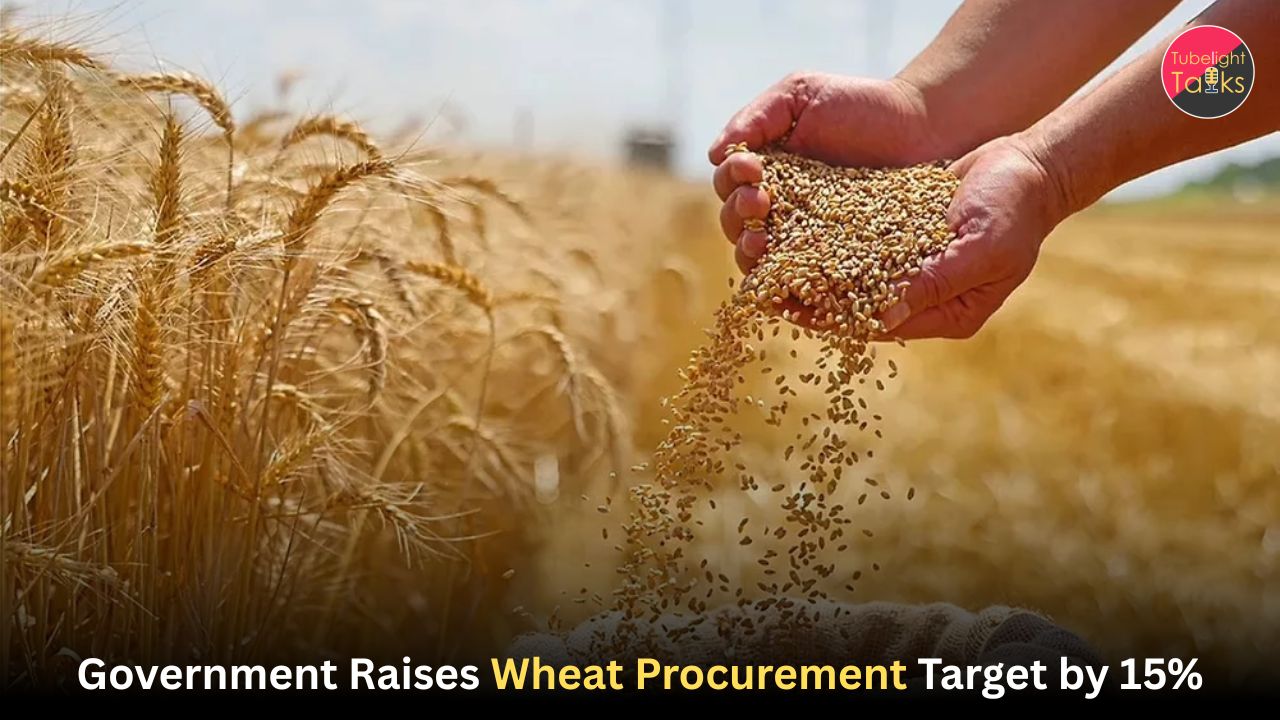
Wheat Procurement Target Raised to 34.5 Million Tonnes
The Indian government has increased its wheat procurement target by 15%, aiming to procure 34.5 million tonnes at Minimum Support Price. This move is intended to strengthen food security and provide better price assurance to farmers. MSP procurement becomes especially important when mandi prices remain lower than the support price or when farmers face uncertainty due to weather-related crop damage.
Higher procurement will help maintain public grain stocks, support welfare schemes, and stabilise food supply. It also gives farmers confidence that their produce will be purchased at an assured price. Efficient storage, quality testing, transport, and timely payments will be crucial for the success of this expanded procurement drive.
Government Expands MSP Procurement
The government has increased its wheat procurement target by 15% to 34.5 million tonnes for the current Rabi marketing season. Reports said the move came as farmers increasingly turned to government procurement at MSP because local mandi prices were lower in several areas.
Why Farmers Prefer MSP
Minimum Support Price gives farmers an assured price for their crop. When market prices fall below MSP or remain uncertain, farmers prefer to sell to government agencies. This helps protect farm income and reduces distress sales.
Also Read: Trump Tariff Rollback Offers Relief for Indian Farmers
Food Security Impact
Wheat procurement is important for India’s food security system. Government stocks are used for welfare distribution, buffer reserves, and price stabilisation. Higher procurement strengthens the public distribution system and protects vulnerable families.
Weather Challenges in Wheat Production
Reuters reported concerns that India’s wheat output may fall due to untimely rain and hailstorms in some regions. Even if domestic supplies remain sufficient, careful procurement planning becomes important in such a situation.
Market and Storage Management
Higher procurement requires efficient storage, transport, quality checks, and payment systems. Timely payments to farmers are essential. Digital procurement and direct transfers can reduce delays and improve transparency.
Farmers Need Technology and Fair Prices
India’s agricultural future depends on fair MSP systems, better seeds, climate-resilient farming, irrigation, soil health, and value addition. Procurement is one part of the solution; long-term farmer prosperity needs scientific and market reforms.
Agriculture Needs Gratitude and Ethics
Food is the foundation of life, and farmers deserve respect. Sant Rampal Ji Maharaj teaches that human beings should live honestly, avoid exploitation, and understand the value of service. A society that respects farmers and follows true spiritual knowledge becomes more balanced and compassionate.
Call to Action
Farmers should check official procurement centres, quality norms, and payment timelines. Citizens should value food, avoid wastage, and support policies that protect both farmers and consumers.
FAQs on Government Raises Wheat Procurement
Q1. What is the new wheat procurement target?
The target is 34.5 million tonnes.
Q2. How much was the target increased?
It was raised by 15%.
Q3. Why are farmers selling to the government?
Because MSP offers assured prices when mandi prices are lower.
Q4. Why is procurement important?
It supports farmers and strengthens food security stocks.
Q5. What challenges can arise?
Weather damage, storage, quality testing, transport, and timely payments can be challenges.
Related Stories





Discussion (0)