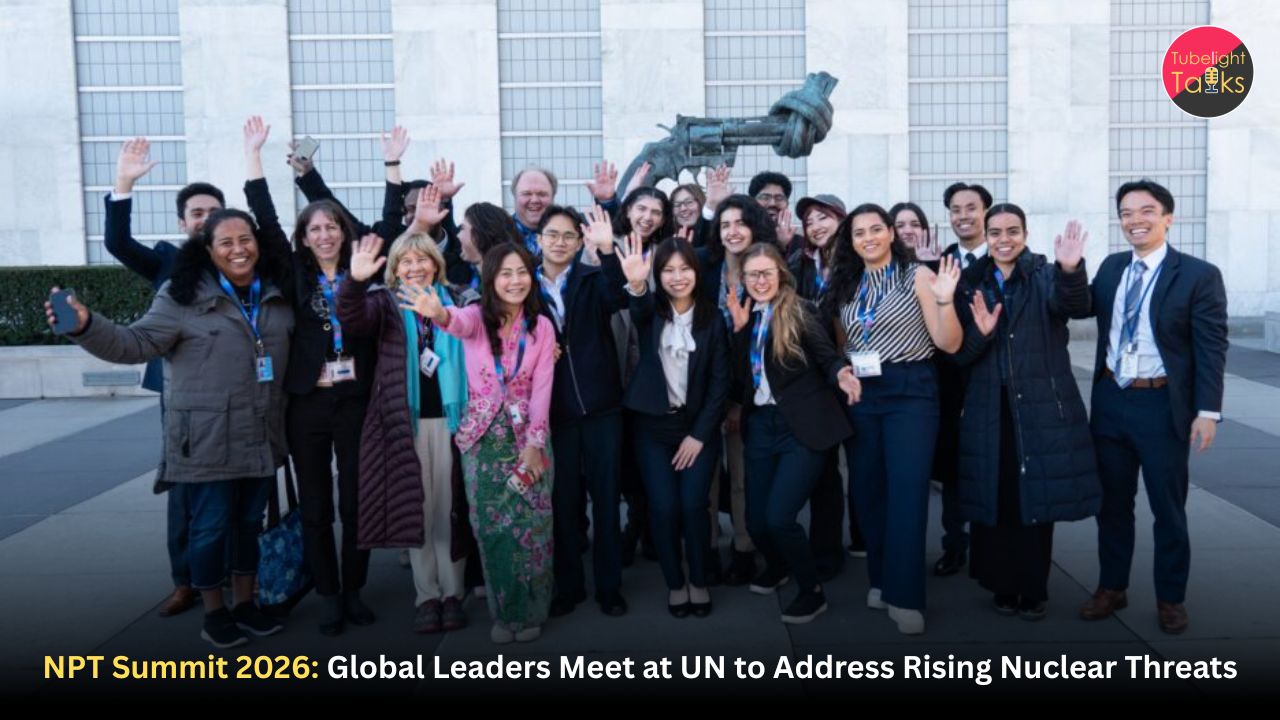
NPT Summit 2026: A Decisive Moment for Global Security
NPT Summit 2026: In a world increasingly defined by geopolitical tensions and strategic rivalries, global leaders are gathering at the United Nations for a high-stakes summit on the Nuclear Non-Proliferation Treaty (NPT). This landmark agreement, which has been the cornerstone of global nuclear arms control for decades, is now facing unprecedented challenges.
As nations debate disarmament, non-proliferation, and peaceful use of nuclear energy, the outcome of this summit could shape the future of international security and determine whether the world moves toward cooperation or confrontation.
What is the Nuclear Non-Proliferation Treaty (NPT)?
The NPT is a global agreement aimed at preventing the spread of nuclear weapons.
Three Core Pillars
The treaty is based on non-proliferation, disarmament, and peaceful use of nuclear energy.
Global Participation
Most countries in the world are signatories, making it one of the most widely accepted arms control agreements.
Why This Summit is Crucial
The current global climate makes this meeting especially important.
Rising Nuclear Risks
Geopolitical tensions have increased concerns about nuclear escalation.
Treaty Challenges
Some nations question the effectiveness and fairness of the NPT.+
Also Read: Delhi AI Summit 2026 Concludes With 88-Nation Global AI Agreement
Key Issues on the Agenda
Leaders are focusing on several critical topics.
Nuclear Disarmament
Efforts to reduce existing nuclear arsenals remain a top priority.
Non-Proliferation
Preventing new countries from acquiring nuclear weapons is essential.
Peaceful Use of Nuclear Energy
Ensuring safe and regulated use of nuclear technology is also discussed.
Major Global Players Involved
Key nuclear and non-nuclear states are participating.
Nuclear Powers
Countries with nuclear weapons play a central role in negotiations.
Non-Nuclear States
These nations demand stronger commitments to disarmament.
Challenges Facing the NPT
The treaty faces several obstacles.
Compliance Issues
Some countries are accused of violating treaty terms.
Trust Deficit
Lack of trust between nations complicates negotiations.
Role of the United Nations
The UN serves as a platform for dialogue.
Diplomatic Facilitation
It brings together nations to discuss and resolve issues.
Policy Framework
The UN helps shape global policies on nuclear security.
Impact on Global Security
The outcomes of the summit will have wide implications.
Preventing Nuclear War
Strengthening the NPT reduces the risk of nuclear conflict.
Stability and Peace
Effective agreements promote global stability.
India’s Perspective
India’s position on the NPT is unique.
Non-Signatory Status
India is not a signatory but supports non-proliferation principles.
Strategic Interests
India emphasizes responsible nuclear use and security.
Future of Nuclear Disarmament
The path forward remains uncertain.
Possible Reforms
Discussions may lead to updates in the treaty framework.
Long-Term Goals
Achieving a nuclear-free world remains the ultimate objective.
Global Public Opinion
Public sentiment plays a role in shaping policy.
Fear of Nuclear Conflict
People worldwide are concerned about escalating tensions.
Demand for Peace
There is strong support for disarmament and diplomacy.
True Security Beyond Nuclear Power
In discussions about nuclear weapons and global security, the teachings of Sant Rampal Ji Maharaj provide a profound insight into the concept of true safety. According to his spiritual knowledge, humanity’s reliance on weapons for security reflects fear and ignorance of divine truth. Nuclear weapons, while powerful, cannot bring lasting peace; instead, they create an environment of भय (fear) and destruction.
Sant Rampal Ji Maharaj teaches that real security comes from following God’s true path, living with righteousness, and fostering compassion among all beings. When individuals and nations adopt spiritual wisdom, conflicts diminish naturally, and peace prevails without the need for destructive power. Thus, while global leaders debate nuclear policies, the ultimate solution lies in spiritual awakening and unity.
For more spiritual knowledge, visit: www.jagatgururampalji.org
Call to Action
The NPT summit highlights the importance of global cooperation in ensuring humanity’s future. Stay informed about international developments and understand their impact on global security. At the same time, explore spiritual knowledge that promotes peace, unity, and harmony. A safer world begins with awareness and collective responsibility.
FAQs: NPT Summit 2026
1. What is the NPT?
The Nuclear Non-Proliferation Treaty is an international agreement to prevent the spread of nuclear weapons.
2. Why is the current summit important?
It addresses rising nuclear risks and the future of global security.
3. What are the main goals of the NPT?
Non-proliferation, disarmament, and peaceful use of nuclear energy.
4. Is India part of the NPT?
No, India is not a signatory but supports non-proliferation efforts.
5. Can nuclear weapons be completely eliminated?
It remains a long-term global goal, requiring strong international cooperation.
Related Stories






Discussion (0)