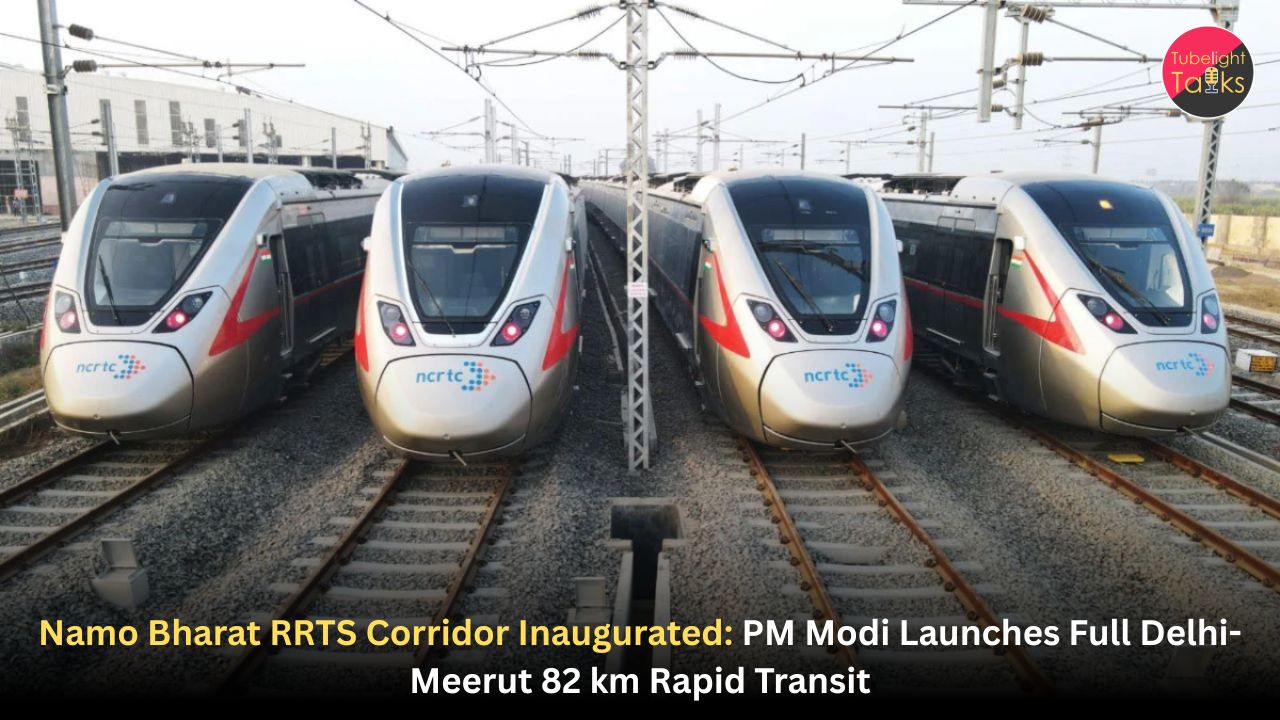
Namo Bharat Expansion: Transforming NCR Connectivity
In a landmark development for India’s infrastructure, Prime Minister Narendra Modi inaugurated the full 82-kilometer Delhi-Meerut Regional Rapid Transit System (RRTS), popularly known as Namo Bharat. This high-speed rail corridor is set to revolutionize transportation in the National Capital Region (NCR), significantly reducing travel time and enhancing connectivity. The project represents India’s commitment to modern, efficient, and sustainable urban transit solutions.
What is Namo Bharat RRTS?
The RRTS is India’s first semi-high-speed regional rail system.
Key Features
It offers high-speed connectivity with modern trains and advanced infrastructure.
Coverage Area
The corridor connects Delhi, Ghaziabad, and Meerut.
Highlights of the 82 km Corridor
The full corridor marks a major milestone.
Travel Time Reduction
Travel between Delhi and Meerut is now significantly faster.
Modern Facilities
Stations are equipped with world-class amenities and digital systems.
Role of Prime Minister Narendra Modi
The inauguration reflects government focus on infrastructure.
Vision for Development
The project aligns with the vision of modernizing India’s transport network.
Public Impact
It aims to improve daily commuting for millions.
Also Read: Delhi–Meerut in Under an Hour: PM Modi Dedicates Full Namo Bharat RRTS, Flags Off Meerut Metro
Benefits for Commuters
The RRTS brings multiple advantages.
Faster Travel
Reduced travel time enhances productivity.
Comfort and Safety
Modern trains provide a comfortable and secure journey.
Economic Impact
The project is expected to boost economic growth.
Job Creation
Construction and operations generate employment.
Regional Development
Improved connectivity encourages business growth.
Environmental Benefits
The RRTS promotes sustainable transportation.
Reduced Pollution
Shifting from road to rail lowers emissions.
Energy Efficiency
Modern trains consume less energy compared to traditional transport.
Technology and Innovation
The corridor showcases advanced technology.
Smart Systems
Digital ticketing and real-time tracking enhance efficiency.
Safety Features
Advanced signaling systems ensure safe operations.
Impact on NCR Development
The project reshapes urban growth.
Urban Expansion
Better connectivity encourages development in surrounding areas.
Reduced Traffic Congestion
Less dependence on road transport eases congestion.
Challenges and Future Expansion
Despite success, challenges remain.
Maintenance and Operations
Ensuring smooth functioning requires continuous effort.
Expansion Plans
More RRTS corridors are planned across India.
Future of Urban Transport in India
The project sets a benchmark.
Smart Cities Vision
It supports India’s smart city initiatives.
Replication Potential
Similar systems may be implemented in other regions.
True Progress Beyond Infrastructure
While projects like Namo Bharat represent remarkable physical progress, the teachings of Sant Rampal Ji Maharaj remind us that true development goes beyond infrastructure. According to his spiritual wisdom, material advancements improve convenience but cannot bring complete peace or satisfaction. True progress is achieved when individuals also focus on spiritual growth, righteousness, and devotion to God.
Sant Rampal Ji Maharaj teaches that combining modern development with spiritual wisdom leads to a balanced and harmonious society. Thus, while high-speed trains connect cities, spiritual knowledge connects humanity to its ultimate purpose.
For more spiritual knowledge, visit: https://www.jagatgururampalji.org/
Call to Action
The Namo Bharat project highlights India’s rapid development. Stay informed about such advancements and make the most of improved infrastructure. At the same time, focus on personal and spiritual growth to achieve a balanced and fulfilling life.
FAQs: Namo Bharat RRTS Corridor Inaugurated
1. What is the Namo Bharat RRTS?
It is India’s first semi-high-speed regional rail system connecting Delhi and Meerut.
2. How long is the corridor?
The full corridor is 82 kilometers long.
3. What are the benefits?
Faster travel, reduced congestion, and improved connectivity.
4. Who inaugurated the project?
Prime Minister Narendra Modi inaugurated the full corridor.
5. Will more such projects be built?
Yes, similar RRTS corridors are planned in other regions.
Related Stories



Discussion (0)