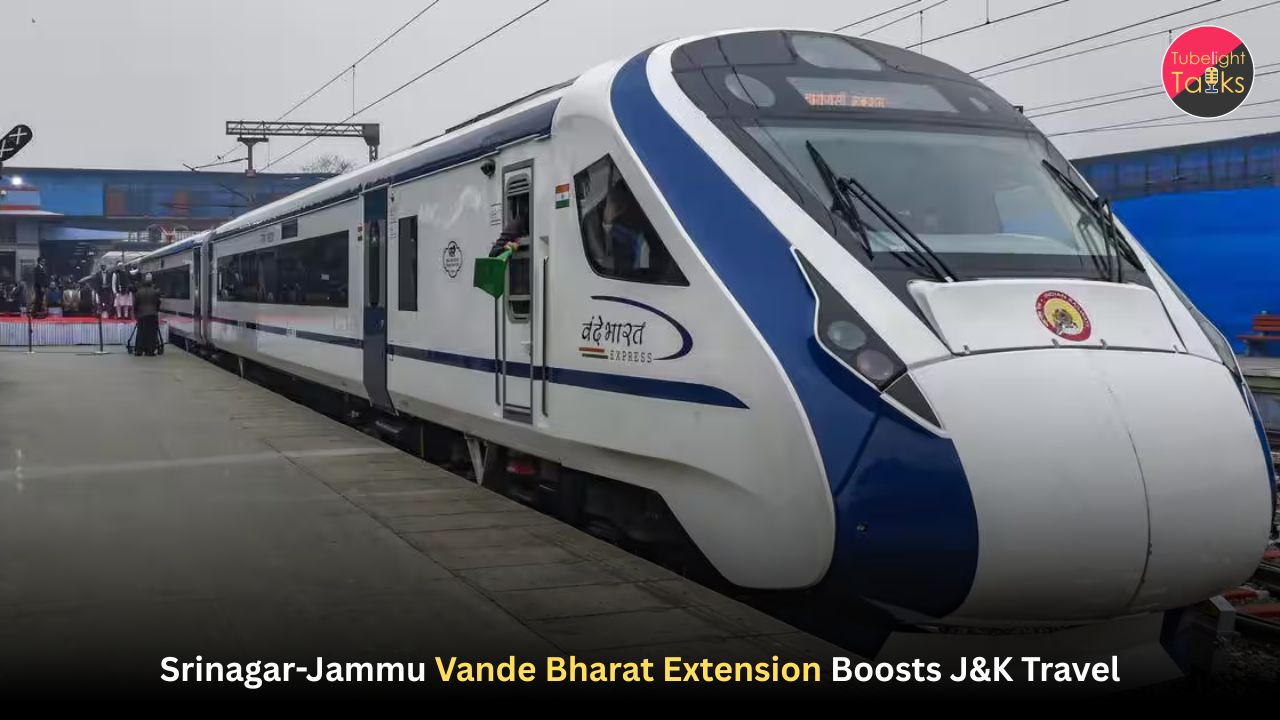
Vande Bharat Expansion: Srinagar-Jammu Service Set to Transform Travel in Jammu & Kashmir
The Srinagar-Jammu Vande Bharat expansion marks a major milestone for rail connectivity in Jammu & Kashmir. According to the Ministry of Railways, Union Railway Minister Ashwini Vaishnaw was scheduled to flag off the extended Srinagar-Katra Vande Bharat service from Jammu Tawi on April 30, 2026. The train, which earlier operated up to Shri Mata Vaishno Devi Katra, will now run all the way to Jammu Tawi. Regular service is set to begin from May 2, benefiting pilgrims, tourists, traders, and local passengers through a direct high-speed rail service.
A New Chapter in J&K Connectivity
The extension of Vande Bharat to Jammu Tawi is more than a timetable change. It connects Kashmir more directly with J&K’s largest railway hub and the wider national rail network. Passengers traveling from Delhi, Mumbai, Punjab, Rajasthan, Gujarat, and other parts of India can now access a more seamless connection toward Srinagar.
From Katra-Srinagar to Jammu-Srinagar
Prime Minister Narendra Modi had flagged off two Vande Bharat Express trains between Shri Mata Vaishno Devi Katra and Srinagar on June 6, 2025. Those services offered a swift and comfortable travel option for residents, pilgrims, and tourists. The new extension takes that benefit further by connecting Jammu Tawi directly to Srinagar.
20-Coach Upgrade to Meet Demand
The Ministry of Railways says the train has been augmented from 8 coaches to 20 coaches in response to high passenger demand. This move more than doubles seating capacity and is expected to ease reservation pressure, especially during peak pilgrimage and tourist seasons.
Regular Services from May 2
The extended Jammu Tawi-Srinagar Vande Bharat Express will enter regular service from May 2, 2026. Two pairs of services will run across the corridor, covering around 266 km. One service is scheduled to leave Jammu Tawi at 6:20 AM and reach Srinagar at 11:10 AM, while another service will leave Srinagar at 8:00 AM and reach Jammu Tawi at 12:40 PM.
Tourism and Pilgrimage Boost
For tourists, the direct Vande Bharat service can reduce uncertainty linked to road delays and weather-dependent routes. For pilgrims, it can connect the Vaishno Devi base at Katra with onward travel toward Srinagar and the wider Kashmir Valley. The Ministry noted that pilgrims combining Vaishno Devi darshan with Amarnath Yatra routes could benefit from easier planning.
Also Read: India Accelerates High-Speed Rail Expansion to Transform National Connectivity
Trade and Local Economy
The Vande Bharat expansion is also important for traders, artisans, students, and professionals. Kashmiri handicrafts, fruit businesses, tourism services, hospitality operators, and small traders may gain from faster travel and improved access to markets. Better mobility can support economic integration and regional confidence.
Progress That Connects Hearts
Better trains connect cities, but true knowledge connects hearts. Sant Rampal Ji Maharaj’s teachings emphasize equality, discipline, non-violence, and devotion based on scriptures. Just as seamless rail connectivity removes physical distance, true spiritual knowledge removes confusion and division among human beings. The official teachings state that anyone, irrespective of caste, creed, color, faith, or religion, can take Naam initiation and follow the path of worship.
Call to Action
Travel Responsibly, Support Local Communities
The new Vande Bharat service can strengthen tourism and livelihoods if travelers respect nature, culture, and local people.
Choose Clean, Safe, and Connected Travel
Passengers should use official railway platforms for bookings, follow travel guidelines, and support local businesses during their journeys.
FAQs: Srinagar-Jammu Vande Bharat Extension Boosts J&K Travel
1. What is the Srinagar-Jammu Vande Bharat expansion?
It is the extension of the earlier Srinagar-Katra Vande Bharat service to Jammu Tawi.
2. When will regular services begin?
Regular services are scheduled to begin from May 2, 2026.
3. How many coaches will the train have?
The train has been augmented from 8 coaches to 20 coaches to meet passenger demand.
4. Who will benefit from this service?
Pilgrims, tourists, local residents, traders, students, and business travelers are expected to benefit.
5. Why is this important for Jammu & Kashmir?
It improves direct rail connectivity, supports tourism, reduces travel inconvenience, and links the Valley more strongly with the national rail network.
Related Stories




Discussion (0)