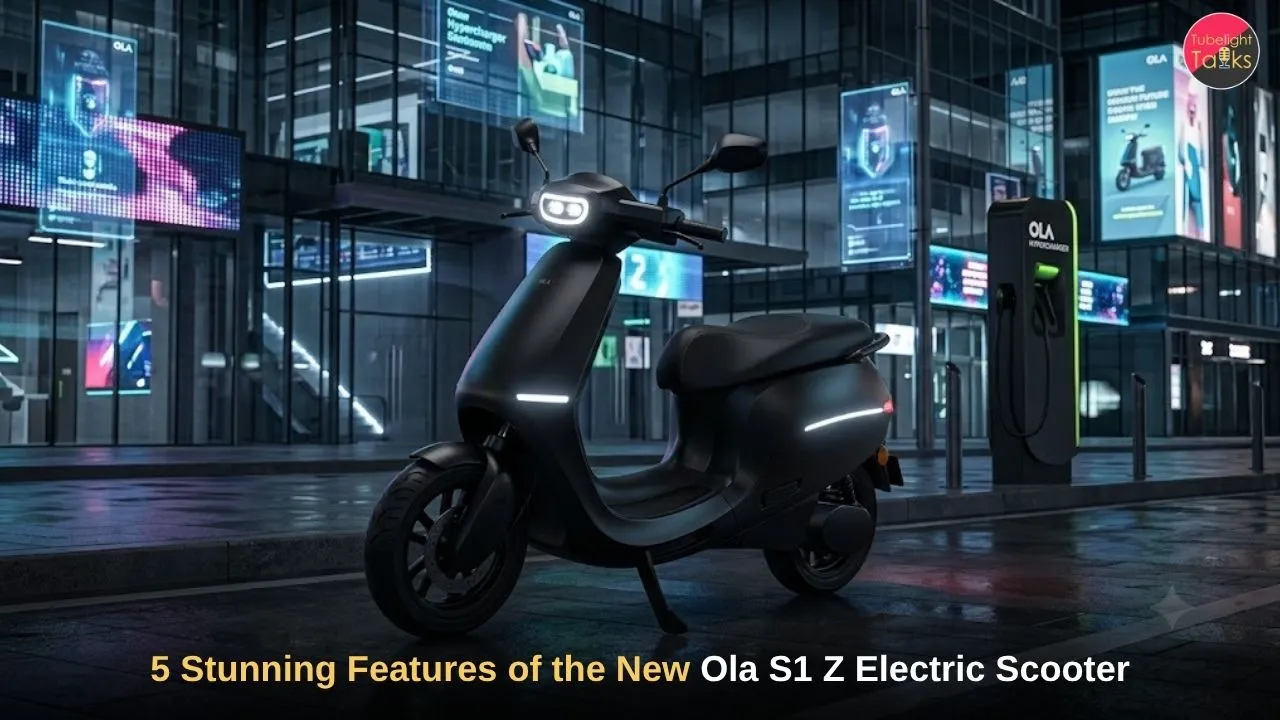
The Ultimate Electric Scooter Evolution: Unpacking the Ola S1 Z and Bharat Cell Technology
The Indian mobility landscape is undergoing a massive transformation, and choosing the right electric scooter is at the forefront of this revolution. On August 28, 2026, Ola Electric officially expanded its dynamic portfolio by launching the highly anticipated Ola S1 Z. This latest offering is not just another addition to the rapidly growing EV market; it represents a major technological leap for the nation. Equipped with the revolutionary, domestically produced Bharat Cell LFP technology, the S1 Z aims to redefine range, safety, and affordability for the modern commuter.
Simultaneously, the brand continues to update its existing lineup, ensuring widespread accessibility. With competitive pricing rollouts for models like the S1 X Gen 2 in regional markets such as Vijayapura, the company is making a clear statement. An electric scooter is no longer a futuristic luxury; it is the definitive, economical, and sustainable choice for everyday transportation.
Also Read :Electric Vehicles vs Hybrid Cars: Ultimate 2026 Guide
Unveiling the Ola S1 Z: A New Benchmark for the Electric Scooter
The launch of the Ola S1 Z disrupts the conventional two-wheeler market by integrating premium features into a highly accessible package. Tech enthusiasts and general riders alike demand more from their vehicles today. They expect an electric scooter to offer seamless connectivity, robust build quality, and zero range anxiety. Ola Electric has meticulously addressed these consumer demands with this latest iteration.
The design language of the S1 Z retains the iconic, minimalist aesthetic that the brand is known for, yet it introduces aggressive aerodynamic tweaks to enhance high-speed stability. The chassis has been refined to offer a lower center of gravity, which significantly improves handling during tight city commutes. For policy experts monitoring the transition to green mobility, the domestic manufacturing of critical components in this electric scooter signals a major victory for the “Make in India” initiative.
Core Specifications and Performance Metrics
When evaluating any modern electric scooter, performance metrics dictate its viability for daily use. The S1 Z boasts an upgraded electric motor designed to deliver instant torque, ensuring rapid acceleration that easily outpaces traditional internal combustion engine (ICE) vehicles in city traffic.
Below is a detailed breakdown of the official specifications released for the Ola S1 Z.
| Feature / Specification | Ola S1 Z Details |
| Battery Technology | Indigenous Bharat Cell LFP (Lithium Iron Phosphate) |
| Claimed Range (IDC) | Up to 160 km per charge |
| Top Speed | 95 km/h |
| Charging Time (0-100%) | 4.5 Hours with fast charging support |
| Operating System | MoveOS 5.0 with AI-driven predictive maintenance |
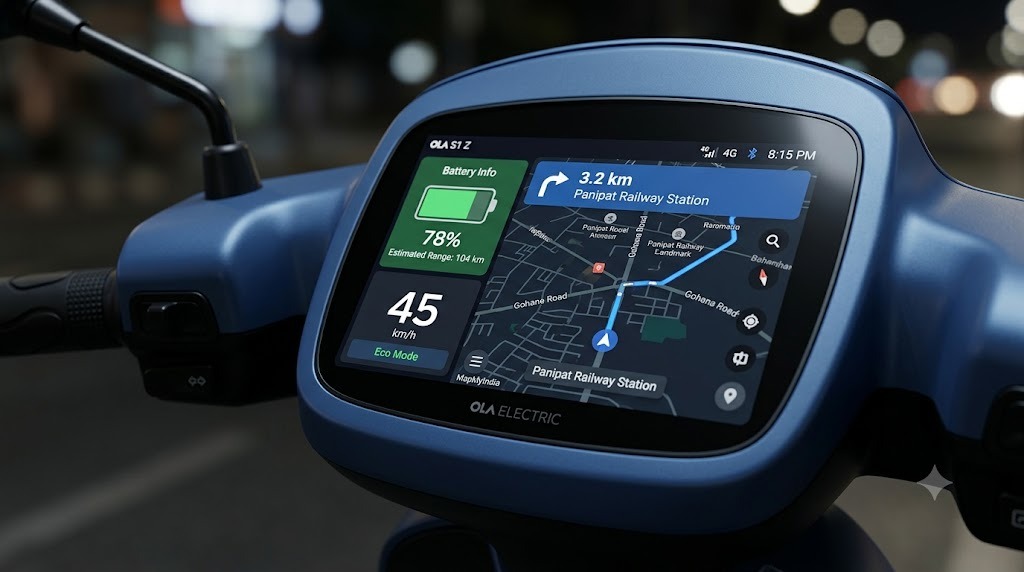
| Display | 7-inch TFT touchscreen with turn-by-turn navigation |
The Heart of the Machine: Indigenous Bharat Cell LFP Technology
The most critical innovation inside this new electric scooter is the introduction of Bharat Cell LFP (Lithium Iron Phosphate) technology. Historically, the Indian EV sector has relied heavily on imported battery cells, primarily using NMC (Nickel Manganese Cobalt) chemistry. While effective, imported cells expose manufacturers to global supply chain disruptions and volatile pricing.
Ola Electric’s gigafactory has now successfully commercialized the indigenous Bharat Cell. LFP chemistry is inherently superior for the Indian climate. It offers exceptional thermal stability, meaning the battery remains safe and operational even during extreme summer heatwaves. Furthermore, LFP batteries boast a longer lifecycle, ensuring that the electric scooter retains its range capacity over thousands of charging cycles.
By manufacturing these cells domestically, Ola Electric has significantly reduced production costs. This cost-saving is directly passed on to the consumer, making the S1 Z one of the most competitively priced vehicles in its segment.
As India’s electrification ramps, today we’re setting a new benchmark for the industry. More than just a metal body
Introducing S1Z!
46160 LFP Bharat Cell. 301 km IDC range.
Intro price of ₹79,999! Book here: book.olaelectric.com
Deliveries in Dec.
The industry has always treated affordable scooters as stripped-down products: less range, less technology, more compromise. We’ve done the opposite.
We built the cell, motor, vehicle, software, every critical component inhouse. And we’re passing that tech advantage to the Indian customer.
Pricing Strategy: Expanding the Electric Scooter Market
Affordability remains the primary catalyst for EV adoption. alongside the high-profile launch of the S1 Z, Ola continues to aggressively price its broader portfolio. For instance, the recent rollout of the S1 X Gen 2 showcases targeted regional pricing. Recent data highlights the on-road price of the S1 X Gen 2 in tier-2 cities like Vijayapura, demonstrating Ola’s commitment to penetrating markets beyond massive metropolitan hubs.
Consumers evaluating an electric scooter often look at the Total Cost of Ownership (TCO). While the upfront cost might rival premium petrol scooters, the running cost of an EV is a mere fraction.
Here is the comparative pricing landscape for Ola’s current dominant models.
| Scooter Model | Estimated Ex-Showroom Price (INR) | Target Audience |
| Ola S1 X Gen 2 | 74,999 – 89,999 | Budget-conscious daily commuters |
| Ola S1 Air | 1,04,999 | Urban riders seeking a balance of tech and value |
| Ola S1 Z | 1,19,999 – 1,29,999 | Tech enthusiasts desiring peak performance and LFP tech |
| Ola S1 Pro | 1,47,499 | Power users and highway commuters |
(Note: Prices are subject to regional subsidies and state-level EV policies. Buyers should consult official local dealerships for precise on-road pricing).
Navigating the Future of Green Mobility
The strategic integration of generative AI into the dashboard of the modern electric scooter changes how riders interact with their vehicles. The new MoveOS 5.0 found in the S1 Z utilizes machine learning to analyze riding patterns. It actively optimizes battery discharge rates based on the rider’s specific habits, effectively squeezing out extra kilometers of range.
Moreover, policy experts suggest that the successful integration of Bharat Cell technology will likely prompt the Indian government to further tighten import regulations on battery cells. This strategic geopolitical move positions India to become a global hub for EV manufacturing. When a consumer buys this new electric scooter, they are indirectly participating in a massive macroeconomic shift towards energy independence.
For comprehensive details on government EV initiatives, readers can refer to the official Ministry of Heavy Industries documentation.
The Superior Choice for 2026
As we navigate through 2026, the arguments against adopting an electric scooter are rapidly disappearing. Range anxiety has been cured by highly efficient LFP batteries. Charging infrastructure has density in urban centers, and the raw performance of EVs is objectively superior to traditional scooters. The Ola S1 Z stands as a testament to what domestic engineering can achieve. From its robust hardware to its highly intelligent software, it represents the pinnacle of modern urban transport.
Finding True Sustainable Peace Beyond Green Mobility
While technological advancements like the revolutionary Bharat Cell and zero-emission vehicles help cleanse our physical environment, they cannot purify the internal pollution of the human mind. Humanity continuously strives for a frictionless, comfortable life through advanced engineering and economic progress. However, despite owning the finest electric scooter or living in a highly developed smart city, true peace of mind remains elusive for most. The stress, anxieties, and spiritual emptiness of the modern era require a different kind of energy source.
This profound internal transformation is only possible through authentic spiritual knowledge. The enlightened teachings of Sant Rampal Ji Maharaj reveal that the material comforts of this world are temporary. To understand the true purpose of human life beyond material acquisitions, one must explore this supreme spiritual science.
To embark on this life-changing spiritual journey, watch the profound discourses on the spiritual YouTube Channel: Sant Rampal Ji Maharaj.
True sustainability is achieving the eternal liberation of the soul. Through proper devotion to the Supreme God Kabir, as outlined in our holy scriptures, humanity can eradicate the root cause of suffering. Sant Rampal Ji Maharaj provides the precise, scripture-based method of worship that brings miraculous peace, resolves life’s deepest crises, and guarantees salvation.
FAQs on electric scooter
1.What makes the battery in the new Ola S1 Z electric scooter unique?
The S1 Z utilizes the newly developed indigenous Bharat Cell LFP (Lithium Iron Phosphate) technology. This battery chemistry is inherently safer, provides superior thermal stability for extreme heat, and offers a significantly longer lifespan compared to traditional NMC cells.
2.What is the real-world range of the Ola S1 Z electric scooter?
While the official Indian Driving Cycle (IDC) claimed range is up to 160 km per charge, the actual real-world range typically varies between 120 km to 135 km depending on the riding mode, traffic conditions, and payload.
3. How does the pricing of the Ola S1 Z compare to the S1 X Gen 2?
The S1 X Gen 2 is positioned as an entry-level, budget-friendly commuter priced around INR 75,000 to 90,000. In contrast, the S1 Z is a more premium offering featuring advanced cell technology and smarter software, priced between INR 1,19,999 and 1,29,999.
4.Is the Ola S1 Z electric scooter eligible for government subsidies?
Yes, depending on the state of purchase, the S1 Z is eligible for both central government subsidies under ongoing EV promotion schemes and specific state-level tax exemptions, which lower the final on-road price.
5.How long does it take to fully charge the new S1 Z?
Using the standard home charger provided by the company, the S1 Z battery pack takes approximately 4.5 hours to charge from zero to one hundred percent. It also supports the company’s fast-charging hypercharger network for quick top-ups.
Related Stories










Discussion (0)