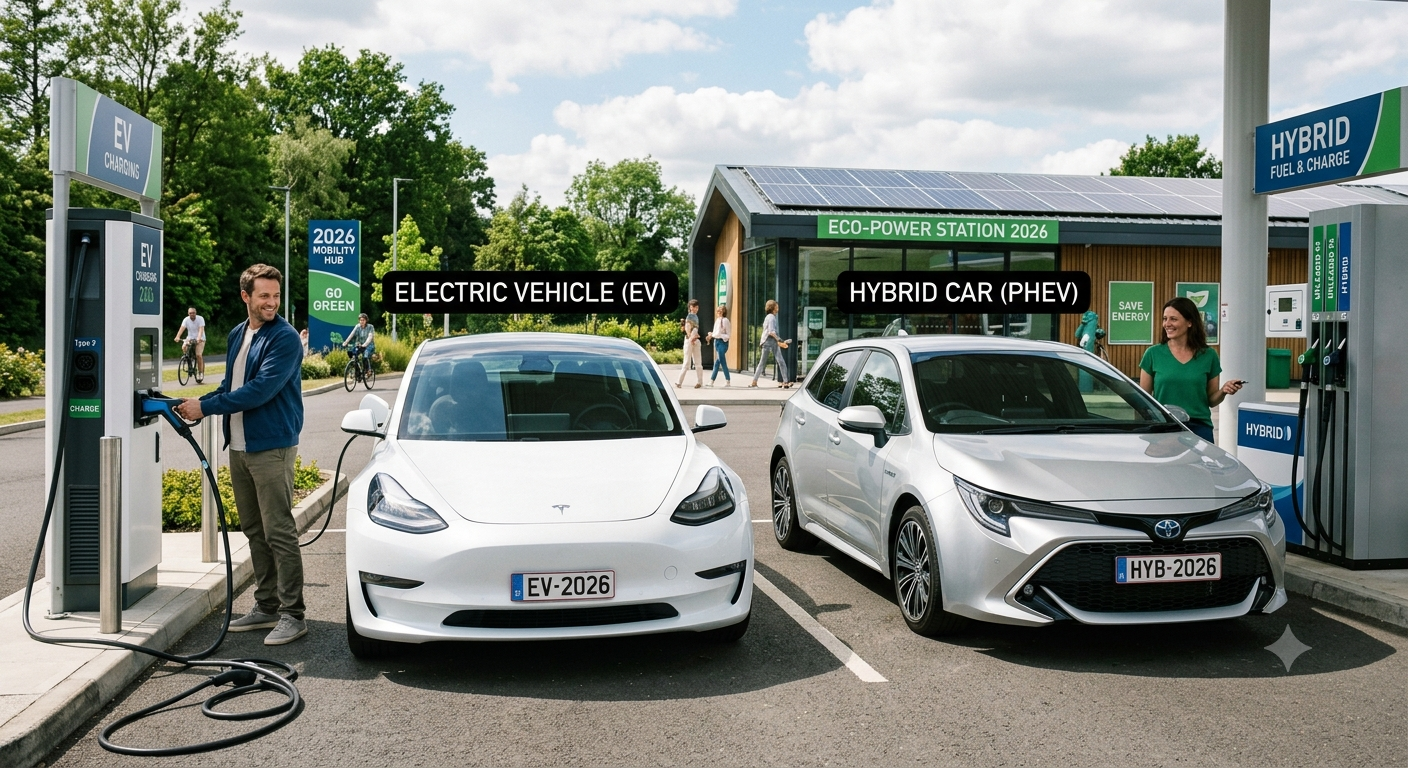
Electric Vehicles vs Hybrid Cars: Ultimate 2026 Guide
The automobile industry is rapidly evolving as more people look for cleaner, smarter, and cost-effective transportation options. In 2026, the debate surrounding Electric Vehicles vs Hybrid Cars has become more relevant than ever before. Rising fuel prices, improved battery technology, expanding charging infrastructure, and government incentives are encouraging buyers to explore alternatives to traditional petrol and diesel vehicles.
However, choosing between an EV and a hybrid depends on several factors, including your driving habits, budget, charging availability, and environmental priorities. This comprehensive guide compares Electric Vehicles vs Hybrid Cars to help you make an informed and practical decision for your next purchase.
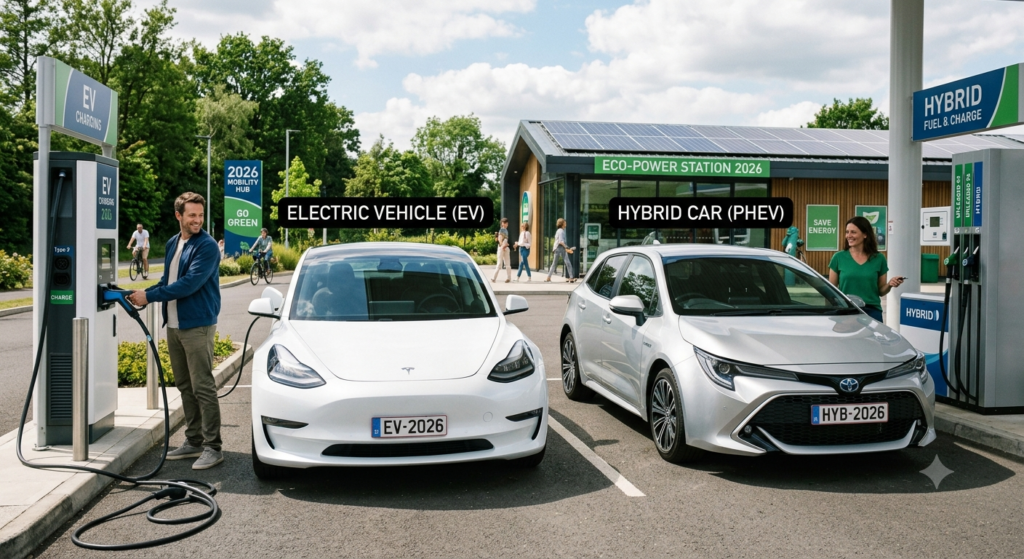
Understanding Electric Vehicles vs Hybrid Cars
To make the right choice, it is essential to understand the core differences between these two popular vehicle types.
What Are Electric Vehicles (EVs)?
Electric Vehicles (EVs) are powered entirely by electricity stored in rechargeable batteries. They do not use petrol or diesel and produce zero tailpipe emissions. Charging is done through home chargers or public charging stations.
What Are Hybrid Cars?
Hybrid cars combine a traditional petrol engine with an electric motor. The battery charges automatically through regenerative braking and the engine itself. This means external charging is usually not required for standard hybrids.
Pros and Cons: Electric Vehicles vs Hybrid Cars
When comparing Electric Vehicles vs Hybrid Cars, it helps to look directly at their respective advantages and disadvantages to see which aligns best with your needs.
| Feature Category | Electric Vehicles (EVs) | Hybrid Cars |
| Main Advantages | Zero tailpipe emissions, smooth driving, lower running costs, fewer maintenance needs, government incentives. | Better fuel efficiency, no charging station dependency, longer driving range, easier for road trips. |
| Main Disadvantages | Higher initial purchase price, longer refueling (charging) time, battery replacement costs, expanding but limited infrastructure. | Still consume petrol, higher maintenance due to more mechanical parts, not completely emission-free. |
Cost Comparison: Electric Vehicles vs Hybrid Cars in 2026
The purchase price of EVs is gradually decreasing as battery technology improves and production scales up globally. Although electric cars may still cost more upfront than comparable hybrid models, they generally offer lower running and maintenance costs over time.
Hybrid cars often have a lower initial price and provide immediate fuel savings compared to conventional vehicles. However, owners continue to spend on petrol, making long-term operating expenses higher than many EVs.
When evaluating the financial impact of Electric Vehicles vs Hybrid Cars, buyers should carefully consider:
- Initial purchase price and taxes
- Ongoing fuel or electricity expenses
- Routine maintenance costs
- Insurance premiums
- Available government incentives
- Long-term resale value
Charging Infrastructure and Driving Experience
Charging infrastructure has expanded significantly in recent years. Many cities now offer fast-charging stations at shopping centers, highways, offices, and residential communities. Home charging remains the most convenient option for EV owners, as overnight charging is sufficient for daily commuters. However, apartment residents or frequent long-distance travelers should carefully evaluate charging accessibility.
In terms of performance, electric vehicles deliver instant torque, resulting in quick acceleration and a smooth, quiet driving experience. Hybrid cars provide a familiar driving experience similar to traditional vehicles while benefiting from electric assistance. Drivers who frequently travel long distances often appreciate the quick refueling flexibility that hybrids offer.
Environmental Impact of Electric Vehicles vs Hybrid Cars
When weighing Electric Vehicles vs Hybrid Cars, environmental impact is a massive deciding factor. Electric vehicles contribute significantly to reducing urban air pollution because they produce no exhaust emissions while driving. As renewable energy sources continue expanding worldwide, EVs become even more environmentally friendly.
Hybrid cars also reduce emissions compared to conventional vehicles by using electricity during low-speed driving and improving overall fuel efficiency. However, since they still rely on petrol, they cannot completely eliminate carbon emissions.
Also read:One Health Movement: Global Leaders Push Integrated Human, Animal and Environmental Health Action
Which Vehicle Is Right for You?
The better choice ultimately depends on your personal driving needs, daily habits, and budget.
| Choose an Electric Vehicle (EV) If You: | Choose a Hybrid Car If You: |
| Drive mainly within city limits. | Frequently travel long distances. |
| Have reliable access to home charging. | Lack reliable daily charging access. |
| Want lower long-term operating costs. | Want better fuel efficiency without charging worries. |
| Prioritize environmental sustainability. | Prefer a gradual transition toward electric mobility. |
Future of Electric and Hybrid Vehicles
The future of transportation is becoming increasingly electrified. Governments, automobile manufacturers, and technology companies continue investing heavily in battery innovation, renewable energy integration, and charging networks.
Battery prices are expected to decline further, charging speeds will continue improving, and driving ranges are likely to increase. While hybrid vehicles will remain popular during the transition period, fully electric vehicles are expected to play a larger role in achieving cleaner transportation and reducing dependence on fossil fuels. Consumers can expect more affordable models, smarter vehicle technology, and improved infrastructure in the coming years.
Beyond EVs: Why Environmental Protection Requires Responsible Human Behavior
Technological advancements like electric vehicles and hybrid cars help reduce pollution and protect nature. However, lasting change begins with responsible human behavior.
Sant Rampal Ji Maharaj teaches that nature is a precious gift from God, and every person should use its resources wisely instead of exploiting them. Living a simple, disciplined, and compassionate life encourages us to minimize unnecessary consumption and care for the environment.
By combining sustainable technologies with righteous conduct and true spiritual knowledge, humanity can create a cleaner, healthier, and more peaceful world for future generations.
Also read: Eliminating Social Evils
FAQs: Electric Vehicles vs Hybrid Cars
1. Which is better in 2026 when comparing Electric Vehicles vs Hybrid Cars?
The choice between Electric Vehicles vs Hybrid Cars depends heavily on your lifestyle. Electric vehicles are generally better for city driving and lower operating costs, while hybrid cars are more suitable for long-distance travel where charging infrastructure may be limited.
2. Are electric vehicles cheaper to maintain than hybrid cars?
Yes. Electric vehicles usually require less maintenance because they have fewer moving parts, do not need engine oil changes, and experience less wear on braking systems due to regenerative braking.
3. Do hybrid cars need to be plugged into charging stations?
Most standard hybrid cars charge their batteries automatically through regenerative braking and the petrol engine, so external charging is not required. Only Plug-in Hybrid Electric Vehicles (PHEVs) need to be plugged in.
4. Is the charging infrastructure sufficient for electric vehicles in 2026?
Charging infrastructure has expanded considerably in many regions, but availability still varies depending on the city and country. Home charging remains the most convenient and reliable option for most EV owners.
5. What is the environmental difference between Electric Vehicles vs Hybrid Cars?
When looking at Electric Vehicles vs Hybrid Cars, EVs are generally more environmentally friendly because they produce zero tailpipe emissions. Hybrids are cleaner than traditional gas cars but still rely on fossil fuels.
Related Stories










Discussion (0)