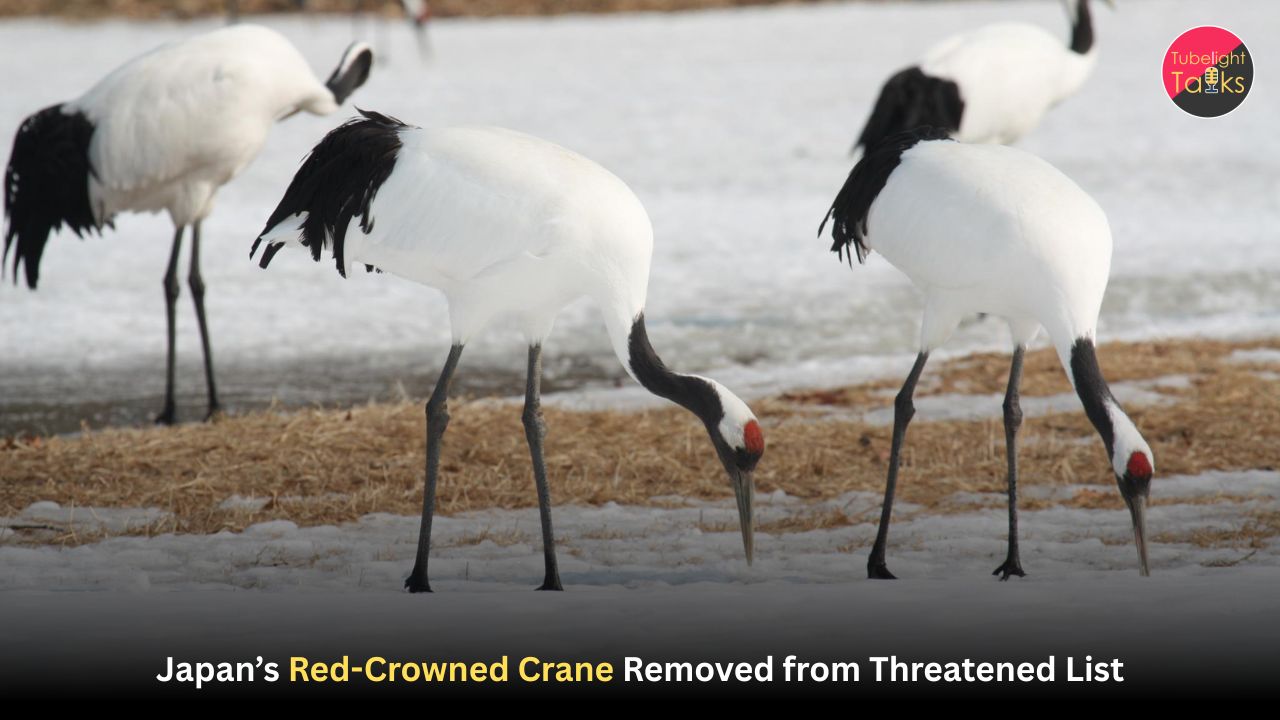
Japan’s Crane Recovery: Red-Crowned Crane Removed from Japan’s Threatened List After Conservation Success
Japan has recorded a major wildlife conservation victory as the red-crowned crane, known as tanchō in Japanese, has been downgraded from “threatened” to “near-threatened” after years of recovery work. Japan’s Ministry of the Environment released its updated threatened species list on March 17, 2026, and the crane’s improved status reflects a lower current risk of extinction. The bird, once believed to have disappeared from Japan due to overhunting, has recovered strongly in Hokkaidō through long-term protection and community-led conservation.
A Symbol of Japan’s Natural Heritage
The red-crowned crane is not just another bird species. In Japanese culture, cranes symbolize longevity, good fortune, beauty, and fidelity. Their elegant winter dances in Hokkaidō have become a treasured image of Japan’s natural identity. The crane’s recovery therefore carries ecological, cultural, and emotional value for the country.
From Near Extinction to Recovery
The story of the red-crowned crane is dramatic. The species was once thought to have died out in Japan after overhunting during the Meiji era. In 1924, several dozen birds were rediscovered in remote areas of the Kushiro Wetland in Hokkaidō. In 1952, when the Kushiro cranes were designated as a Special Natural Monument, only 33 birds were recorded in a wintering habitat survey.
Decades of Conservation Paid Off
The recovery did not happen automatically. Volunteers, local communities, conservation workers, and authorities supported protection and feeding efforts, particularly around Tsurui village and the Akan district. These long-term initiatives helped the population gradually rise. The 2024 wintering habitat survey, conducted in late January 2025, confirmed 1,927 red-crowned cranes, leading to the lower-risk assessment.
Why the Status Change Matters
The downgrade from “threatened” to “near-threatened” does not mean conservation work can stop. It means the immediate extinction risk has reduced. The crane still needs healthy wetlands, safe wintering grounds, responsible tourism, and protection from disease, road accidents, and human-wildlife conflict. The success story must now shift from emergency rescue to long-term coexistence.
Conservation Lessons for the World
Japan’s red-crowned crane recovery shows that patient conservation can reverse decline when people work with nature rather than against it. It also proves the importance of wetlands, local community participation, and consistent monitoring. The crane’s recovery can inspire conservation efforts for other endangered species facing habitat loss, poaching, and climate pressure.
Restoring What Was Almost Lost
The return of the red-crowned crane from near extinction teaches a deeper lesson: when humans abandon greed and act with responsibility, damaged creation can heal. Sant Rampal Ji Maharaj’s teachings emphasize compassion, discipline, non-violence, and true worship based on scriptures. Such spiritual wisdom reminds society that nature is not merely a resource for human use; it is part of God’s creation and must be protected with humility and restraint.
His official teachings explain that the true aim of human life is not material gain alone, but salvation through correct worship and righteous living.
Call to Action
Protect Wildlife Before It Is Too Late
Japan’s red-crowned crane recovery proves that conservation works when people act before extinction becomes permanent.
Support Habitat Protection
Citizens should respect wildlife spaces, avoid disturbing protected species, support wetland conservation, and promote responsible nature tourism.
FAQs: Japans Red-Crowned Crane Removed from Threatened List
1. What happened to Japan’s red-crowned crane?
It was downgraded from “threatened” to “near-threatened” after population recovery.
2. When did Japan update the status?
Japan’s Ministry of the Environment released the updated list on March 17, 2026.
3. How many cranes were recorded in the latest cited survey?
The 2024 wintering habitat survey confirmed 1,927 red-crowned cranes.
4. Was the crane once near extinction?
Yes. Only 33 birds were recorded in a 1952 wintering habitat survey.
5. Does near-threatened mean completely safe?
No. It means the current extinction risk is lower, but continued conservation remains necessary.
Related Stories










Discussion (0)