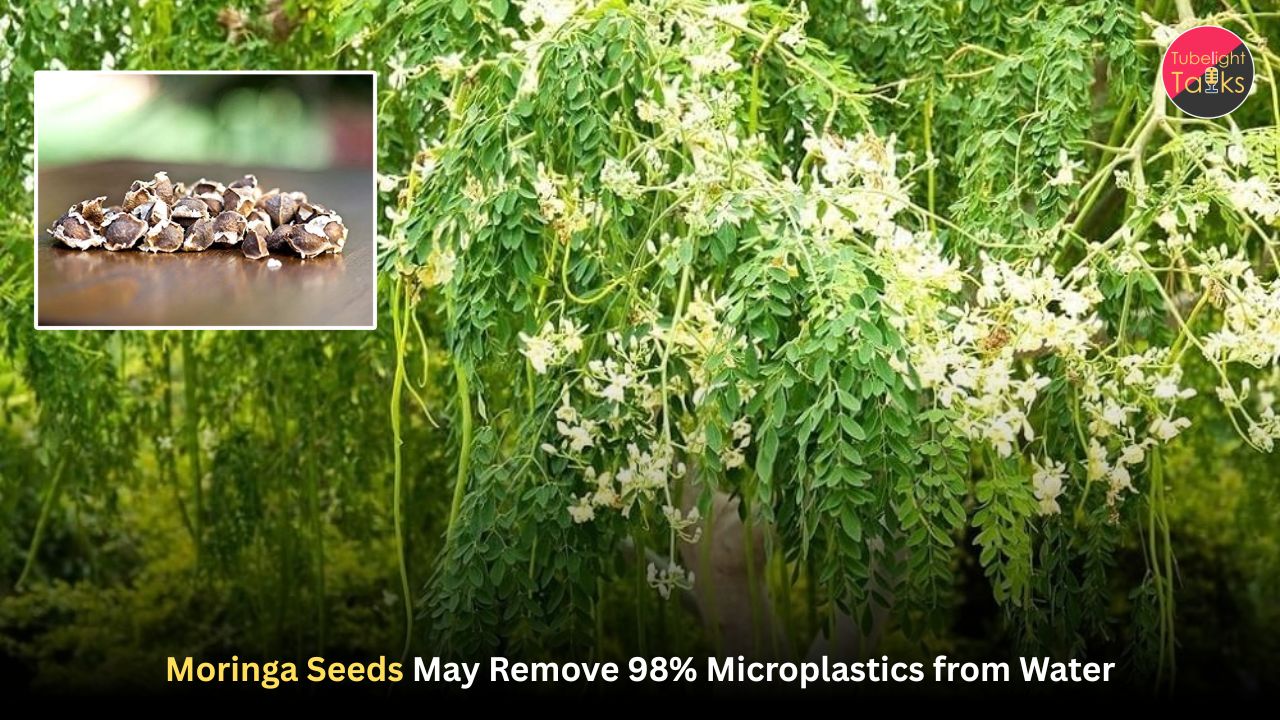
Microplastic Solution: Moringa Seed Extract Shows Powerful Potential for Cleaner Drinking Water
Researchers have found that Moringa oleifera seeds may help remove microplastics from drinking water through a natural coagulation process. The study, published in ACS Omega, tested moringa seed saline extract against aluminum sulfate, a common chemical coagulant used in water treatment. ScienceDaily, citing the Fundação de Amparo à Pesquisa do Estado de São Paulo, reported that moringa seeds can cause plastic particles to clump together, making them easier to filter, and in alkaline water the plant-based extract performed even better than aluminum sulfate.
Why Microplastics Are a Growing Concern
Microplastics are tiny plastic fragments that can enter water systems through packaging waste, synthetic textiles, plastic products, industrial discharge, and degraded debris. Once they enter drinking water sources, they are difficult to remove because of their small size and electrical charge. Their presence has increased the urgency for affordable, safe, and sustainable purification methods.
How Moringa Helps
Moringa seed extract acts as a natural coagulant. In water treatment, coagulation neutralizes the electrical charge of contaminants, allowing small particles to stick together. Once microplastic particles form larger clusters, they can be captured more easily through filtration. The study focused on in-line filtration, where treated water passes through a sand filter after coagulation.
Also Read: Moringa Seeds Offer Green Solution for Microplastic Removal
Performance Compared with Chemical Treatment
Researchers found that moringa seed extract performed similarly to aluminum sulfate in removing microplastics from water. Gabrielle Batista, the first author of the study, said the saline extract from moringa seeds performed similarly to aluminum sulfate and worked even better in more alkaline water. Independent summaries of the ACS Omega study report that optimal conditions reached around 98.5% removal of aged PVC microplastics.
Why This Matters for Rural Communities
The method may be especially useful for small communities, rural areas, and low-resource settings where large-scale chemical water treatment is difficult or expensive. Moringa grows in tropical regions, including India, and its seeds are already known for traditional water-purification properties. This makes it a promising plant-based clean-water solution.
Limits and Next Steps
The research is promising but still needs real-world validation. The study was conducted under controlled conditions using PVC microplastics in treated water systems. Researchers are now testing moringa seed extract on natural water sources such as the Paraíba do Sul River, which supplies São José dos Campos in Brazil.
Purity Outside and Within
Clean drinking water protects the body, but purity of thought and action protects the soul. Sant Rampal Ji Maharaj’s teachings emphasize that human life should be guided by true knowledge, discipline, and scripture-based devotion. The effort to remove invisible microplastics from water can also remind us to remove invisible impurities such as ego, violence, intoxication, and false worship from life. His official teachings explain that correct worship under a Tatvadarshi Saint leads to spiritual welfare and salvation.
Call to Action
Choose Sustainable Water Solutions
Plant-based purification research should be supported because clean water is a basic human need.
Reduce Plastic at the Source
Communities should reduce single-use plastic, improve waste management, support water testing, and encourage scientific innovation for safer drinking water.
FAQs: Moringa Seeds May Remove 98% Microplastics from Water
1. What plant was studied for microplastic removal?
Researchers studied Moringa oleifera seeds.
2. How does moringa remove microplastics?
Its seed extract acts as a coagulant, helping tiny plastic particles clump together for easier filtration.
3. How much microplastic can it remove?
Reports of the ACS Omega study indicate removal of more than 98% of aged PVC microplastics under optimal laboratory conditions.
4. Is this ready for city-scale use?
Not yet. More real-world testing and process optimization are needed.
5. Why is this discovery important?
It may offer a low-cost, biodegradable, plant-based alternative to chemical water treatment.
Related Stories









Discussion (0)