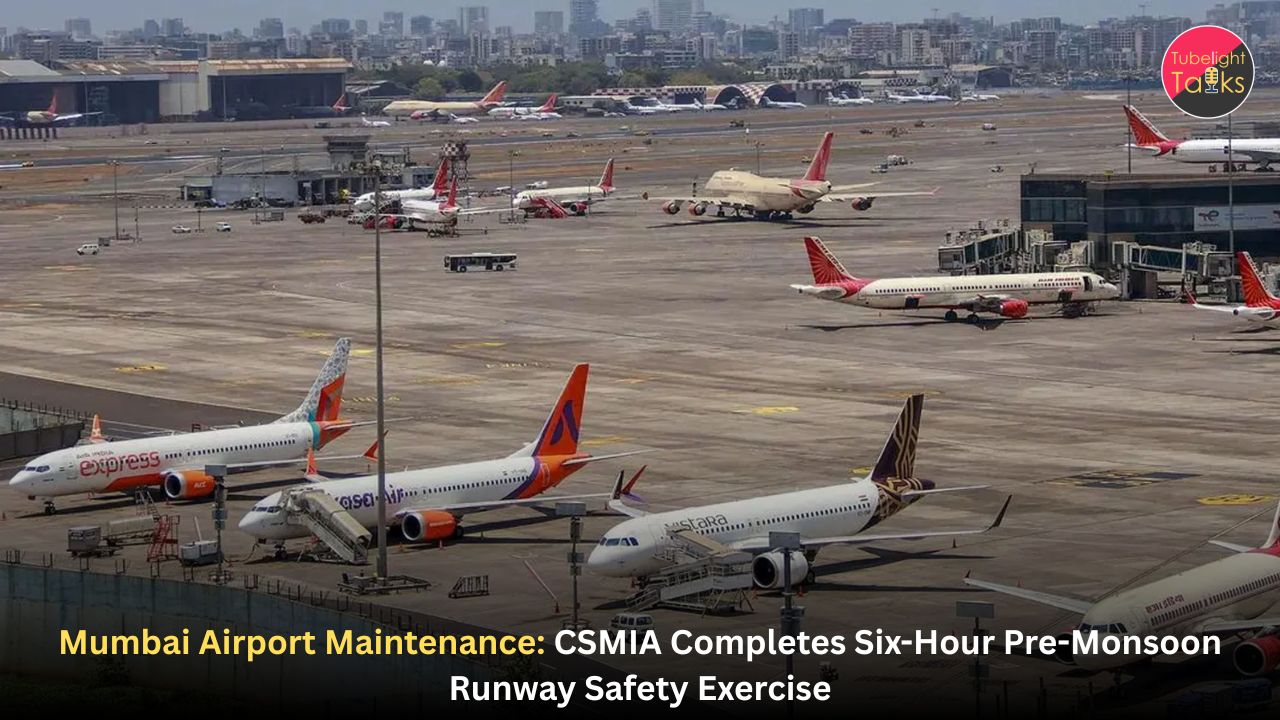
Mumbai Airport Maintenance: CSMIA Completes Six-Hour Pre-Monsoon Runway Safety Exercise
Mumbai’s Chhatrapati Shivaji Maharaj International Airport has completed its scheduled six-hour pre-monsoon runway maintenance exercise, restoring both runways to full operations after the planned shutdown. The trending briefing mentioned the maintenance as concluding “today,” but verified reports show that the work was carried out and completed on Thursday, May 7, 2026, between 11 AM and 5 PM.
During this period, all flight movements were suspended as both runways—09/27 and 14/32—underwent critical inspection, pavement work, rubber removal, electrical checks, drain cleaning and lighting-system inspection. The operation was planned months in advance in coordination with airlines to reduce passenger disruption. The exercise is a key safety preparation before Mumbai’s demanding monsoon season, when heavy rain, waterlogging risk and reduced visibility can test aviation systems.
Mumbai Airport Maintenance: What Was Completed?
Six-Hour Closure From 11 AM to 5 PM
CSMIA suspended all flight operations for six hours on May 7, from 11 AM to 5 PM, so that maintenance teams could carry out annual pre-monsoon runway work. Both the primary runway 09/27 and cross-runway 14/32 were temporarily closed during this window. The airport restored operations after the maintenance window ended.
The timing was chosen deliberately. A major airport cannot shut runways casually, especially one as busy as Mumbai. Such work must be scheduled in a defined operational window so airlines can adjust flight timings, passengers can be informed, and air traffic can be managed safely.
The six-hour pause affected both domestic and international operations, but because airlines were informed in advance, many schedule changes could be planned before the day of maintenance. This is why pre-announcement matters in aviation: passengers may still face inconvenience, but sudden chaos is reduced.
Both Runways Restored After Safety Checks
Reports confirmed that both runways were restored after the maintenance exercise. The work included runway inspection, pavement strengthening, rubber removal, electrical system checks, drain cleaning and inspection of more than 3,000 runway lights and associated cable networks. Technical teams also inspected runway intersections and systems connected to lighting, IT and navigational support.
This is not cosmetic maintenance. Runway safety depends on surface friction, drainage, lighting, markings, electrical reliability and navigation-support systems. If any of these weaken during monsoon, aircraft operations can be affected.
Why Pre-Monsoon Maintenance Matters in Mumbai
Mumbai’s Monsoon Is Operationally Demanding
Mumbai receives intense monsoon rainfall, often accompanied by low visibility, strong winds, waterlogging and sudden weather changes. For an airport, this means runway drainage, friction and lighting systems become critical.
When aircraft land on wet runways, braking efficiency depends partly on runway surface condition. Rubber deposits from aircraft tyres can reduce friction over time, especially when the runway is wet. Removing these deposits helps maintain safer landing and takeoff conditions.
Drain cleaning is equally important. If rainwater does not drain quickly, standing water can increase the risk of hydroplaning and operational delays. Mumbai’s airport therefore must prepare before monsoon arrives, not after problems begin.
Safety Over Short-Term Convenience
A six-hour closure may inconvenience some passengers, but such planned maintenance protects long-term safety. Aviation safety depends on preventive action. It is better to pause operations for a known maintenance window than risk weather-related disruptions caused by unresolved runway or drainage issues during heavy rains.
This is especially true for Mumbai because the airport handles a very high number of air traffic movements daily. Times of India reported that Mumbai airport handles more than 950 air traffic movements. That volume leaves little room for infrastructure weakness during peak monsoon conditions.
Also Read: Mumbai Airport Shutdown: CSMIA Closed for Six Hours Today for Critical Pre-Monsoon Maintenance
What Work Was Done on the Runways?
Runway Surface Inspection and Strengthening
Runway pavement faces continuous stress from aircraft weight, repeated landings, braking, heat, rain and tyre friction. Maintenance teams inspected and strengthened runway surfaces to ensure they remain safe during the rainy season.
Even small surface defects can become serious when exposed to heavy rain and aircraft pressure. Pre-monsoon inspection helps identify weak patches before they create operational problems.
Rubber Removal
Aircraft tyres leave rubber deposits on runways during landing. Over time, these deposits can reduce runway friction. Removing rubber is an important part of aviation maintenance, especially before monsoon when wet surfaces can increase stopping-distance concerns.
Rubber removal directly supports safer aircraft braking and better runway performance during rain.
Drain Cleaning
Drainage systems were cleaned to prevent water accumulation. Mumbai’s heavy rain can overwhelm urban infrastructure, and airport drainage must function efficiently to avoid runway waterlogging.
Clean drains help maintain runway availability and reduce delays during downpours.
Lighting and Electrical Checks
More than 3,000 runway lights and related cable networks were inspected. This is crucial because monsoon weather often reduces visibility. Pilots depend heavily on runway edge lights, approach lights, taxiway lighting and related guidance systems during poor weather.
Electrical reliability is also critical during storms. Any failure in lighting or power systems can slow operations or trigger safety restrictions.
Navigation and IT Support Systems
Technical teams also checked systems linked to lighting, information technology and navigational support. This shows how modern airport operations depend on integrated systems. Runway safety is no longer only about concrete and asphalt; it is also about sensors, cables, communication, digital control and airside coordination.
Also Read: Delhi Airport Glitch Causes Widespread Flight Delays and Chaos
Planning Began Six Months Earlier
Coordination With Airlines
Airport officials said planning for the exercise began six months in advance in coordination with airlines to minimise disruption and allow schedule realignment.
This early coordination is essential because Mumbai is a major hub. Airlines must adjust aircraft rotation, crew duty hours, passenger connections, international schedules, cargo movement and ground-handling resources. A six-hour closure at a busy airport can create ripple effects if not planned well.
By coordinating early, the airport and airlines can reduce last-minute cancellations and passenger confusion.
Passenger Advisory Was Issued
Before the closure, passengers were advised to check flight status with their airlines and adjust travel plans. Reports ahead of the maintenance stated that both domestic and international flights would be affected during the runway closure window.
This advisory remains important for future maintenance windows too. Passengers should always check airline updates before leaving for the airport when runway closures or major weather events are announced.
Why This Is Important for India’s Aviation Network
Mumbai Is One of India’s Busiest Airports
CSMIA is one of India’s most important aviation gateways and plays a major role in domestic, international, business and cargo travel. The airport connects Mumbai with cities across India and the world, supporting finance, tourism, trade, entertainment, exports, healthcare travel and family movement.
Because of this scale, even a small operational issue can affect thousands of passengers and multiple airlines. Preventive maintenance is therefore not only a local airport issue; it is part of national aviation reliability.
Monsoon Readiness Protects Wider Connectivity
During monsoon, delays at Mumbai can affect onward connections across India and abroad. Aircraft arriving late into Mumbai may delay their next departures. Crew scheduling can be affected. Connecting passengers may miss onward flights.
A well-maintained runway system helps reduce avoidable disruptions during an already difficult weather season.
Passenger Impact and Lessons
Short-Term Disruption, Long-Term Benefit
Passengers travelling on May 7 had to adjust to schedule changes, possible retiming and airline advisories. But because the shutdown was planned, the disruption was more manageable than an emergency closure.
For passengers, the key lesson is simple: during monsoon season, always track airline notifications, airport advisories and weather alerts. Even after maintenance, heavy rainfall can still cause delays.
Airlines Must Communicate Clearly
Airlines play a crucial role during runway closures. Passengers need timely SMS, email and app notifications about retiming, cancellations, rebooking and refunds. Clear communication reduces frustration.
The airport may complete its work smoothly, but passenger experience depends on airline coordination.
What This Means for Monsoon 2026
Better Prepared Airside Infrastructure
With runway surfaces inspected, drains cleaned, lights checked and systems tested, Mumbai airport is better prepared for monsoon operations. Maintenance does not eliminate weather disruption, but it reduces avoidable infrastructure-related risk.
Continued Monitoring Still Needed
Monsoon readiness is not completed in one day. Airport teams will still need continuous monitoring through the rainy season. Heavy rainfall, lightning, crosswinds and low visibility can create operational pressure even after pre-monsoon work.
Passenger Patience Will Matter
Mumbai’s monsoon can test everyone—airlines, airport staff, passengers, ground handlers and air traffic controllers. A prepared airport improves safety, but passengers should still expect occasional weather-related delays.
Safety, Service and Public Responsibility
Mumbai airport’s pre-monsoon maintenance shows how public systems work best when planning, discipline and responsibility come together before crisis begins. Aviation safety depends on thousands of small duties being performed honestly—inspection, cleaning, electrical checks, drainage work, communication and coordination. Sant Rampal Ji Maharaj’s guidance on honesty, disciplined work and service-oriented conduct offers a meaningful reflection here.
When people perform their duty sincerely, without negligence or corruption, public life becomes safer for everyone. SatGyan teaches that responsibility is not only spiritual; it is visible in everyday work that protects human lives. At a busy airport, one technician’s careful inspection, one engineer’s honest report and one official’s timely planning can help thousands travel safely. This is the deeper lesson of such maintenance: safety begins with truthful conduct and duty performed with care.
FAQs on Mumbai Airport Maintenance
1. When was Mumbai airport’s pre-monsoon runway maintenance completed?
Mumbai airport completed its annual pre-monsoon runway maintenance on Thursday, May 7, 2026, after a six-hour shutdown from 11 AM to 5 PM.
2. Were both runways closed?
Yes. Both runways—09/27 and 14/32—were closed during the maintenance window.
3. What maintenance work was carried out?
The work included runway inspection, pavement strengthening, rubber removal, electrical checks, drain cleaning, lighting inspection and checks of associated cable networks and navigational-support systems.
4. How long were flight operations suspended?
Flight operations were suspended for six hours, from 11 AM to 5 PM.
5. Why is this maintenance important before monsoon?
It helps prepare runway surfaces, drainage, lighting and electrical systems for heavy rain, low visibility and demanding monsoon operations.
6. Were passengers informed in advance?
Yes. Reports before the shutdown advised passengers to check flight status with airlines and adjust travel plans, as both domestic and international flights could be affected.
Related Stories





Discussion (0)