Mount Dukono Eruption: Fatal Hike Disaster Raises Alarm Over Restricted-Zone Tourism in Indonesia
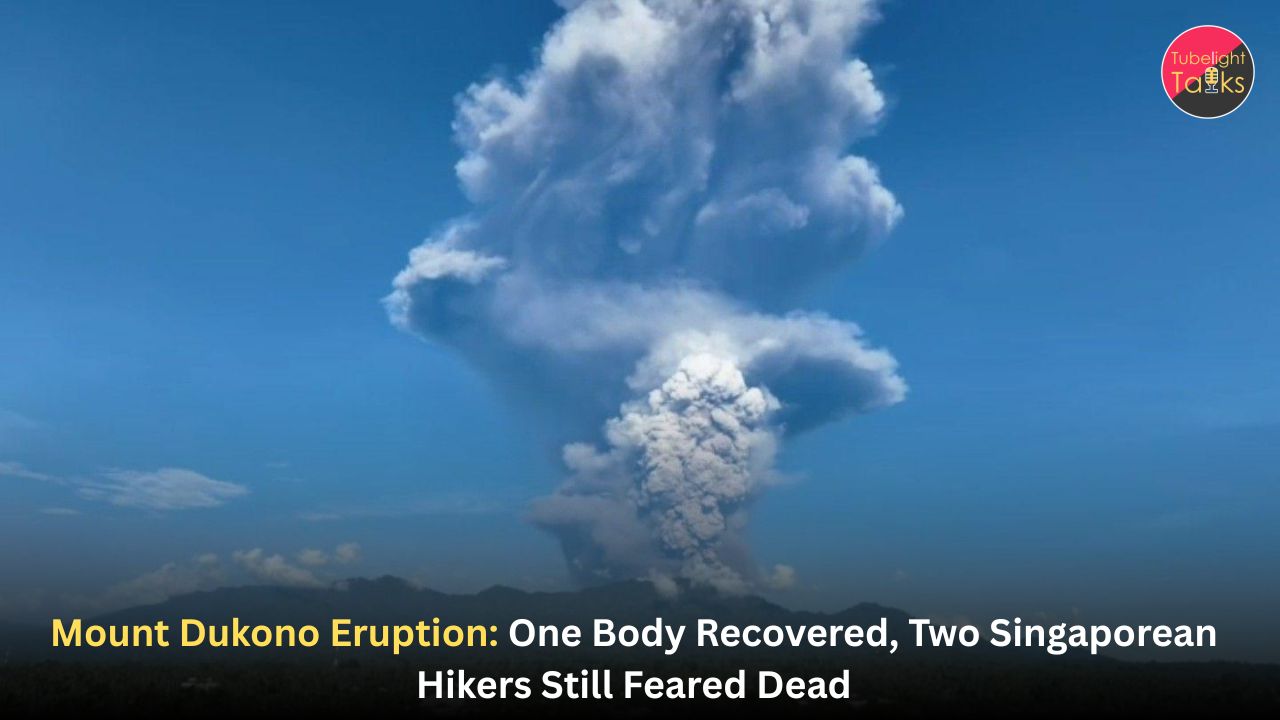
Indonesia’s Mount Dukono eruption has become a major international safety warning after a group of 20 hikers was caught on the slopes of the highly active volcano on Halmahera Island in North Maluku. The eruption began on May 8, sending a thick ash column around 10 km into the sky and forcing a difficult rescue operation in dangerous volcanic terrain.
Early reports said three hikers—two Singaporeans and one Indonesian—had died, but the latest confirmed update is more cautious: rescuers have recovered the body of one Indonesian woman, while the positions of two missing Singaporean hikers have been located, though their conditions remain unknown and they are feared dead. Seventeen hikers were rescued, including several with burns and injuries. Authorities are now investigating how the group entered a restricted zone despite a climbing ban.
Mount Dukono Eruption: What Happened?
Ash Column Rose About 10 Kilometres
Mount Dukono erupted on Friday morning, May 8, while hikers were on the volcano’s slopes. The eruption sent ash roughly 10 km into the atmosphere, creating immediate danger from ashfall, heat, poor visibility, unstable ground and possible toxic volcanic gases. Reuters reported that the eruption hurled ash up to 10 km into the air, while AP said the volcano spewed a thick ash column and continued showing dangerous activity during rescue efforts.
Global Disaster Alert and Coordination System data also recorded the eruption beginning around 7:41 AM local time on May 8, with an ash column reaching more than 10 km above the summit and drifting northward. This confirms the scale of the event and explains why rescue teams had to move carefully even after survivors were evacuated.
The eruption quickly became viral after footage showed hikers trying to escape as the volcano erupted behind them. NDTV reported that a chilling video captured the moment of eruption and showed the terrifying situation faced by people on the mountain.
Hikers Were in a Restricted Area
The tragedy is especially painful because the hiking group had entered an area under restrictions. Reuters reported that climbing to Mount Dukono’s summit had been prohibited since 2024 and that a complete ban on climbing activities was enacted in April 2026 because of increased eruptions. AP also reported that a 4-km exclusion zone had been enforced and that the volcano had been under high alert for years.
Authorities are now investigating the tour company that allegedly led the hikers into the area. Reuters reported that six people had been questioned, though no arrests had been made at the time of the latest update.
Casualties and Rescue Status
One Body Recovered, Two Singaporeans Still Missing
The first reports from local officials described three deaths: two Singaporean men and one Indonesian woman. AP’s earlier report said three hikers had been killed and five injured, while The Guardian also reported that three hikers had died in the no-go zone.
However, the latest rescue update is more precise. Reuters reported that Indonesian authorities recovered the body of one Indonesian female hiker and had located the positions of two missing Singaporean hikers, but their condition remained unknown. AP similarly reported that one body had been recovered and that the search continued for two missing Singaporean climbers.
This distinction matters. The two Singaporean hikers are widely feared dead based on survivor accounts and early official statements, but rescue agencies had not fully completed recovery and confirmation in the latest reports. The situation therefore remains developing.
Seventeen Hikers Rescued
Seventeen hikers were evacuated safely after the eruption. Reuters reported that the rescued group included seven Singaporeans and ten Indonesians. AP said several survivors suffered minor burns and injuries.
For survivors, the physical injuries may be only one part of the trauma. Being caught near a live volcanic eruption, seeing fellow climbers go missing and escaping through ash and dangerous terrain can leave lasting psychological effects.
Why Rescue Operations Are So Difficult
Continued Volcanic Activity
Search-and-rescue operations have been hampered by continued eruptions, hazardous terrain and poor visibility. Reuters reported that ongoing activity forced search operations to be paused on Saturday evening, with plans to resume on Sunday. AP said rescue teams were aided by drones but faced continuing eruptions and lava bursts.
Volcano rescues are very different from ordinary mountain rescues. Teams must assess not only terrain and weather, but also ash clouds, gas exposure, ground heat, falling rocks and the risk of another eruption. Even if rescuers know where missing hikers are located, reaching them safely can be impossible until conditions allow.
Drones and More Than 100 Personnel Deployed
More than 100 rescuers, supported by military personnel and thermal drones, have been deployed for the operation. Thermal drones can help locate heat signatures and reduce direct exposure for rescuers, but they cannot replace ground recovery in steep volcanic terrain.
The use of drones shows how disaster response is changing. Technology can help locate victims, map danger zones and guide teams, but natural hazards still decide the pace of recovery.
Mount Dukono: One of Indonesia’s Most Active Volcanoes
Continuous Activity for Decades
Mount Dukono is one of Indonesia’s most active volcanoes. The Straits Times, citing volcano information sources, noted that Dukono has erupted almost continuously since 1933, making it one of Indonesia’s most consistently active volcanoes.
This history makes the climbing ban especially important. Unlike a dormant scenic mountain, Dukono is an active volcanic system with frequent explosions. Reuters reported that the volcano remains at the third-highest alert level and that increased eruptions had led to tighter restrictions.
Indonesia’s Ring of Fire Risk
Indonesia sits on the Pacific Ring of Fire, where tectonic activity produces frequent earthquakes and volcanic eruptions. The country has many active volcanoes, and communities often live near danger zones because volcanic soils support farming and settlements. This creates a difficult balance between daily life, tourism and hazard management.
Mount Dukono’s latest tragedy shows how quickly that balance can collapse when people ignore restrictions or when tourism operators underestimate danger.
Why Restricted-Zone Tourism Is Dangerous
Viral Content Can Encourage Risk
The viral nature of the Dukono video has created debate about social media-driven adventure tourism. Reports noted that some visitors enter restricted areas seeking dramatic content, photographs or videos. When dangerous places become backdrops for online attention, risk judgment can weaken.
Volcanoes are not ordinary tourist viewpoints. A beautiful crater can become deadly within seconds. Ash, gas, heat and rock fragments can spread faster than hikers can escape.
Tour Operators Carry Responsibility
Authorities are investigating how the group reached the restricted area. If a tour company led hikers despite a known ban, responsibility must be examined seriously. Adventure tourism depends on trust. Travellers often rely on guides to understand local risks, safety rules and emergency planning.
A guide or company that ignores official restrictions endangers clients, rescuers and local authorities. Accountability is essential not only for this case but for preventing similar disasters.
Hikers Must Also Respect Warnings
Travellers also have responsibility. Warning signs, exclusion zones and climbing bans are not formalities. They are based on scientific monitoring and risk assessment. A mountain may look calm from a distance while dangerous pressure, gases and magma movement continue inside.
The Dukono tragedy should be a warning to hikers worldwide: when authorities close a volcano, the correct choice is to stay away.
Local Impact on North Maluku
No Immediate Threat to Nearby Villages
Early reports said no towns or villages were close enough to face immediate direct threat from the eruption. The Guardian reported that the eruption sent ash about 10 km into the air but that no nearby towns or villages faced immediate danger at that time.
Still, ashfall can affect health, water sources, crops, roads and visibility depending on wind direction. Residents near active volcanoes often need masks, clean water precautions and updates from local disaster authorities.
Flight Operations Not Disrupted
Reuters reported that no flight disruptions had been reported despite the eruption. This is important because volcanic ash can be dangerous for aircraft engines. Aviation authorities must monitor ash plumes carefully, especially when they rise high into the atmosphere.
Even when flights continue normally, pilots, airports and aviation safety agencies remain alert because ash movement can change with wind.
What Authorities Are Likely to Do Next
Complete Recovery Efforts
The immediate priority is locating and safely recovering the two missing Singaporean hikers, if conditions allow. Rescue teams must balance urgency with safety, especially while the volcano remains active.
Investigate the Climbing Route
Authorities will likely examine who organised the hike, how the group entered the restricted zone, whether warnings were ignored, and whether any local guides or operators violated rules.
Reinforce Exclusion Zones
After such incidents, governments often strengthen barriers, signage, patrols and penalties around danger zones. Indonesia’s disaster agency has already warned of legal consequences for violating restrictions.
Public Safety Campaigns
The tragedy may also trigger broader safety campaigns for tourists visiting active volcanoes in Indonesia. Tourists need clear information in multiple languages, especially in areas attracting foreign climbers.
Lessons for Adventure Travellers
Check Official Alerts
Before hiking near a volcano, travellers should check official volcanic alert status, local disaster agency updates and weather conditions. Blogs, social media clips and tour operator claims are not enough.
Avoid Closed Areas Completely
A closed trail or exclusion zone should be treated as non-negotiable. No photograph or sunrise view is worth entering a lethal hazard zone.
Choose Licensed Operators Carefully
Travellers should verify whether guides are licensed, whether they follow official restrictions and whether they have emergency plans. Cheap or informal tours can be dangerous in high-risk zones.
Carry Safety Essentials
Even on approved trails, hikers should carry masks, water, headlamps, first-aid supplies, communication devices and emergency contacts. But equipment cannot make a banned route safe.
Nature, Discipline and Human Responsibility
The Mount Dukono tragedy shows how nature’s power demands humility from human beings. A volcano does not respond to excitement, ambition or the desire for dramatic social media footage. Sant Rampal Ji Maharaj’s teachings on disciplined living, restraint, truthfulness and responsible conduct offer a meaningful reflection here. SatGyan reminds people that human life is precious and should not be risked through carelessness, ego or disregard for wise warnings.
In this disaster, the loss was not only caused by volcanic force; it was also shaped by decisions to enter a restricted zone despite known danger. Respecting nature, obeying safety rules and valuing life over thrill are moral duties as much as practical precautions. When people act with humility and responsibility, many avoidable tragedies can be prevented.
FAQs on Mount Dukono Eruption
1. Where is Mount Dukono located?
Mount Dukono is located on Halmahera Island in Indonesia’s North Maluku province.
2. When did the eruption happen?
The eruption occurred on Friday, May 8, 2026, with a large ash column rising about 10 km into the sky.
3. How many hikers were involved?
Twenty hikers were on the volcano’s slopes during the eruption. Seventeen were rescued, while three were initially reported dead or missing.
4. How many deaths have been confirmed?
The latest confirmed update says rescuers recovered the body of one Indonesian woman, while two Singaporean hikers remain missing and feared dead after their positions were located.
5. Why were the hikers in danger?
They were on the volcano despite official restrictions and climbing bans. Authorities had enforced danger zones because of high volcanic activity.
6. Is Mount Dukono still active?
Yes. Mount Dukono is one of Indonesia’s most active volcanoes and has been erupting almost continuously for decades. It remains under elevated alert, with authorities warning people to stay away from restricted zones.
Related Stories






Discussion (0)