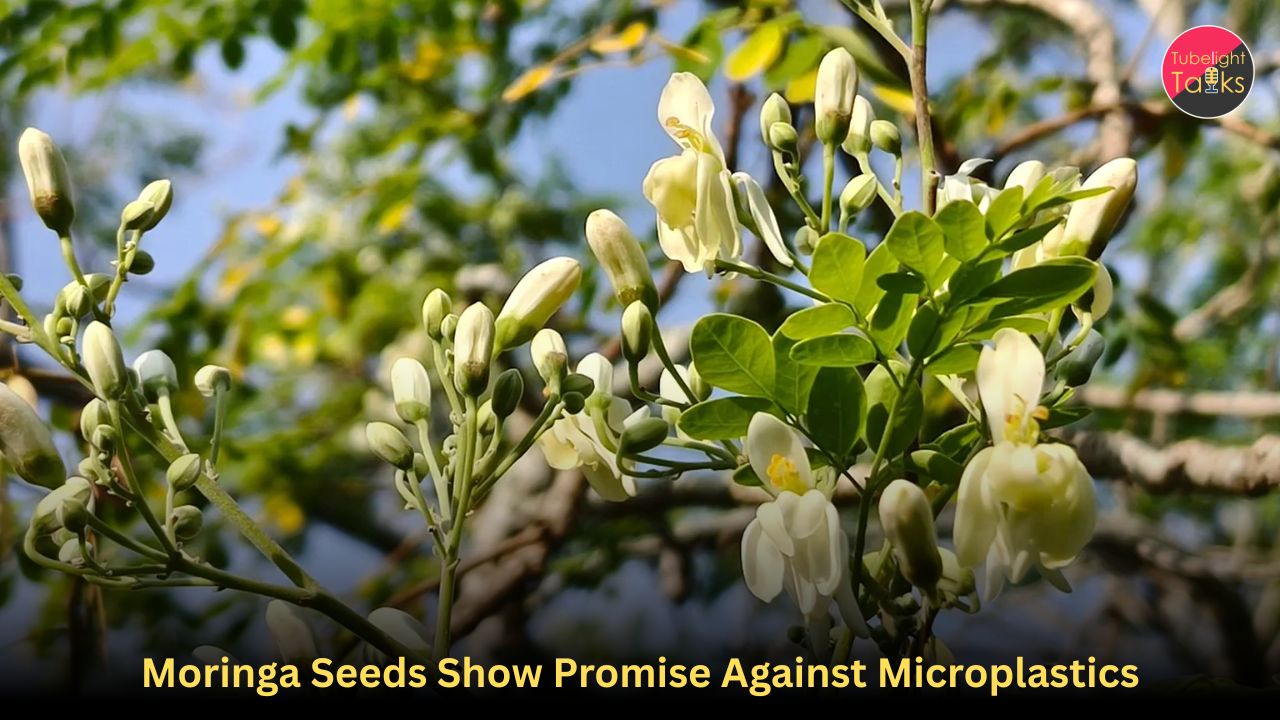
Moringa Seeds Offer Green Solution for Microplastic Removal
Researchers have found that extracts from Moringa oleifera seeds can help remove microplastics from drinking water by causing tiny plastic particles to clump together for filtration. The study, published in ACS Omega, suggests moringa could become a sustainable alternative to conventional chemical coagulants in certain water-treatment settings.
How Moringa Removes Microplastics
Microplastics carry electrical charges that make them difficult to filter. Moringa seed extract acts as a natural coagulant, neutralising charges and helping particles clump together.
Comparable to Chemical Treatments
Researchers found that moringa seed extract performed similarly to aluminium sulfate in the coagulation step and, in some conditions, matched or outperformed standard treatments.
Also Read: New Imaging Technique Captures Matter in Trillionths of a Second
Why Microplastics Are a Concern
Microplastics are particles smaller than 5 millimetres and are now found in water, food chains and even human tissues. Their long-term health impact remains an active research concern.
Potential for Small Communities
Because moringa is plant-based, biodegradable and widely grown in many tropical regions, it may be useful for small-scale or rural water treatment. However, large municipal use needs more testing.
Limitations Remain
Natural coagulants can add dissolved organic material to water, which may require additional treatment. Researchers must test real-world water sources, scaling methods and long-term safety.
Clean Water and Human Duty
Sant Rampal Ji Maharaj’s social reform message highlights compassion and service. Clean water is a basic human need, and scientific solutions should serve communities without harming nature.
Call to Action
Water authorities and researchers should test plant-based purification methods carefully. Citizens should reduce plastic use and support cleaner water practices.
FAQs: Moringa Seeds Show Promise Against Microplastics
Q1. What plant is used in this study?
Moringa oleifera seeds are used.
Q2. How does moringa remove microplastics?
It helps plastic particles clump together for filtration.
Q3. Is it better than chemical coagulants?
In some conditions, it matched or outperformed aluminium sulfate.
Q4. Can people use it directly at home?
Home use should not replace certified water treatment without safety guidance.
Q5. Why is this discovery important?
It offers a low-cost, plant-based route for cleaner drinking water research.
Related Stories









Discussion (0)