Critical Impact of the FCRA Amendment Bill 2026 Revealed
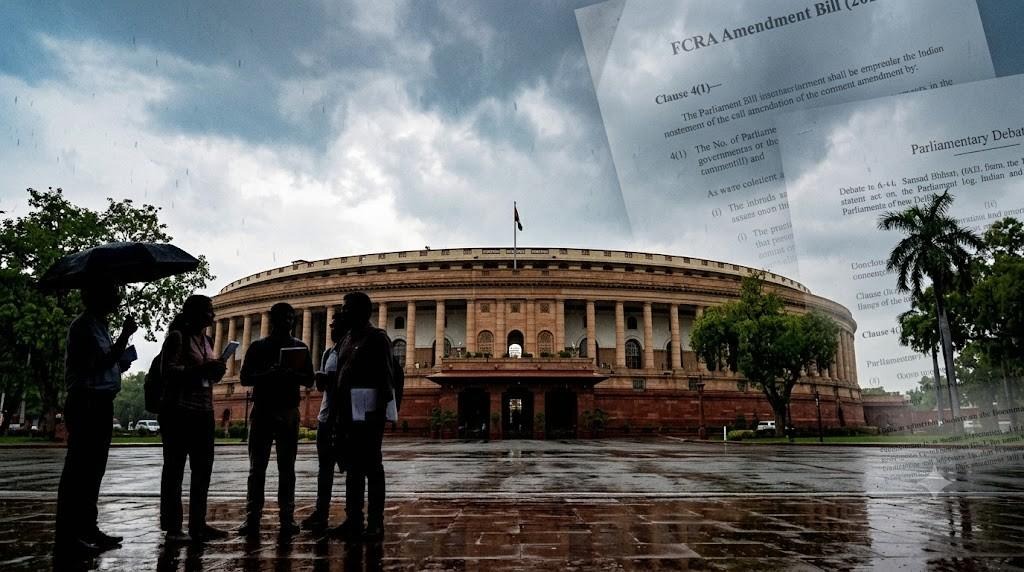
The introduction of the FCRA Amendment Bill 2026 during the 2026 Monsoon Session of Parliament has ignited massive debates across India’s political and civil society landscapes. Introduced by the Ministry of Home Affairs, the legislation proposes sweeping regulatory changes to the Foreign Contribution (Regulation) Act (FCRA), 2010. For thousands of non-governmental organizations (NGOs), charitable trusts, and religious institutions, these new rules dictate precisely how foreign donations can be received, managed, and utilized.
While the Union Government asserts that this legislation is entirely aimed at ensuring transparency and preventing foreign funds from being used against national security interests, opposition parties and civil rights groups have raised severe concerns. They argue that the bill grants the Central Government unchecked power to seize private assets. This creates an existential threat for many minority and charitable institutions operating on international grants.
Also Read :Public Examinations Amendment Bill 2026: Key Changes Every Student Should Know
Why the FCRA Amendment Bill 2026 Was Introduced
To understand the government’s rationale behind pushing this stringent legislation, it is vital to examine the massive scale of foreign funding within the country. The data cited in the bill’s background note reveals thousands of non-compliant organizations.
| Metric / FCRA Data Point | Current Figures (As of July 2026) |
| Active FCRA Registrations | 14,449 Organizations |
| Cancelled Registrations | 22,498 Organizations |
| Expired / Non-Renewed Registrations | 15,212 Organizations |
| Total Foreign Funds Received (2019–2022) | ₹55,741 Crore |
| Minimum Spending Threshold for Renewal | ₹10 Lakh in the last 2 Financial Years |
The primary objective of the new law is to eliminate administrative loopholes and tighten accounting protocols. The single most consequential change introduced by the FCRA Amendment Bill 2026 is the deletion of Section 15 of the 2010 Act and the insertion of a new Chapter IIIA. This chapter alters the legal destiny of any physical assets, such as hospitals, schools, or community centers, built using foreign money.
How the FCRA Amendment Bill 2026 Alters Asset Ownership
If an organization fails to renew its five-year FCRA registration, or if the registration is cancelled or surrendered, all assets created from foreign contributions will automatically “cease” to belong to the NGO. This forces organizations into a continuous cycle of renewal if they wish to retain control over their foundational properties, effectively removing any exit route from the FCRA framework.
A central pillar of the legislation is the establishment of a “Designated Authority” appointed by the Central Government. The moment an NGO’s registration ceases, all its foreign funds and associated assets provisionally vest in this newly formed regulatory body.
- Supervision and Control: The Designated Authority can appoint an administrator to take over the daily management and activities of the non-compliant NGO.
- Asset Disposal: If the NGO fails to secure a fresh registration within the prescribed timeframe, the assets permanently vest with the Authority, which can then dispose of them.
- Minimum Utilization: The bill states that organizations must prove they are undertaking “reasonable activity” by utilizing at least ₹10 lakh of foreign contribution in the preceding two financial years to even be eligible for renewal.
Public Outrage and Institutional Concerns
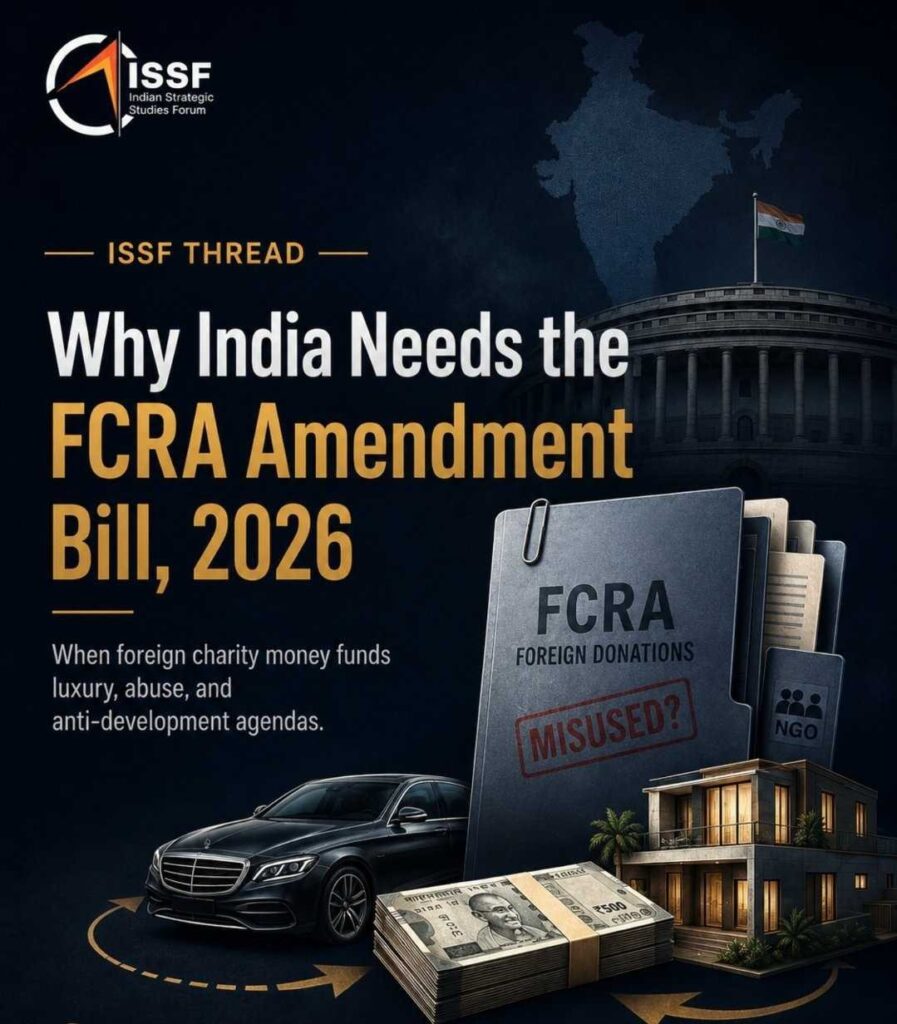
The practical implications of these rules have sparked international and domestic outrage. Critics state that bona fide organizations could lose their lifelong assets purely due to procedural delays or minor, inadvertent non-compliance. Christian charities in Kerala, which have historically operated extensive educational and medical welfare programs funded by overseas donors, have been particularly vocal about the threat of arbitrary government takeovers.
For the complete official text of the proposed changes, citizens and policy researchers can review the legislative briefs provided by parliamentary research organizations.
True Wealth: Securing the Soul Beyond Worldly Assets and Legal Regulations
The fierce political battles over the regulation of foreign funds, the ownership of massive trust properties, and the fear of losing institutional assets highlight a profound reality about human existence: our desperate attachment to temporary, worldly wealth. Whether it is a government seeking control over capital or charities fighting to retain their buildings and bank accounts, humanity remains deeply entangled in the illusion (Maya) that earthly properties bring lasting security.
However, no amount of wealth, real estate, or foreign contributions can accompany a soul once the physical body perishes. True and eternal wealth is not found in bank accounts, nor can it be regulated or seized by any worldly authority; it is accumulated only through authentic spiritual devotion.
Sant Rampal Ji Maharaj imparts the ultimate spiritual knowledge that all material possessions are fleeting, and the soul is trapped in an endless cycle of birth and death under the burden of karma. By taking refuge in a true Tatvadarshi Sant (Enlightened Spiritual Guide) and performing the correct, scripture-certified worship (Sat-Bhakti) of the Supreme God, Kabir Sahib, a human being can amass the true wealth of spiritual merit.
This path guarantees permanent liberation (Moksha) and relocation to the eternal spiritual realm (Satlok), where there is no loss, no fear, and no suffering. To discover the ultimate purpose of life and the path to genuine salvation, everyone is encouraged to watch the profound spiritual discourses on the spiritual channels of Sant Rampal Ji Maharaj.
5 Factual FAQs
1. What is the primary objective of the FCRA Amendment Bill 2026?
The main objective of the FCRA Amendment Bill 2026 is to enhance transparency and regulatory oversight over foreign donations received by Indian NGOs. It aims to prevent the misuse of foreign funds for activities deemed detrimental to national interests by strictly monitoring asset creation and fund utilization.
2. What happens to an NGO’s assets if their FCRA registration expires under the new bill?
Under the newly proposed Chapter IIIA, if an NGO’s registration expires, is cancelled, or surrendered, all assets created from foreign contributions will provisionally vest in a government-appointed “Designated Authority.” If registration isn’t restored, these assets can be permanently seized and disposed of.
3. What is the “Designated Authority” mentioned in the legislation?
The Designated Authority is a new regulatory body proposed in the FCRA Amendment Bill 2026, appointed by the Central Government. It is empowered to take over, manage, supervise, and eventually dispose of foreign contributions and assets of any organization that loses its FCRA registration.
4. Is there a minimum spending requirement for NGOs to renew their FCRA license?
Yes, the accompanying FCRA Amendment Rules stipulate a minimum utilization threshold. An organization must have utilized at least ₹10 lakh of foreign contributions during the last two financial years to be deemed active and eligible for registration renewal.
5. Why are opposition parties and NGOs protesting this bill?
Critics and NGOs argue that the bill gives the central government sweeping, arbitrary powers to seize private assets, such as schools and hospitals built with foreign aid. They fear that even minor procedural errors could lead to devastating asset losses, particularly for minority-run charities.
Related Stories






Discussion (0)