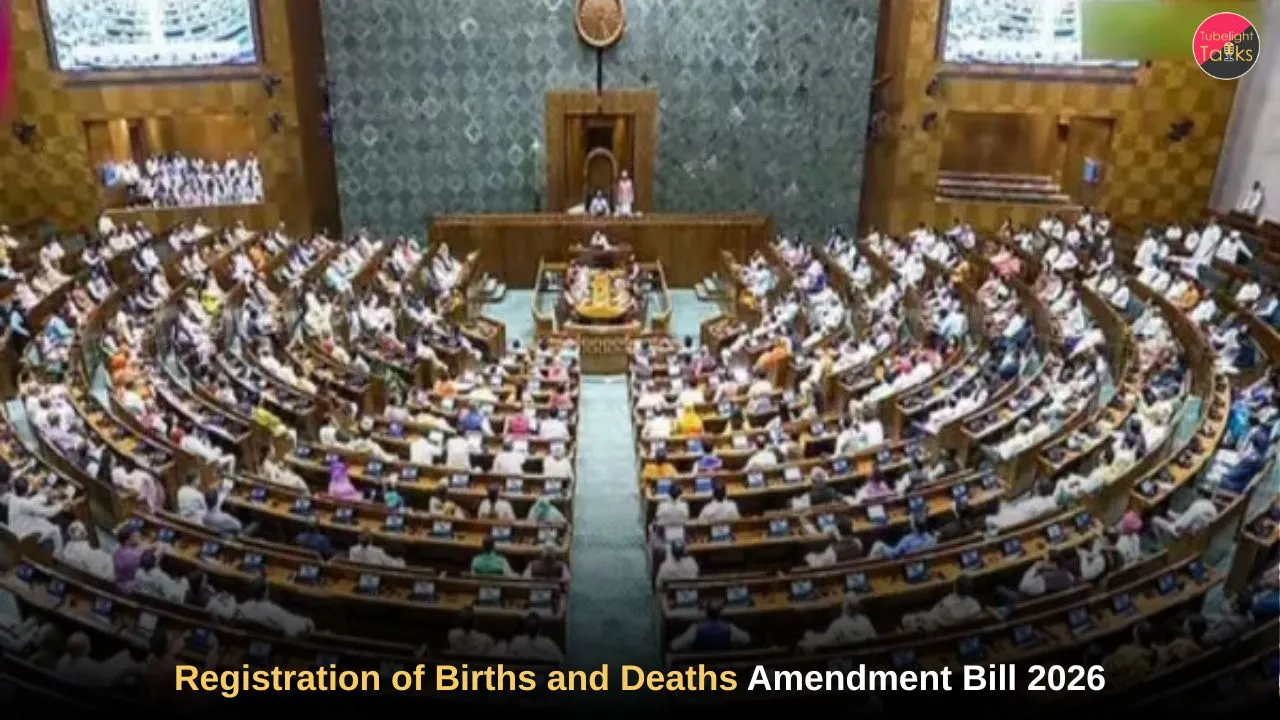
Registration of Births and Deaths Amendment Bill 2026 Passed by Parliament: Key Changes to Delayed Registration Rules Explained
The Registration of Births and Deaths Amendment Bill 2026 has been passed by Parliament after receiving approval from both the Lok Sabha and the Rajya Sabha. The Bill amends the Registration of Births and Deaths Act, 1969, to make delayed registration of births and deaths more stringent while encouraging timely reporting. The proposed changes come as India records near-universal birth and death registration, with the government aiming to strengthen the integrity of the country’s civil registration system and prevent misuse.
Registration of Births and Deaths Amendment Bill 2026 Passed by Parliament
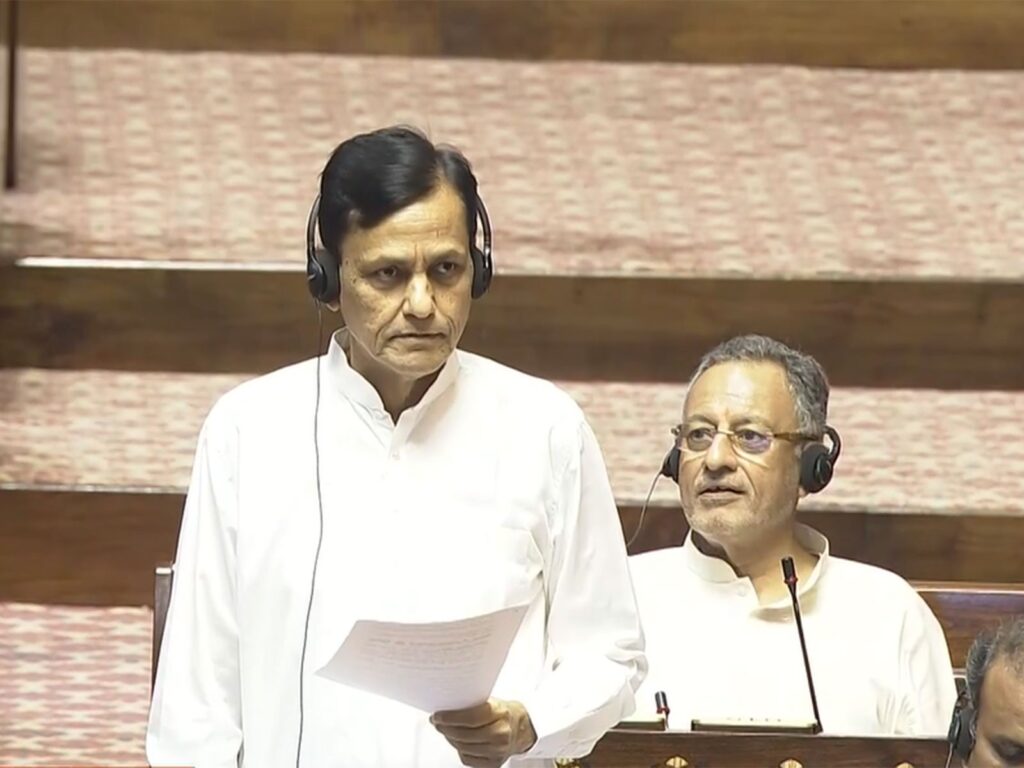
Source: ANI
Parliament has passed the Registration of Births and Deaths Amendment Bill 2026, with the Rajya Sabha approving the legislation after it had already been passed by the Lok Sabha. The Bill was moved in the Upper House by Minister of State for Home Nityanand Rai.
Also Read: How a Bill Becomes a Law in India: A Simple and Complete Guide
The legislation seeks to amend the Registration of Births and Deaths Act, 1969, with the primary objective of making provisions relating to delayed registration more stringent while encouraging the timely reporting of births and deaths across the country.
According to the Statement of Objects and Reasons, the amendment follows consultations with States, Union Territories and other stakeholders after the Registration of Births and Deaths (Amendment) Act, 2023 came into force.
Why the Registration of Births and Deaths Amendment Bill 2026 Has Been Introduced
The government stated that the amendment aims to strengthen scrutiny in cases of delayed registration and prevent the possible misuse of birth and death records.
Replying to the debate in the Rajya Sabha, Nityanand Rai said the amendment had been introduced in view of the possible misuse of delayed registration. He said the government’s intention is to ensure that every child born in the country is properly registered while preventing improper or manipulated registrations carried out for vested interests.
The Minister also stated that every death should be recorded in a timely manner so that there is no scope for misuse or irregularities in official records.
The proposal also comes after birth certificates assumed greater legal significance under the 2023 amendment, becoming the primary proof of date and place of birth for individuals born on or after 1 October 2023 for school admissions, government employment, electoral rolls, passports and other notified purposes.
What Changes Under the Registration of Births and Deaths Amendment Bill 2026?
The amendment modifies the provisions relating to delayed registration under Section 13 of the Act.
| Delay Period | Approval Required |
| Within 21 days | Registration under existing provisions |
| More than 1 year but within 2 years | District Magistrate, Sub-Divisional Magistrate or Executive Magistrate authorised by the District Magistrate after verification |
| More than 2 years | Order of a Judicial Magistrate First Class after verification |
The Bill partly revisits the 2023 amendment by restoring judicial scrutiny for registrations delayed beyond two years while retaining executive approval for delays between one and two years.
Registration of Births and Deaths Amendment Bill 2026: Civil Registration System Shows Near-Universal Coverage
The proposed amendment comes even as official data indicates that India has nearly achieved universal registration.
According to the Civil Registration System (CRS) 2024 Report:
| Indicator | Data |
| Births Registered | 2.55 crore |
| Deaths Registered | 89.38 lakh |
| Birth Registration | 99.1% |
| Death Registration | 99.4% |
| States/UTs with 100% Birth Registration | 18 |
| States/UTs with 100% Death Registration | 21 |
During the Rajya Sabha debate, Nityanand Rai also informed the House that nearly 3.5 lakh registration units are functioning across India.
Also Read: Lok Sabha Passes Online Gaming Bill 2025: Redefining the Path of India’s Digital Economy
He said birth registration had increased from around 86.6% in 2014 to over 99% in 2024, while death registration rose from around 72.5% to 99.4% during the same period. According to the Minister, India is progressing confidently towards universal and accurate birth and death registration.
Registration of Births and Deaths Amendment Bill 2026: Timely Reporting Remains the Main Challenge
Although overall registration has reached near-universal levels, the CRS 2024 Report highlights that timely reporting continues to vary across States.
Under the Registration of Births and Deaths Amendment Bill 2026, births and deaths are required to be reported within 21 days.
The report notes:
- Only 13 States and Union Territories registered more than 90% of births within 21 days.
- Andhra Pradesh and Odisha recorded between 80% and 90%.
- Telangana, Karnataka, Maharashtra, Uttar Pradesh and several other States registered between 50% and 80%.
- Bihar, Jammu and Kashmir, Uttarakhand, Manipur, Arunachal Pradesh, Nagaland and Ladakh registered half or fewer births within the prescribed period.
A similar trend was recorded for death registration, where only seven States and Union Territories crossed the 90% mark within the statutory period.
The report distinguishes between eventual registration and timely reporting, indicating that while almost all births and deaths are ultimately registered, compliance with the 21-day reporting requirement remains uneven.
Registration of Births and Deaths Amendment Bill 2026: Debate in Parliament
Participating in the discussion, BJP MP Darshana Singh said birth and death registration is not merely an administrative process but an important identity document for every citizen. She said the system has been digitised, making records more secure, reliable, transparent and technology-driven.
BJD MP Dr Santrupt Misra expressed concern over requiring Judicial Magistrate First Class approval after two years, stating that courts are already burdened with pending cases.
YSRCP MP Meda Raghunadha Reddy said his party supports efforts to strengthen the integrity of India’s civil registration system and prevent identity fraud. He stated that before 2000, only about 56% of births and 48% of deaths were registered nationally, adding that a reliable civil registration system is essential for legal identity, governance, policy planning and public service delivery.
Members including Phulo Devi Netam (Congress), Mamata Thakur (TMC), Ravi Chandra Vaddiraju (BRS) and M. Dhanapal (AIADMK) also participated in the discussion.
Registration of Births and Deaths Amendment Bill 2026: Enforcement and Existing Challenges
The CRS 2024 Report also highlights uneven enforcement of existing provisions.
Section 23 of the Registration of Births and Deaths Act empowers authorities to impose penalties for failure to report births and deaths or for providing false information. However, the report states that most State Governments are not imposing penalties.
During 2024:
- Twenty-eight States and Union Territories imposed no penalties.
- Bihar did not furnish information.
- Rajasthan collected more than ₹7 lakh across 2,550 cases.
- Tamil Nadu imposed penalties in 15 cases.
- Karnataka and Gujarat preferred counselling over punitive action.
- Haryana attributed the reduced need for penalties to online registration.
The report also notes that several States and Union Territories did not furnish inspection data despite statutory inspection powers being available.
What the Amendment Means Going Forward
The Registration of Births and Deaths Amendment Bill 2026 strengthens scrutiny for registrations reported more than two years after the event while retaining executive approval for delays between one and two years. According to the government, the objective is to promote timely reporting, safeguard the integrity of birth and death records, and reduce the possibility of fraudulent or manipulated registrations. As of 5 August 2026, Parliament has passed the Bill, while the next step is the Presidential assent before the amendment comes into force.
Every Law Reflects Greater Justice
Every society functions through laws that safeguard order, transparency and accountability. In the same way, spiritual wisdom teaches that the Supreme Law of God governs every human action. Just as violating civil laws may invite legal consequences, violating the Divine Constitution through dishonesty, corruption, deception, harming others or practising worship contrary to the Holy Scriptures is believed to result in the consequences of one’s own karma.
Spiritual teachings emphasise living truthfully, avoiding wrongdoing and following Scriptural worship under the guidance of a Complete Guru. To understand this Divine Knowledge and the true principles of righteous living, listen to the spiritual discourses of Tatvdarshi Sant Rampal Ji Maharaj.
For More Information Do Visit Sant Rampal Ji Maharaj YouTube Channel.
FAQs on Registration of Births and Deaths Amendment Bill 2026
1. What is the Registration of Births and Deaths Amendment Bill 2026?
It is a Bill passed by Parliament to strengthen rules governing delayed registration of births and deaths.
2. What happens if registration is delayed by more than two years?
Registration will require an order from a Judicial Magistrate First Class after verification.
3. Why was the amendment introduced?
The government said it aims to prevent misuse of delayed registration and encourage timely reporting.
4. What does the CRS 2024 Report show?
It reports 99.1% birth registration and 99.4% death registration across India.
5. Has the Bill become law?
As of 5 August 2026, Parliament has passed the Bill. Presidential assent is the next step before it comes into force.
Related Stories









Discussion (0)