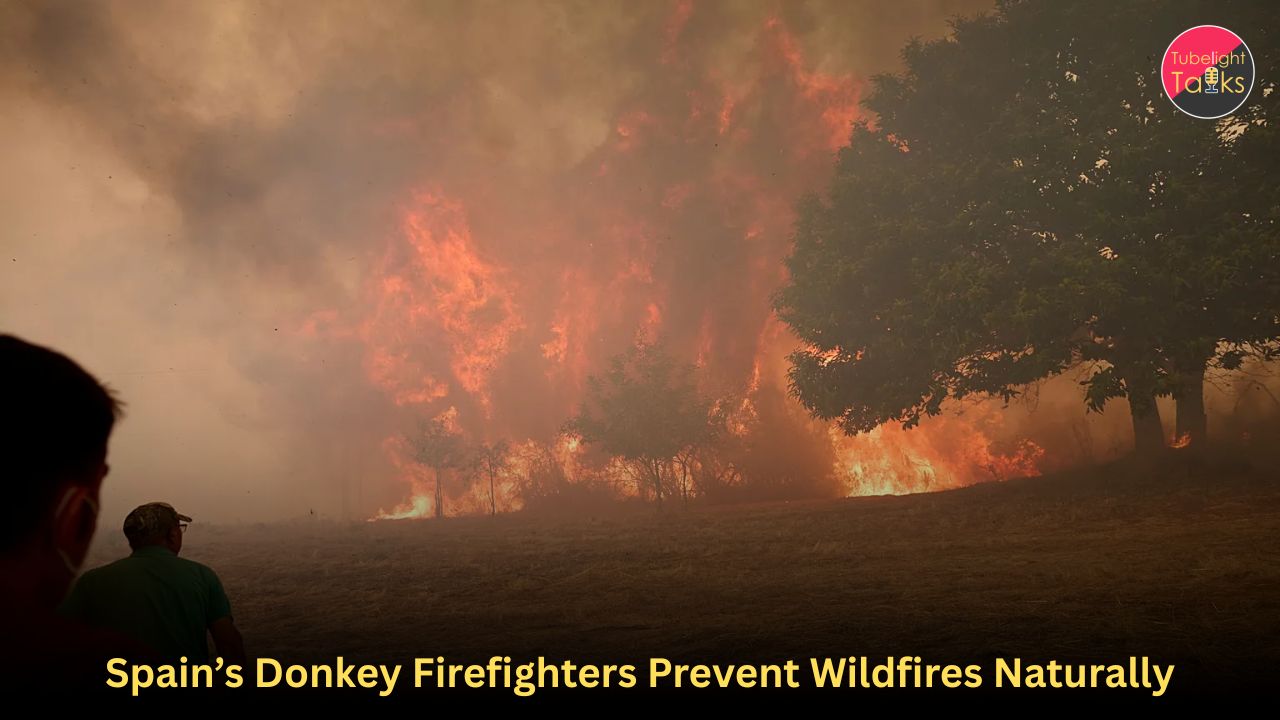
Solar-Powered “Donkey Firefighters”: Spain’s Rescued Donkeys Clear Dry Brush to Prevent Wildfires
Spain’s “donkey firefighters” have become an inspiring example of low-cost, nature-based wildfire prevention. In Doñana, Galicia, and Catalonia, donkeys are used to graze dry vegetation and reduce plant fuel that can feed summer wildfires. Euronews reports that donkeys including Mortadelo, Magallanes, Leonor, and Ainoa work for up to seven hours a day between March and November, grazing assigned strips and removing dry vegetation.
National Geographic reports that the Doñana project has been active since around 2014 with 18 rescued donkeys from El Burrito Feliz.
Why Spain Needs New Wildfire Solutions
Spain faces intense wildfire risk due to heat, drought, abandoned rural land, and accumulated dry vegetation. When grasses, shrubs, and undergrowth build up, forests become highly flammable. Traditional firefighting remains essential, but prevention is increasingly important because stopping a fire before it starts is safer, cheaper, and better for ecosystems.
How Donkeys Prevent Fires
The idea is simple. Donkeys eat dry grasses, shrubs, and undergrowth that would otherwise become wildfire fuel. Their grazing creates natural firebreaks, especially in areas where machines may be too costly, invasive, or difficult to use. Euronews reports that these animals graze strips of about 40 metres by 15 metres, reducing fire risk in assigned areas.
Also Read: New Wildfire Devastates LA: 10,000 Acres Scorched, Thousands Evacuated
Rescued Animals with a New Purpose
National Geographic reports that since around 2014, 18 donkeys have patrolled the outskirts of Doñana National Park through the association El Burrito Feliz, which rescues animals from abandonment. The association’s president, Luis Manuel Bejarano, describes the donkeys as “herbivorous firefighters,” a phrase that captures both their charm and practical value.
Daily Routine of the Donkey Brigade
The donkeys follow a structured plan. They patrol around mobile firebreak lines marked by fences, graze for hours, drink water, and return to rest. National Geographic reports that they work from March through November and consume flammable material in their assigned area, dramatically reducing fire risk.
Why Donkeys Work Better in Some Landscapes
Donkeys can digest coarse, dry vegetation that some other grazing animals avoid. They are hardy, sure-footed, and well suited to Mediterranean scrubland. Their slow, steady grazing also avoids the heavy soil disturbance that machines can cause. This makes them especially useful as part of a wider land-management plan.
A Complement, Not a Replacement
Donkey grazing is not a substitute for professional firefighters, forest planning, early warning systems, or emergency response. It is a preventive tool. Used properly, it can reduce fuel load and give human fire crews a better chance if a blaze starts. The biggest lesson is that traditional ecological knowledge and modern climate planning can work together.
Nature’s Simple Wisdom
Spain’s donkey firefighters show that sometimes solutions do not need to be complicated; they need to be wise, compassionate, and consistent. Sant Rampal Ji Maharaj’s teachings also guide humanity toward simplicity, non-violence, discipline, and respect for all living beings. A rescued animal serving nature reminds us that every life has value when placed in the right direction. True spiritual knowledge teaches humans to live responsibly with creation instead of exploiting it blindly.
Call to Action
Prevent Fires Before They Begin
Wildfire prevention must include local communities, ecological grazing, forest maintenance, and climate preparedness.
Support Nature-Based Solutions
Authorities and citizens should support humane animal care, responsible land management, and sustainable fire-prevention models.
FAQs: Spain’s Donkey Firefighters Prevent Wildfires Naturally
1. What are Spain’s donkey firefighters?
They are donkeys used to graze dry vegetation and reduce wildfire fuel in high-risk areas.
2. Where is the best-known project located?
The best-known project is around Doñana National Park in Spain.
3. Are the donkeys rescued animals?
Yes. National Geographic reports that the Doñana donkeys come from El Burrito Feliz, which rescues abandoned animals.
4. How do they reduce wildfire risk?
They eat dry grasses and shrubs, creating natural firebreaks and reducing combustible vegetation.
5. Can donkeys replace firefighters?
No. They are a preventive tool that supports, but does not replace, professional firefighting and forest management.
Related Stories










Discussion (0)