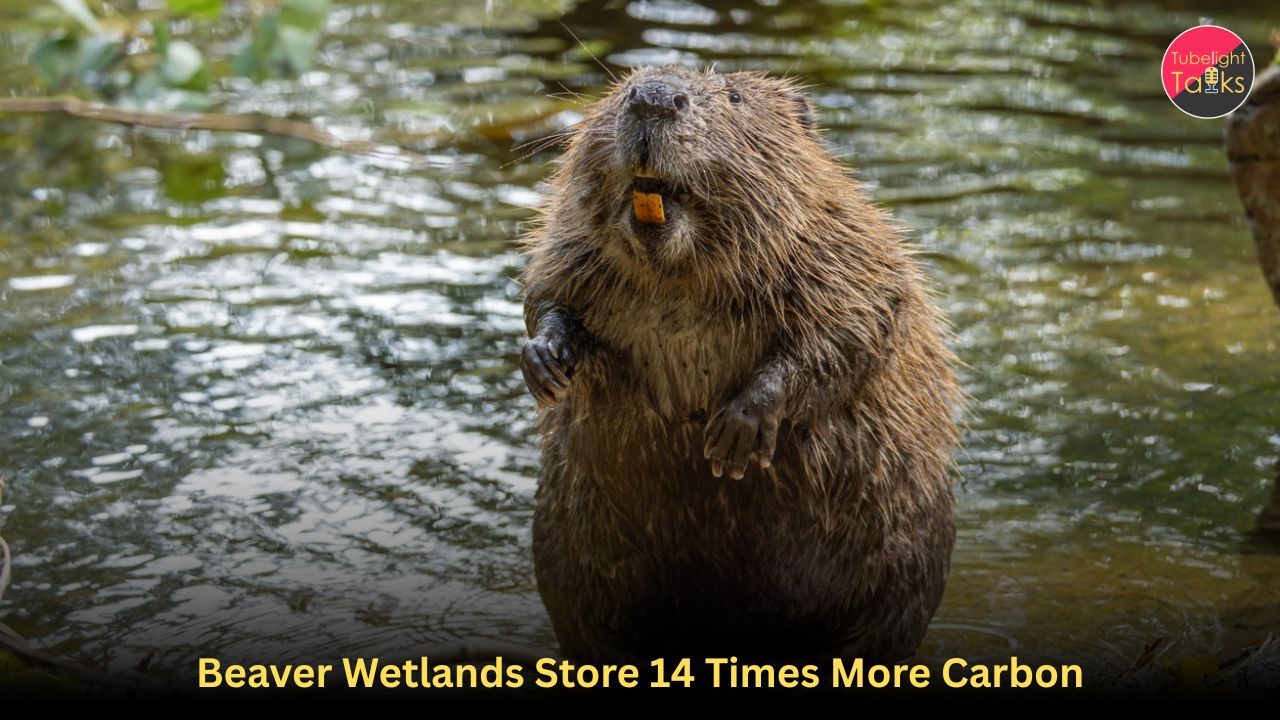
Beaver Engineering for Climate: Beaver-Built Wetlands Store Far More Carbon Than Surrounding Forest Soils
New research has confirmed that beavers can transform stream corridors into powerful and persistent carbon sinks. A study published in Communications Earth & Environment found that beaver-created wetlands substantially increased organic and inorganic carbon storage compared with adjacent forest soils or pre-beaver floodplain sediments. Wageningen University & Research reported that these sediments contained up to 14 times more inorganic carbon and eight times more organic carbon than surrounding forest soils.
Beavers as Ecosystem Engineers
Beavers are known as ecosystem engineers because they reshape landscapes by building dams, slowing water flow, expanding wetlands, and trapping sediments. These changes create new habitats for birds, fish, amphibians, insects, and plants. The latest research adds another benefit: long-term carbon storage.
What the Study Found
The Communications Earth & Environment paper reports that beaver-created wetlands increased organic carbon contents by 1.5 to 8.1 times and inorganic carbon contents by 2.1 to 14.9 times compared with adjacent forest soils or pre-beaver floodplain sediments. This supports the claim that beaver-engineered systems can significantly enhance carbon sequestration.
Also Read: Solar-Powered “Donkey Firefighters”: Spain’s Rescued Donkeys Clear Dry Brush to Prevent Wildfires
Carbon Storage Over 13 Years
Wageningen University & Research reported that over a 13-year period, the studied beaver wetland accumulated an estimated 1,194 tonnes of carbon, equivalent to 10.1 tonnes of carbon per hectare per year. The wetland acted as a net annual carbon sink of 98.3 ± 33.4 tonnes of carbon per year.
Why Wetlands Store Carbon
Wetlands store carbon because waterlogged sediments slow decomposition. Organic material, deadwood, and mineral carbon become buried and stabilized. Beaver dams also slow water and trap sediments, helping lock carbon into wetland soils rather than allowing it to quickly move downstream or return to the atmosphere.
Methane Concern and Study Findings
Wetlands can emit methane, which is a potent greenhouse gas. However, the study reported that methane emissions were negligible compared with the annual carbon budget and contributed only about 1% of the system’s global warming potential. This makes the studied beaver wetland a net climate-positive system over annual cycles.
Nature-Based Climate Solutions
The study suggests that beaver rewilding in suitable areas could support nature-based climate strategies. It does not mean beavers should be introduced everywhere. Beaver restoration must consider local ecology, agriculture, flood risk, landowners, and biodiversity needs. When done responsibly, however, beaver-led restoration can support carbon storage, water retention, biodiversity, and drought resilience.
Small Actions, Large Impact
The beaver’s work teaches a powerful lesson: even small beings can create a large positive impact when they act according to their natural duty. Sant Rampal Ji Maharaj’s teachings remind humans that righteous conduct, compassion, and true devotion can transform society in the same way that beavers transform degraded streams into living wetlands. Spiritual knowledge encourages people to protect nature, reduce destruction, and understand that creation is not meant for careless exploitation.
Call to Action
Restore Wetlands Responsibly
Beaver rewilding and wetland restoration should be guided by science, local participation, and ecological planning.
Support Nature-Based Climate Action
Governments, communities, and researchers should protect wetlands, restore river corridors, and value ecosystem engineers like beavers.
FAQs: Beaver Wetlands Store 14 Times More Carbon
1. What did the beaver wetland study find?
It found that beaver-created wetlands can store much more organic and inorganic carbon than nearby forest soils.
2. How much more carbon was stored?
The sediments contained up to 14 times more inorganic carbon and eight times more organic carbon than surrounding forest soils.
3. Are beavers good for climate action?
In suitable landscapes, beavers can support carbon storage, wetland restoration, biodiversity, and water regulation.
4. Do beaver wetlands emit methane?
Yes, but in this study methane emissions were negligible compared with the total annual carbon budget.
5. Should beavers be reintroduced everywhere?
No. Reintroduction should be done carefully after ecological, social, and hydrological assessment.
Related Stories










Discussion (0)