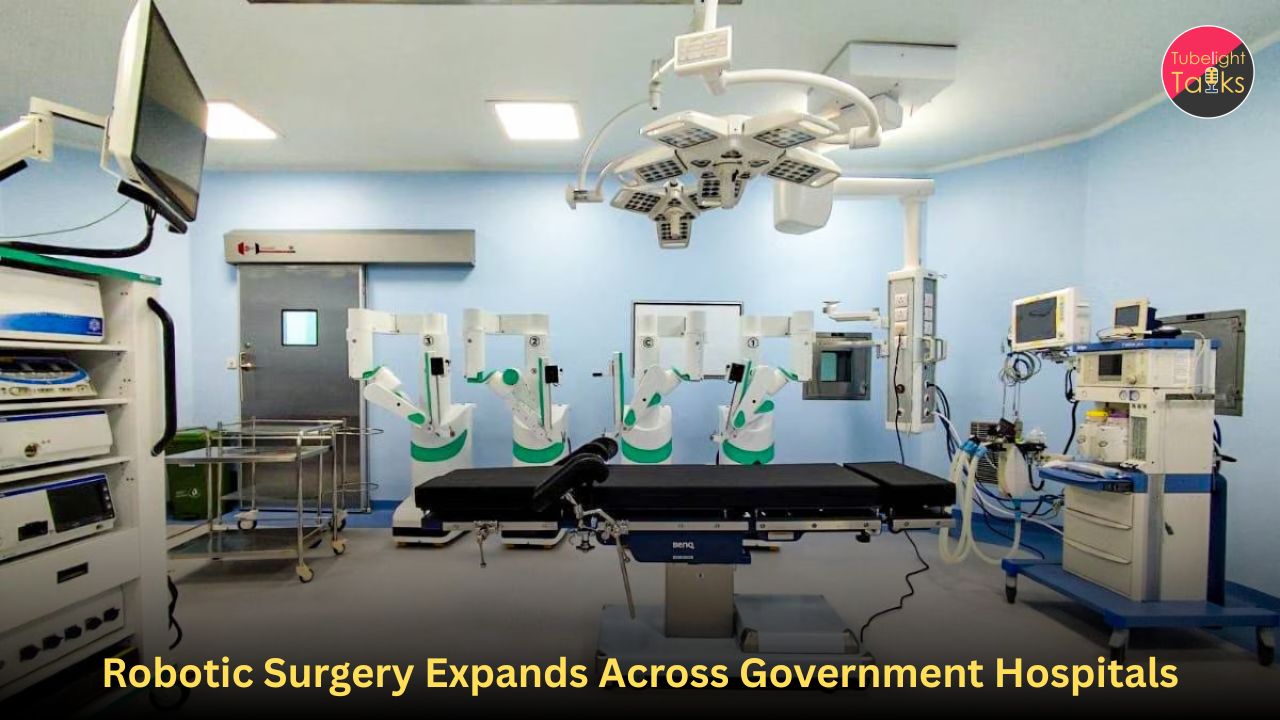
Robotic Surgery Expansion: AI-Enabled and Robotic Systems Strengthen Public Healthcare in India
India’s public healthcare system is witnessing a major technology shift as AI-enabled imaging and Robotic Surgery Expands across government hospitals and medical institutions. While the claim that AI-powered robotic assistants have become “standard use” in several government hospitals should be treated carefully, verified developments show clear progress.
KGMU Lucknow has installed AI-enabled MRI and robotic systems, AIIMS Delhi has crossed 1,000 robotic surgeries, AIIMS Raipur launched Central India’s first government robotic surgery facility, and Himachal Pradesh has expanded robotic surgery across government medical colleges.
KGMU Adds AI-Enabled and Robotic Systems
King George’s Medical University in Lucknow has installed advanced AI-enabled MRI and robotic systems to improve patient care. Reports say these technologies are expected to improve diagnosis, support early detection, assist procedures and increase efficiency in treatment planning.
AIIMS Delhi Crosses Robotic Surgery Milestone
AIIMS Delhi has reportedly completed more than 1,000 robotic surgeries since launching its robotic surgery programme. This milestone matters because AIIMS is India’s premier public medical institution, and its adoption of robotic surgery can influence training, affordability and wider public-sector confidence.
AIIMS Raipur Brings Robotic Surgery to Central India
In September 2025, AIIMS Raipur launched Central India’s first government robotic-assisted surgery facility. PIB quoted Chhattisgarh Chief Minister Vishnu Deo Sai as saying that robotic-assisted surgery would help patients access advanced treatment options and strengthen the state’s role in medical education and innovation.
Himachal Pradesh Expands Public Robotic Surgery
Himachal Pradesh has also moved to scale robotic surgery in government medical colleges. Reports say robotic surgery has been operationalised at AIMSS Chamiana and Tanda Medical College, while IGMC Shimla inaugurated a ₹28-crore robotic surgery facility for advanced minimally invasive procedures.
Why Robotic Surgery Matters
Robotic surgery can help doctors perform minimally invasive procedures with better precision, improved visualization, controlled movements and smaller incisions. This can reduce blood loss, tissue damage, hospital stay and recovery time in selected procedures. However, outcomes depend on surgeon training, patient selection, equipment maintenance and hospital protocols.
AI and Healthcare Delivery
A PIB document on artificial intelligence in healthcare noted that AI is helping address gaps in healthcare delivery, improve quality of medical devices, services and drugs, and make care more accessible and affordable. It also highlights the role of AI in early detection, clinical decision support and remote care.
Advanced Care Beyond Metro Cities
The expansion of robotic surgery in public hospitals can reduce the gap between private advanced care and government healthcare access. When such systems are available in AIIMS institutions and state medical colleges, patients from smaller cities and lower-income backgrounds may benefit from precision surgery without always depending on expensive private hospitals in metros.
Technology Needs Training and Ethics
Robotic surgery is powerful, but technology alone cannot replace medical skill. Doctors, nurses, technicians and administrators need proper training, maintenance support and ethical protocols. Public hospitals must ensure that robotic surgery is used where it genuinely benefits patients, not merely as a symbol of modern infrastructure. Affordability and patient safety must remain central.
Advanced Surgery Must Become Accessible
Robotic surgery in government hospitals can reduce the gap between private advanced healthcare and public medical services. If such technology is available only in expensive private hospitals, many patients will remain excluded. Its expansion in public institutions can help ordinary citizens access precision surgery, shorter recovery times, and better treatment options at lower cost, provided the system remains transparent and patient-focused.
Technology Cannot Replace Skilled Doctors
Robotic systems can support doctors, but they cannot replace medical judgment, training, and experience. Successful robotic surgery requires skilled surgeons, trained nurses, reliable maintenance teams, proper patient selection, and clear safety protocols. Public hospitals must ensure that technology is used where it genuinely improves outcomes rather than becoming only a symbol of modernization. Patient welfare must always remain the centre of medical innovation.
Precision in Surgery, Precision in Life
Robotic surgery shows the value of precision, discipline and correct guidance. Sant Rampal Ji Maharaj’s teachings also emphasize that spiritual life requires the correct method of worship, not guesswork or blind tradition. His official teachings state that Sant Rampal Ji Maharaj focuses on adopting the true method of worship and doing right karmas according to holy scriptures.
Call to Action
Make Advanced Surgery Accessible
Government hospitals should expand robotic surgery carefully with trained teams, transparent pricing and maintenance systems.
Prioritize Patients Over Technology Hype
Hospitals must use robotic systems where clinically appropriate and explain benefits, risks and alternatives clearly to patients.
FAQs: Robotic Surgery Expands Across Government Hospitals
1. Have robotic systems expanded in Indian government hospitals?
Yes. Verified examples include KGMU Lucknow, AIIMS Delhi, AIIMS Raipur and Himachal government medical colleges.
2. Has AIIMS Delhi achieved a robotic surgery milestone?
Reports say AIIMS Delhi has crossed 1,000 robotic surgeries.
3. Which government facility launched Central India’s first robotic surgery programme?
AIIMS Raipur launched Central India’s first government robotic-assisted surgery facility.
4. What are the benefits of robotic surgery?
It can improve precision, visualization and minimally invasive surgery outcomes in selected cases.
5. Is robotic surgery automatically better for every patient?
No. Suitability depends on the disease, procedure, surgeon expertise, patient condition and hospital resources.
Related Stories










Discussion (0)