Japan Earthquake: 7.1-Magnitude Quake Strikes Kyushu, Injures Dozens, Damages Infrastructure and Disrupts Transport
A powerful Japan Earthquake of 7.1-magnitude struck Japan’s southern Kyushu island on Tuesday, causing injuries, damaging buildings and transport infrastructure, disrupting power and communication services, and prompting a tsunami warning that was later lifted. Authorities launched emergency response operations while assessing the full extent of the damage. Officials also confirmed that no abnormalities were reported at nearby nuclear power plants.
Key Takeaways on Japan Earthquake
- A 7.1-magnitude earthquake struck Kumamoto Prefecture on Japan’s Kyushu island.
- The Japan Meteorological Agency (JMA) said the earthquake’s epicenter was 10 kilometres below the sea surface.
- A tsunami warning for waves of up to one metre (3.28 feet) was issued and later lifted by the JMA.
- Japanese Prime Minister Sanae Takaichi said injuries had been reported and a building had collapsed, while the full extent of casualties and damage was still being assessed.
- Reuters reported that at least 50 people were injured, while NHK said one hospital alone treated more than 50 injured people.
- More than 150,000 residents were instructed to move to evacuation centres.
- Around 40,000 homes lost electricity, and transport services across Kyushu faced major disruptions.
- Authorities confirmed that no irregularities were reported at nuclear power stations following the earthquake.
- The JMA warned residents to remain alert for strong aftershocks and possible landslides for about one week.
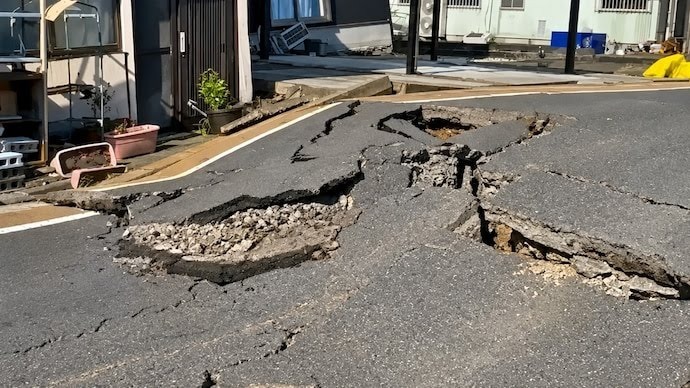
A 7.1-magnitude Japan Earthquake struck Kumamoto Prefecture on Japan’s southern main island of Kyushu on Tuesday, triggering widespread emergency response operations across the region. According to the Japan Meteorological Agency (JMA), the earthquake’s epicenter was located at a depth of 10 kilometres beneath the sea surface.
The Japanese government immediately issued emergency earthquake warnings for Kumamoto, Nagasaki, Kagoshima, Fukuoka, Saga, Oita and Miyazaki prefectures.
Also Read: Tibet Earthquake: Mild Tremor Jolts Xizang Region, No Immediate Casualties Reported
Prime Minister Sanae Takaichi said injuries had been reported and a building had collapsed. Speaking to reporters in Tokyo, she said authorities were still assessing the full extent of casualties and damage.
Injuries Reported as Emergency Response Begins: Japan Earthquake
Authorities prioritised emergency rescue operations following the earthquake.
According to Reuters:
- At least 50 people were injured.
- NHK reported that one hospital alone treated more than 50 injured people.
- The Nikkei newspaper reported that several passengers aboard a high-speed train were also injured.
The Prime Minister’s Office instructed relevant agencies to:
- Assess damage as quickly as possible.
- Prioritise saving human life.
- Spare no effort in emergency disaster response.
Following the earthquake, the JMA issued a tsunami warning for waves measuring up to one metre (3.28 feet).
Residents living along coastal areas were urged to:
- Move immediately to higher ground.
- Follow official evacuation instructions.
NHK reported that waves approaching the forecast height may already have been observed. Later, the JMA lifted the tsunami warning after further assessment.
Buildings, Roads and Transport Infrastructure Damaged | Japan Earthquake
The earthquake caused damage across several parts of Kumamoto and neighbouring areas.
According to NHK and Reuters:
- Multiple buildings were damaged.
- An Aeon shopping mall reportedly suffered an explosion.
- Television footage showed some buildings on fire or partially collapsed.
- Large cracks appeared on major roads, including an elevated highway.
- A goods train derailed.
- Rail services were suspended.
- High-speed bullet train services operated by JR Kyushu were halted.
- Kumamoto Airport closed its runway, resulting in flight cancellations and diversions.
An official at Kumamoto Castle also confirmed that sections of the castle’s historic stone walls collapsed during Tuesday’s earthquake.
Power, Telecommunications and Industrial Operations Affected | Japan Earthquake
The earthquake also disrupted utilities and industrial activity across Kyushu.
| Sector | Impact |
|---|---|
| Electricity | Around 40,000 homes lost power, according to Kyushu Electric Power. |
| Telecommunications | KDDI and Docomo reported disruptions due to power shortages and transmission-line failures. |
| Rail | JR Kyushu suspended several railway services, including bullet trains. |
| Aviation | Kumamoto Airport temporarily closed its runway. |
| Manufacturing | TSMC evacuated workers from its nearby plant as a precaution. Sony and Fujifilm also evacuated staff from facilities in the affected area, according to Nikkei. |
More than 150,000 people were instructed by Japan’s disaster management agency to move to evacuation centres.
Nuclear Facilities Remain Safe | Japan Earthquake
Japan’s Nuclear Regulation Authority confirmed that no irregularities were detected at nuclear power stations following the earthquake. Authorities continued monitoring critical infrastructure while emergency inspections remained underway.
Residents Warned About Aftershocks | Japan Earthquake
The Japan Meteorological Agency warned that residents in the hardest-hit areas should remain prepared for:
- Strong aftershocks over approximately one week.
- Increased landslide risks caused by continued seismic activity.
Officials urged residents to continue following official safety guidance
Japan’s Earthquake High Risk
Japan remains one of the world’s most seismically active countries because it lies along the western edge of the Pacific “Ring of Fire,” where four major tectonic plates meet.
According to the information provided:
- The country experiences hundreds of earthquakes every year.
- It accounts for about 18% of the world’s earthquakes in one reference and about 20% of earthquakes measuring magnitude 6.0 or higher in another.
- Tremors occur frequently, with earthquakes recorded regularly across the country.
- Although many earthquakes are relatively mild, their impact depends on location and depth.
Previous Major Japan Earthquakes Highlight Ongoing Seismic Threat
The latest Japan Earthquake follows several significant seismic events in recent years. A magnitude 7.2 earthquake struck northern Japan on June 25 but caused no deaths or major damage.
Earlier this year, a magnitude 7.7 earthquake on April 20 injured at least 10 people and shook large buildings in Tokyo, prompting authorities to issue a special advisory warning about an increased risk of earthquakes measuring magnitude 8.0 or stronger before lifting the advisory a week later.
Japan also continues to remember the devastating magnitude 9.0 undersea earthquake and tsunami in 2011, which killed or left around 18,500 people missing and severely damaged the Fukushima nuclear power plant.
Also Read: Afghanistan 5.9 Magnitude Earthquake Kills 8, Damages Homes Across Multiple Provinces
Separately, Kumamoto experienced a major earthquake ten years ago that killed 275 people, injured another 2,739 and caused extensive damage, including to Kumamoto Castle.
Authorities Continue Damage Assessment and Public Safety Measures
Emergency response operations remained underway as authorities continued assessing damage across affected areas.
Government agencies focused on rescue efforts, restoring disrupted services and monitoring infrastructure while urging residents to remain vigilant for aftershocks and to follow official safety instructions issued by local authorities and the Japan Meteorological Agency.
Reflecting on Life Beyond Temporary Suffering
Natural disasters such as earthquakes remind us that unexpected events continue to occur in this world despite human progress and preparedness. Such incidents encourage reflection on whether a place where suffering, loss, and uncertainty repeatedly exist can truly be our permanent home.
According to the Spiritual Knowledge imparted by Tatvdarshi Sant Rampal Ji Maharaj, the eternal abode of the Supreme God is Satlok, a realm where there is only everlasting peace, happiness, and freedom from sorrow. He explains that this present world is not the permanent abode of human beings and that souls have come here due to their own karmic actions.
FAQs on Japan Earthquak
1. Where did the 7.1-magnitude earthquake occur? The earthquake struck Kumamoto Prefecture on Japan’s southern Kyushu island.
2. Did the earthquake trigger a tsunami warning? Yes. The JMA issued a one-metre tsunami warning, which was later lifted.
3. How many people were injured? Reuters reported at least 50 injuries, while NHK said one hospital treated more than 50 injured people.
4. Were nuclear power plants affected? No. Japan’s Nuclear Regulation Authority reported no irregularities at nearby nuclear power stations.
5. What precautions have authorities advised? The JMA advised residents to remain alert for strong aftershocks and possible landslides for about one week.
Related Stories









Discussion (0)