Ocean Plastic Pollution: Innovative Solutions from Around the World
Ocean plastic pollution has reached a critical threshold, threatening marine biodiversity, global fisheries, and human health through microplastic accumulation. Every year, millions of metric tons of plastic waste enter marine ecosystems, degrading habitats and endangering countless species.
Fortunately, scientists, engineers, and environmental organizations worldwide are developing innovative solutions. From automated river interceptors that stop debris before it reaches the sea to advanced floating barriers that collect ocean waste, global technology and cooperation are helping turn the tide against marine degradation.
Also read: Moringa Water Filtration: Plant-Based Microplastic Removal Offers Hope for Safer Drinking Water
The Global Crisis of Ocean Plastic Pollution
Plastic waste is one of the most pressing environmental challenges of the 21st century. Because plastic takes hundreds of years to break down, it gradually disintegrates into harmful microplastics that contaminate marine food chains.
This ongoing contamination threatens wildlife, destroys coral reefs, and impacts human communities. Tackling ocean plastic pollution effectively requires a combined strategy of advanced technology, robust government policies, corporate responsibility, and heightened public awareness.
Advanced Technological Solutions for Ocean Plastic Pollution
Organizations such as The Ocean Cleanup have introduced groundbreaking technologies to remove floating plastic directly from the marine environment.
Floating Ocean Cleanup Systems
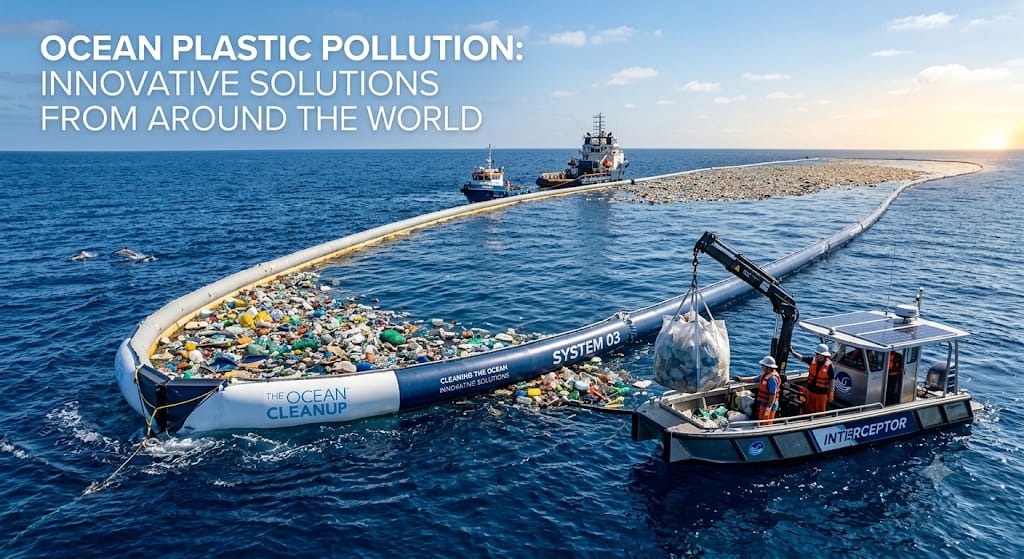
Their flagship innovation, System 03, utilizes a 2.2-kilometer floating barrier designed to collect waste in highly contaminated zones like the Great Pacific Garbage Patch. Natural ocean currents guide floating debris directly into the retention zone.
To ensure safety, the system incorporates features like the Marine Animal Safety Hatch (MASH), which allows marine life to escape unharmed while securing captured waste.
Automated River Interceptors
Stopping waste before it enters the sea is one of the most cost-effective strategies available. Solar-powered River Interceptors automatically collect floating waste from rivers using conveyor belts and automated onboard containers.
These autonomous systems are currently operating across key waterways in Asia, Latin America, and North America, intercepting trash at the primary source.
| Cleanup Stage | System / Method | Primary Function |
| River Interceptors | Solar-Powered Conveyor Belts | Stops plastic waste in rivers before reaching the sea |
| Coastal Cleanup | Shoreline & Beach Restoration | Protects sensitive beaches and coastal ecosystems |
| System 03 | 2.2-Kilometer Floating Barrier | Remediates legacy plastic in the Great Pacific Garbage Patch |
Biological and Circular Economy Solutions
Habitat Restoration and Nature-Based Systems
Nature-based strategies provide a biological defense against environmental contamination. Large-scale oyster restoration projects significantly improve water quality by naturally filtering suspended sediments and organic pollutants.
Healthy coastal ecosystems become naturally more resilient, helping mitigate the long-term damage caused by chemical runoff and microplastics.
Circular Economy Innovations
Recovered marine debris is increasingly being integrated into circular supply chains. Collected waste is cleaned, processed, and transformed into consumer goods, apparel, and sustainable construction materials.
Many international organizations now utilize digital traceability systems to confirm that recovered waste is responsibly recycled rather than routed back into municipal landfills.
Global Policy and International Cooperation
Technological breakthroughs alone cannot solve the environmental crisis without regulatory support. Nations worldwide are actively negotiating the UN Global Plastics Treaty to establish binding international standards.
This landmark agreement aims to restrict single-use plastics, enforce Extended Producer Responsibility (EPR), and modernize waste management infrastructure globally.
Satgyaan: Spiritual Wisdom and Environmental Stewardship
Environmental degradation is not merely a physical challenge; it is also a reflection of excessive consumerism and human greed.
According to the spiritual teachings of Sant Rampal Ji Maharaj, true Satgyan imparts respect for every creation of Supreme God Kabir Saheb. When individuals embrace simplicity, contentment (Santosh), and moral living, unnecessary consumption naturally decreases.
While advanced technology can clean our waters, lasting environmental preservation requires moral integrity and spiritual awareness. Together, scientific innovation and righteous living will safeguard Earth’s precious marine ecosystems for generations to come.
Frequently Asked Questions (FAQs)
Q1. What is the primary cause of ocean plastic pollution?
The primary drivers of ocean plastic pollution include mismanaged municipal waste, uncollected single-use plastics, industrial runoff, and abandoned commercial fishing gear entering waterways.
Q2. How does System 03 combat ocean plastic pollution in the Pacific?
System 03 uses a massive 2.2-kilometer floating barrier towed between vessels to gather floating debris in the Great Pacific Garbage Patch, channeling waste into a retention zone while protecting marine life.
Q3. Why are river interceptors vital in stopping ocean plastic pollution?
River interceptors trap floating debris in major river systems before it flows into open waters, offering a high-efficiency solution that prevents long-term marine contamination.
Q4. What happens to plastic waste after it is collected from the sea?
Once retrieved, the waste is sorted, processed, and recycled into high-quality raw materials for apparel, footwear, packaging, and construction products via certified recycling partners.
Q5. How can individuals help reduce ocean plastic pollution daily?
Individuals can combat ocean plastic pollution by eliminating single-use plastics, participating in local beach or river cleanups, supporting circular products, and practicing conscious consumer habits.
Related Stories




Discussion (0)