World Breastfeeding Week 2026: Proven Support Systems and Global Health Impact
World Breastfeeding Week 2026 is being observed globally from 1 August to 7 August to raise vital awareness about the importance of breastfeeding. Supported by the World Health Organization (WHO), UNICEF, Ministries of Health, and civil society organizations, this campaign safeguards the health and well-being of both infants and mothers. This year’s focus lies in strengthening proven interventions and encouraging sustained support across communities.
To ensure success, governments, healthcare systems, workplaces, and families must collaborate to provide an empowering environment for breastfeeding mothers. The initiative underscores that a sustainable start in life begins with proper nutrition and unwavering community backing.
Also read: Rising Cancer Cases in India: An Alarming Reality
Why World Breastfeeding Week 2026 Focuses on Sustainable Support
The official theme for World Breastfeeding Week 2026, “Breastfeeding for a Sustainable Start in Life: Strengthen What Works,” focuses heavily on tracking progress and evaluating impact. It aims to expand upon approaches that have already demonstrated highly positive breastfeeding outcomes globally.
According to the global campaign, governments, health systems, workplaces, and families are deeply encouraged to strengthen the “Warm Chain of Support.” Building upon successful past experiences ensures that mothers receive consistent and compassionate care.
Proven interventions already exist and offer significant economic and health returns for society. The primary challenge remaining is investing in these essential interventions at a sufficient and sustainable scale.
Evidence-Based Interventions for Better Outcomes
Several evidence-based interventions highlighted during the campaign have demonstrated measurable improvements in exclusive breastfeeding. Implementing these strategies globally can reshape infant care.
| Intervention | Reported Outcome |
| Skilled Infant & Young Child Feeding Counselling | A systematic review across 16 studies reported a 58% increase in exclusive breastfeeding when counselling was delivered across multiple channels. |
| Baby-Friendly Hospital Initiative (BFHI) | Studies involving 15,096 newborns found a 45% increase in exclusive breastfeeding at six months following the implementation of the Ten Steps. |
| National Mass Media Campaigns | A systematic review of 16 studies reported a 17% increase in exclusive breastfeeding when integrated with community mobilization. |
| International Code of Marketing | Countries with legislation aligned with the Code reported an average exclusive breastfeeding rate of 54%, compared to 24% without measures. |
| Paid Maternity Leave | A review of 35 studies from low- and middle-income countries found a 52% increase in exclusive breastfeeding rates. |
| Workplace Breastfeeding Support | Strong workplace policies and support programmes are associated with significantly higher exclusive breastfeeding rates globally. |
Key Milestones and the Evolution of the Global Campaign
This campaign has been observed every year since 1992 to promote optimal infant feeding and improve maternal and child health worldwide. It commemorates the landmark 1990 Innocenti Declaration, which was adopted to protect, promote, and support breastfeeding globally.
Key historical milestones include the establishment of the World Alliance for Breastfeeding Action (WABA) in 1991. Shortly after, the very first awareness week was celebrated in more than 120 countries in 1992.
By 2018, the World Health Assembly officially endorsed the campaign as a global health promotion strategy. Today, it is actively observed in more than 170 countries with massive support from healthcare professionals and public health entities.
Crucial WHO Recommendations for Infant Health
The World Health Organization explicitly recommends breastfeeding as the absolute ideal source of nutrition for infants. For optimal developmental outcomes, mothers are advised to initiate breastfeeding within the very first hour of birth.
Mothers are encouraged to exclusively breastfeed infants during the first six months of life. Following this period, safe and nutritious complementary foods should be introduced at six months while continuing the breastfeeding journey.
The WHO also advises continuing breastfeeding up to two years of age or beyond, alongside complementary feeding. Caregivers should encourage immediate skin-to-skin contact after birth and feed infants purely on demand.
Furthermore, the WHO suggests avoiding the unnecessary use of feeding bottles, teats, and pacifiers during the crucial early months. Providing adequate counselling and emotional support through trained healthcare professionals remains paramount to a mother’s success.
Also read: Global Youth Mental Health Crisis: Urgent Causes and Solutions
Health Benefits of Breastfeeding for Babies and Mothers
Breastfeeding provides profound, lifelong health benefits that cannot be replicated by artificial substitutes. It acts as the first line of defense and builds a lasting foundation for wellness.
Essential Benefits for Babies
Breast milk provides complete nutrition during the vital first six months of an infant’s life. It naturally strengthens immunity and actively protects vulnerable infants against harsh environmental infections.
This natural feeding method significantly reduces the risk of diarrhoea, pneumonia, ear infections, and severe allergies. It also robustly supports healthy brain development and advanced cognitive function in growing children.
Long-term benefits include lowering the risk of obesity, type 1 and type 2 diabetes, and certain childhood illnesses. Furthermore, it promotes healthy digestion, optimal physical growth, and strengthens emotional bonding through skin-to-skin contact.
Vital Benefits for Mothers
The practice is equally beneficial for mothers, helping the uterus rapidly return to its normal pre-pregnancy size. It actively reduces postpartum bleeding and supports a much faster physical recovery after childbirth.
Mothers who nurse experience a lowered risk of developing breast and ovarian cancers later in life. Additionally, it reduces the long-term risk of type 2 diabetes and severe cardiovascular diseases.
Nursing supports healthy postpartum weight loss and provides a safe, convenient, and highly cost-effective method of infant feeding. Importantly, it promotes deep emotional bonding and may significantly reduce the risk of developing postpartum depression.
How World Breastfeeding Week 2026 Supports Global Goals
World Breastfeeding Week 2026 heavily highlights the practice’s contribution toward multiple United Nations Sustainable Development Goals (SDGs). By optimizing infant nutrition, the global community takes a massive step toward SDG 2: Zero Hunger and SDG 3: Good Health and Well-being.
The initiative also champions SDG 5: Gender Equality and SDG 8: Decent Work and Economic Growth by advocating for paid maternity leave. Ensuring maternal rights in the workplace directly reduces inequalities across society.
The campaign effectively links natural infant feeding with environmental sustainability, echoing SDG 12 and SDG 13 regarding climate action and responsible consumption. Finally, it strengthens global partnerships to achieve these critical milestones worldwide.
Also read: How to Baby-Proof Your Home: A Room-by-Room Guide
JIPMER Marks World Breastfeeding Week 2026 with Awareness Activities
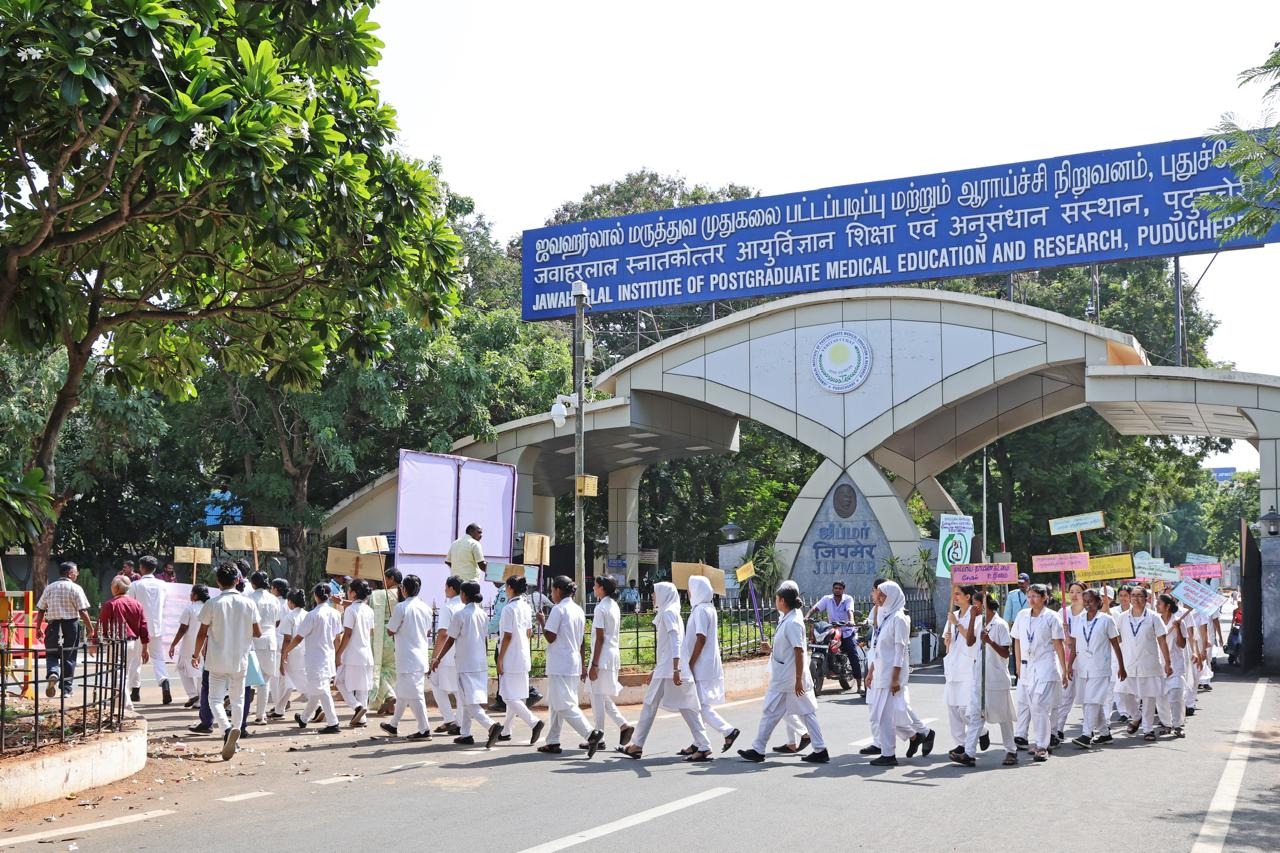
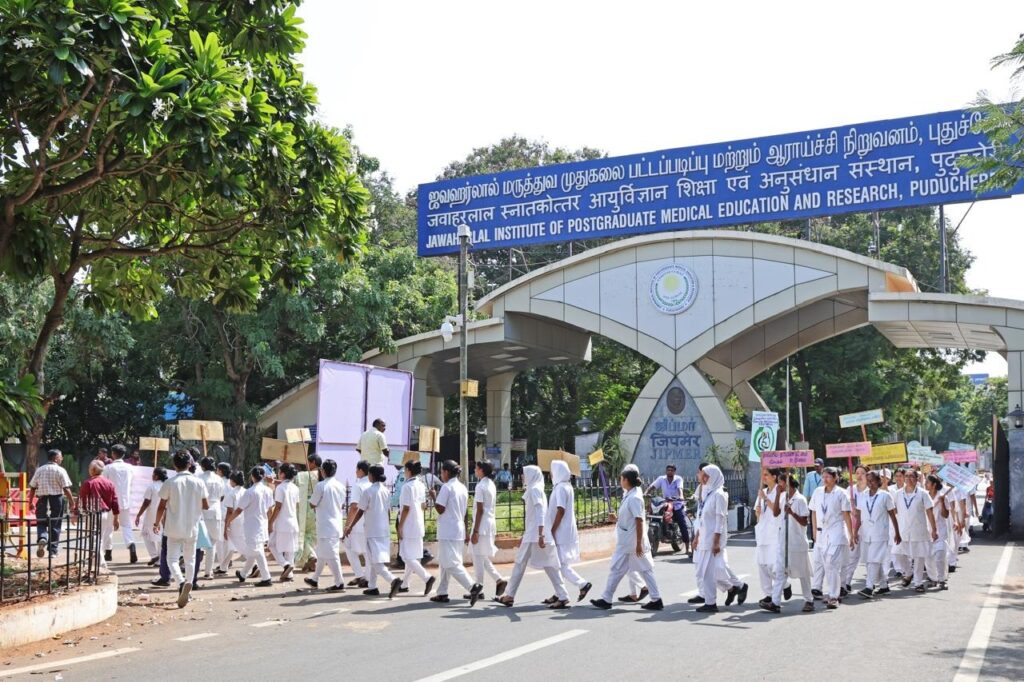
As part of World Breastfeeding Week 2026, JIPMER launched an extensive, week-long awareness programme. The initiative began with a massive awareness rally at the JIPMER Women and Children Hospital (JWCH) on 1 August. (Source: PIB)
The comprehensive programme is organized by the Nursing Department and the College of Nursing. It features deep collaboration with the Departments of Neonatology, Paediatrics, and Obstetrics & Gynaecology to maximize public reach.
Participants in the rally included nursing officers, faculty members, dedicated nursing students, and various healthcare professionals. They carried awareness placards promoting the early initiation and exclusive continuation of natural infant feeding.
Throughout the week, the interactive programme includes health education sessions, poster competitions, and open-house public discussions. Cultural events like Villu Paatu and postgraduate seminars ensure the message reaches diverse audiences effectively.
Spiritual Perspective on Selfless Care
Public health campaigns highlight the values of care, compassion, protection, and selfless nurturing that strengthen the foundation of human life. These profound values also find a sacred place in many spiritual traditions across the globe.
In these traditions, deep love, moral responsibility, and service towards others are regarded as essential principles for building a harmonious society. True nurturing transcends the physical body and touches the spiritual core of humanity.
Bahute Pyara Balak Maa Ka, Ussey Badhkar Shishy Guruon Ka.
Through the discourses of Tatvdarshi Sant Rampal Ji Maharaj, it is taught that a True Guru guides disciples with boundless compassion. This sacred relationship of unconditional care inspires individuals to live with humanity, kindness, and devotion while seeking lasting spiritual well-being.
FAQs on World Breastfeeding Week 2026
1. When is World Breastfeeding Week 2026 officially observed?
World Breastfeeding Week 2026 is observed globally from 1 August to 7 August to raise critical awareness about maternal and infant health.
2. What is the main theme for this year’s global campaign?
The official theme for World Breastfeeding Week 2026 is “Breastfeeding for a Sustainable Start in Life: Strengthen What Works.”
3. Which major organizations support these global health initiatives?
The campaign is heavily supported by the WHO, UNICEF, various national Ministries of Health, WABA, and numerous civil society organizations worldwide.
4. What are the WHO guidelines for infant feeding?
The WHO recommends initiating feeding within one hour of birth and maintaining exclusive breastfeeding for the first six months. Continued feeding alongside safe complementary foods is recommended up to two years or beyond.
5. Why is World Breastfeeding Week 2026 considered a public health priority?
World Breastfeeding Week 2026 is vital because it promotes evidence-based healthcare practices and supportive workplace policies. It actively drives global progress toward the United Nations Sustainable Development Goals by improving child nutrition and maternal well-being.
Related Stories







Discussion (0)