Jharkhand Protest: Latest Update on JPSC Exam Row and Student Demands
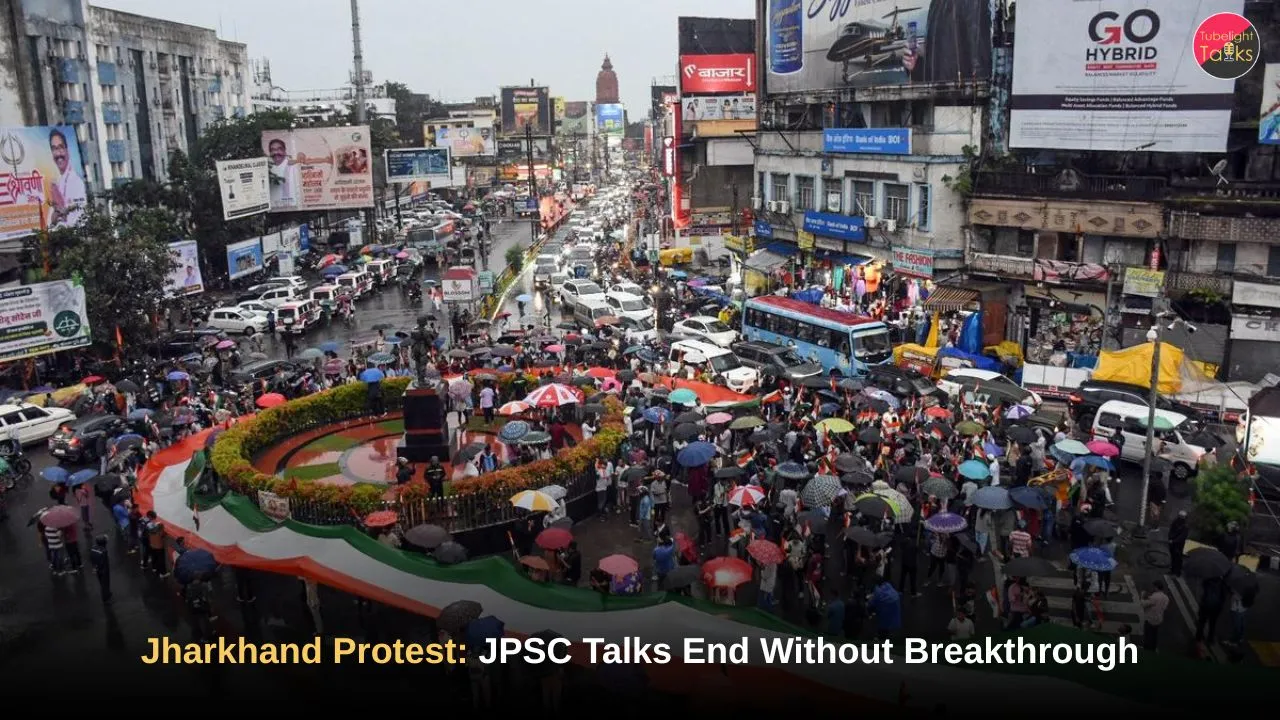
Ranchi: The Jharkhand protest over alleged irregularities in JPSC and JSSC recruitment examinations continued on August 8, 2026, after the government’s first formal talks with student representatives failed to resolve their key demands. Students are seeking cancellation of the 14th JPSC Preliminary Examination and an independent probe, while the government has said their concerns will be considered sympathetically.
Why Are Jharkhand Students Protesting?
The current Jharkhand protest is centred on allegations concerning the transparency and conduct of recruitment examinations conducted by the Jharkhand Public Service Commission (JPSC) and the Jharkhand Staff Selection Commission (JSSC).
The immediate controversy has particularly focused on the 14th JPSC Combined Civil Services Preliminary Examination. Students and aspirants have raised questions over the examination and recruitment process and have demanded an independent investigation rather than relying only on internal mechanisms.
The issue gained wider attention after a purported answer-sheet or OMR-related document was circulated on social media and was claimed to be connected with the 14th JPSC Preliminary Examination. However, the authenticity of the circulated document has not been officially confirmed. Therefore, its circulation should not be treated as proof that a paper leak or examination irregularity has been established.
Also Read: Shocking Delhi Opposition Protest: High-Stakes 2026 Shift
Students’ concerns extend beyond the circulated material. They have been demanding greater transparency, accountability and reforms in recruitment examinations, arguing that government examinations involve years of preparation and significant personal and financial investment by aspirants.
The broader demands raised by protesters include:
- cancellation of the 14th JPSC Preliminary Examination;
- an independent probe into alleged irregularities;
- action against those responsible if wrongdoing is established;
- structural reforms in recruitment bodies; and
- a transparent examination system for future government recruitment.
How the JPSC Controversy Escalated
The controversy surrounding the 14th JPSC examination intensified after the preliminary examination results were declared. According to an Indian Express explainer published on July 27, the examination had been held in April and the Commission shortlisted 2,204 candidates against 103 vacancies for the Main examination.
Candidates subsequently raised questions over the non-publication of category-wise cut-off marks and the merit list. Some candidates also questioned the absence of signatures of the Commission’s constitutional members on the published merit list.
The matter subsequently moved beyond student allegations. The Jharkhand CID and Ranchi Police conducted searches connected with the investigation into alleged irregularities. The investigation also led to arrests, according to reports.
The controversy intensified further after L Khiangte, the former Jharkhand Public Service Commission chairperson, resigned. Khiangte said he had voluntarily stepped down to allow an impartial investigation and said that continuing in office could raise questions about the possibility of evidence being tampered with.
The development added to the political and public scrutiny surrounding the recruitment process. Opposition parties and student organisations subsequently intensified their calls for an independent probe.
Hunger Strike Becomes Major Part of Protest
As the agitation continued in Ranchi, hunger strikes became a central part of the students’ campaign.
Student leader Devendra Nath Mahto began an indefinite hunger strike in early August at the protest site. He said the fast was intended to press for a CBI investigation into alleged irregularities in JPSC and JSSC examinations and cancellation of the disputed JPSC Preliminary Examination.
By August 7, the agitation had entered its 14th day and six protesters were continuing their hunger strike.
The health of one protester, Rahul Kranti, deteriorated during the agitation and he was taken to hospital for treatment. Activist Sonam Wangchuk also appealed to Mahto to take care of his health. Following the appeal, Mahto agreed to consume water while continuing his protest.
The hunger strike has therefore remained an important part of the wider movement as students continue to seek action on their demands.
Government Holds First Formal Talks With Students
The Jharkhand government held its first formal round of talks with representatives of the protesting students on Friday evening, August 7, at the State Guest House in Ranchi.
A delegation of the JPSC/JSSC Reforms Manch met a ministerial panel led by Higher and Technical Education Minister Sudivya Kumar.
The government had earlier objected to the organisation’s original 11-member delegation, which included an advocate and two technical experts. A revised delegation was subsequently submitted.
After the meeting, Minister Sudivya Kumar said the government was sensitive to the concerns raised by the protesters and was ready to consider their demands sympathetically.
Minister Dipika Pandey Singh said the students’ demands had been conveyed to Chief Minister Hemant Soren. Soren had earlier said that his government was ready to hold talks with protesting students and would consider their grievances.
Despite the positive atmosphere described by both sides, the talks did not result in a settlement. Student representatives said their movement would continue until their demands, including cancellation of the 14th JPSC examination, were accepted.
August 10 Assembly March Warning
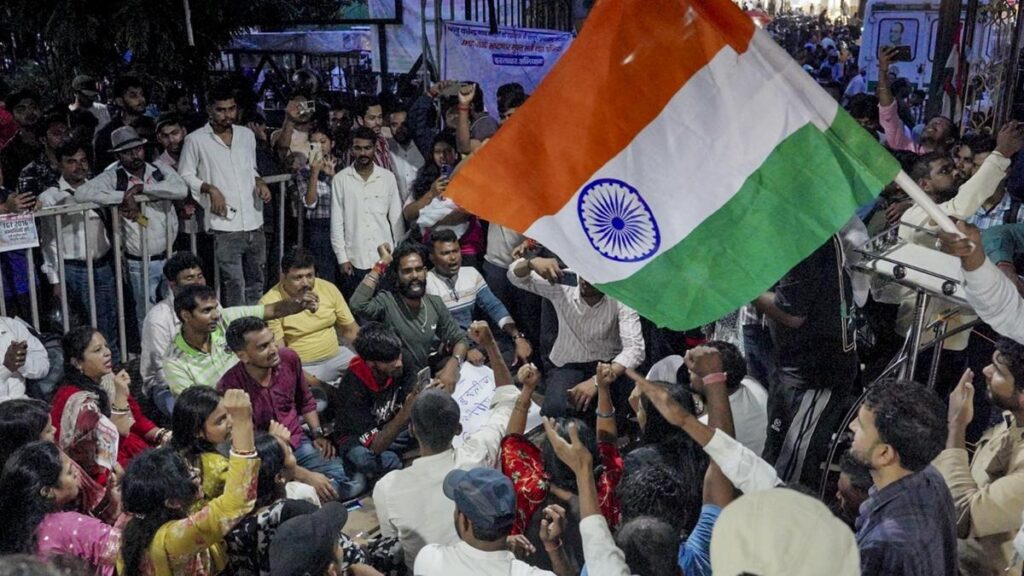
Following the talks, protesting students said they would march towards the Jharkhand Assembly on August 10 if concrete action was not taken by Sunday.
The protest movement has also seen participation and support from other student and political organisations. AISA and AISF organised a march towards the Assembly in solidarity with the protesters, while the JPSC-JSSC Reforms Manch clarified that it was not part of that march, although it welcomed moral support from other organisations.
The issue also reached the Jharkhand Assembly, where BJP legislators disrupted proceedings while demanding a court-monitored CBI probe into the alleged recruitment irregularities.
Also Read: झारखंड में गुटखा और पान मसाला पर प्रतिबंध: स्वास्थ्य के लिए बड़ा कदम
CID Summons Three Serving JPSC Members
While the student-government talks were taking place, a parallel investigation into the alleged irregularities was also progressing.
The Jharkhand CID has summoned three serving members of the Jharkhand Public Service Commission (JPSC) for questioning. The development came as the students’ agitation over the recruitment examination process entered its 14th day on August 7.
The questioning is part of the investigation into allegations surrounding the recruitment examination process. The CID development is significant because students have been demanding an independent investigation into the allegations, particularly by the CBI.
The CID action, however, should not be interpreted as confirmation that the alleged irregularities have been established. The allegations remain under investigation.
What Exactly Are Students Demanding?
The protesters have maintained that the controversy cannot be resolved merely through discussions and that an independent investigation is required.
Their principal demands include:
| Demand | What students are seeking |
| 14th JPSC Preliminary Examination | Cancellation of the examination |
| Independent investigation | Probe into alleged irregularities |
| Investigating agency | CBI or a panel of retired High Court judges from outside Jharkhand |
| Accountability | Action against those responsible if wrongdoing is established |
| Recruitment reforms | Structural changes in recruitment bodies |
| Future examinations | A transparent recruitment and examination system |
Students have argued that an independent investigation is necessary to restore confidence among government-job aspirants.
The protesters’ position has remained that the agitation will continue until their demands are addressed.
Is There Proof of a JPSC Paper Leak?
The issue of a purported answer-sheet or OMR-related document circulating on social media has become part of the controversy.
The document was claimed to be linked to the 14th JPSC Preliminary Examination, and its circulation intensified questions already being raised by aspirants about the examination process.
However, the authenticity of the circulated document has not been officially confirmed.
Therefore, the current reports should not describe the incident as a proven paper leak. The appropriate description is an alleged examination irregularity, with the relevant allegations being investigated.
This distinction is important because the students are demanding an investigation precisely to establish whether wrongdoing occurred and, if so, who was responsible.
Student Delegations and Differences Within Protest
The negotiations also followed disagreement over the composition of the students’ delegation.
The JPSC/JSSC Reforms Manch initially submitted an 11-member delegation, but the government objected because the proposed group included an advocate and two technical experts.
The organisation subsequently submitted a revised list.
The delegation that participated in the talks included student leaders Ravindra Paswan, Piyush Kumar, Rajesh Prasad, Neetu Kujur, Ankit Raj, Kartik Soren and Shalu Kumari, among others.
Another group of protesters led by Devendra Mahto, who had been on hunger strike for six days according to the Friday report, said it had also received an invitation from the government and had submitted the names of an eight-member delegation.
The existence of different groups and delegations reflects the broader participation in the agitation, while the central demands remain focused on the examination controversy, cancellation of the 14th JPSC examination and an independent probe.
Political Support and Assembly Developments
The Jharkhand protest has also drawn political attention.
The youth and student wings of the AJSU Party organised demonstrations in Ranchi and demanded a CBI investigation into alleged irregularities in the 14th JPSC Preliminary Examination.
The BJP’s youth wing also held protests and sought accountability from the state government.
Congress leader Rahul Gandhi expressed support for the protesting students and said governments should listen to young people and address their grievances.
Inside the Jharkhand Assembly, BJP legislators raised the recruitment-exam issue and demanded a court-monitored CBI probe into the alleged irregularities. Their disruption led to the House being adjourned for the day.
The political reactions have therefore added another dimension to an agitation that began with students and government-job aspirants raising concerns over recruitment examinations.
Neha Bora Ink Attack During Solidarity March
Another incident occurred during a march towards the Assembly organised by two Left-backed student organisations, AISA and AISF, in solidarity with the protesting students.
AISA national president Neha Bora was targeted with ink near Birsa Chowk. The accused, identified as Amarnath Pandey, was detained by police for questioning.
Bora alleged that the incident was an attempt to intimidate the student movement. The BJP dismissed the allegation as a “stage-managed drama”, while the ABVP denied involvement and condemned the attack.
The JPSC-JSSC Reforms Manch clarified that it was not part of the march, although it welcomed moral support from other organisations.
The incident remained separate from the protesters’ core demands concerning the JPSC and JSSC recruitment examinations.
What Has the Jharkhand Government Said?
The government has not announced acceptance of the students’ principal demands.
Instead, during the August 7 talks, ministers said the government was sensitive to the students’ concerns and would consider their demands sympathetically.
Higher and Technical Education Minister Sudivya Kumar said the government had listened carefully to the students. Minister Dipika Pandey Singh said the demands had been conveyed to Chief Minister Hemant Soren.
Soren had earlier said his government was ready for dialogue and that students could place their grievances before the government. He also said the government would move ahead with reforms in line with students’ demands.
However, after the first formal talks, the students made clear that the agitation would continue.
This means that, as of August 8, 2026, there has been no reported settlement between the government and protesting students.
Where the Jharkhand Protest Stands on August 8
The latest developments show that the dispute remains unresolved.
The sequence of events is:
Allegations over recruitment examinations → student mobilisation → hunger strike → political support → government outreach → first formal talks → no breakthrough → continued agitation → CID questioning of JPSC members → warning of an August 10 Assembly march.
The immediate focus is now on whether the government takes concrete action on the students’ demands before the proposed August 10 march.
The students continue to demand cancellation of the 14th JPSC Preliminary Examination and an independent investigation, while the government has so far said their concerns will be considered sympathetically.
Why the JPSC Row Matters to Aspirants
The controversy has gained importance because government recruitment examinations represent years of preparation for thousands of aspirants competing for a limited number of vacancies.
Students argue that any proven irregularity could unfairly affect candidates who have invested substantial time, money and effort in preparation.
Their demands therefore extend beyond the disputed examination itself. They are also calling for greater transparency, accountability and structural reforms in the recruitment system.
At the same time, allegations must remain clearly distinguished from established findings. The authenticity of the circulated answer-sheet material has not been officially confirmed, and the alleged irregularities remain subject to investigation.
What Happens Next?
The students have said they will continue the agitation until their demands are met. If concrete action is not taken by Sunday, they have warned of a march towards the Jharkhand Assembly on August 10.
Meanwhile, the CID investigation and questioning of serving JPSC members provide a separate official process concerning the allegations.
The government has opened dialogue but has not accepted the students’ principal demands. With the protest continuing and the investigation underway, the JPSC controversy remains unresolved as of August 8, 2026.
A Dispute Still Awaiting Answers
The Jharkhand protest has moved from examination-related allegations to a wider demand for transparency and institutional reform. Students continue to seek cancellation of the 14th JPSC examination and an independent probe, while the government has opened dialogue and the CID is investigating. With no breakthrough in the first talks, the proposed August 10 Assembly march remains the next major development to watch.
Duty, Truth and Guidance in Public Life
The ongoing protest also raises a broader question about duty and responsibility in public life. Students are seeking a fair process so they can build their future and contribute to the country. When institutions fail to fulfil their responsibilities, public trust can be affected.
Spiritual traditions remind those entrusted with responsibility that authority should be accompanied by duty, accountability and righteous conduct. In this context, seeking the guidance of Saints can help individuals reflect on their responsibilities and the consequences of their actions. The teachings of Tatvdarshi Sant Rampal Ji Maharaj emphasise understanding true Knowledge, performing righteous actions and recognising the difference between what should and should not be done. Such spiritual understanding can encourage responsible conduct, humility and commitment to one’s duty.
FAQs on Jharkhand Protest
1. Why are Jharkhand students protesting?
Students are protesting alleged irregularities in JPSC and JSSC recruitment examinations and demanding cancellation of the 14th JPSC Preliminary Examination.
2. What is the main demand of the protesters?
Their main demands include cancellation of the 14th JPSC examination and an independent probe by the CBI or retired High Court judges.
3. Was the JPSC paper leak proven?
No. A purported answer-sheet document circulated online, but its authenticity has not been officially confirmed.
4. What did the government say?
The government said it was sensitive to the students’ concerns and ready to consider their demands sympathetically after the first formal talks.
5. What is the next planned protest?
Students have warned that they will march to the Jharkhand Assembly on August 10 if concrete action is not taken by Sunday.
Related Stories


Discussion (0)