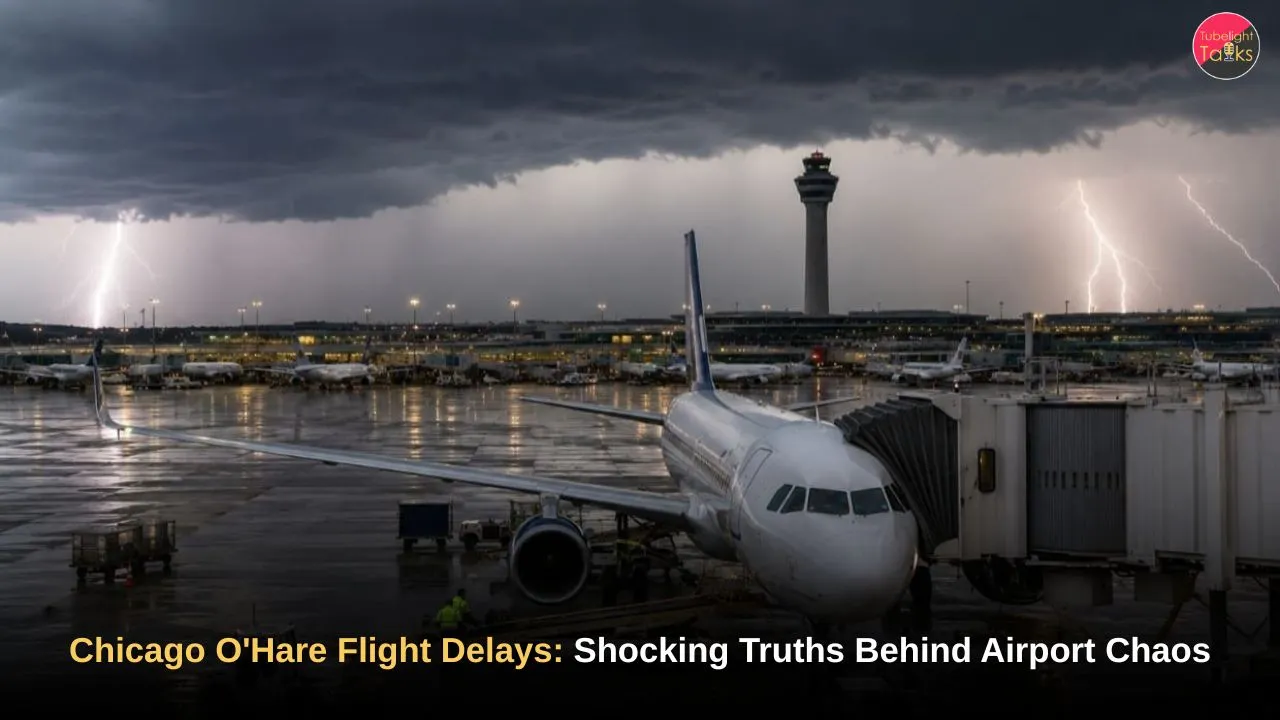
Understanding the Cascading Impact of Chicago O’Hare Flight Delays Across North American Aviation
Chicago O’Hare flight delays have escalated into a major operational challenge for travelers and airlines nationwide, as severe weather patterns, air traffic control system outages, and acute staffing shortages converge at one of the world’s busiest transportation hubs.
When Ground Stop programs and Ground Delay Programs freeze operations at Chicago O’Hare International Airport (ORD), the cascading disruption rapidly spreads through regional routes and international gateways across North America. Passengers face severe schedule breakdowns, missed connections, crew duty time expirations, and extensive baggage dislocation during peak travel periods. Analyzing the structural causes, airline responses, regulatory framework, and passenger rights helps reveal how air transit infrastructure struggles under unexpected demand and weather shocks, offering travelers vital strategies to protect their itineraries and navigate systemic airport disruptions effectively.
Why Chicago O’Hare Flight Delays Trigger Nationwide Aviation Bottlenecks
Chicago O’Hare flight delays serve as an immediate stress indicator for the broader United States commercial aviation network. Because O’Hare International Airport operates as a massive central hub connecting East and West Coast corridors, any operational slowdown in Chicago immediately ripples outward to secondary and tertiary airports. When aircraft scheduled to depart Chicago are grounded, downline flights in cities like Denver, New York, Atlanta, and Dallas experience derivative delays.
A primary driver of these compounding disruptions is the complex interplay between airfield layout, high hourly flight capacity, and stringent Federal Aviation Administration (FAA) separation standards. O’Hare handles hundreds of thousands of operations annually, meaning that even a minor 15-minute operational pause can create a backlog of dozens of aircraft on taxiways and at arrival gates. As gates remain occupied by delayed departures, arriving aircraft are forced into holding patterns or held at remote deicing pads and staging areas.
Also read: IndiGo Power Bank Explosion: Panic on Chandigarh Flight After Passenger Device Catches Fire
Furthermore, air traffic control centers handling Midwest airspace manage some of the densest high-altitude transit corridors in the world. When regional radar systems or automated management facilities experience technical outages or radar handoff constraints, air traffic managers must enforce increased mile-in-trail spacing. This safety procedure reduces the total hourly arrival rate into O’Hare, transforming minor scheduling hiccups into multi-day recovery challenges for major airlines.
| Impact Level | Aviation Operational Metric | Baseline Operating Target | Impact During Severe Disruption |
| National Corridor | Hourly Arrival Capacity (ORD) | 80–100 arrivals/hr | Reduced to 30–45 arrivals/hr |
| Network Ripple | Average Gate Taxi In/Out Time | 12–18 minutes | Escalates to 45–120+ minutes |
| Crew Status | Flight Crew Legal Duty Limits | 12–14 hours active duty | Widespread crew timeouts |
| System Backlog | System-Wide Recovery Duration | Same-day resolution | 24 to 48 hours for full reset |
Root Causes Behind Recurring Delays at O’Hare Airport
To understand why travel schedules collapse at ORD, industry analysts look closely at structural vulnerabilities embedded within modern commercial flight operations. While weather is frequently cited as the primary catalyst, underlying systemic issues amplify every disturbance.
1. Convective Weather Systems and Seasonal Storm Fronts
Chicago’s geographical position near Lake Michigan exposes O’Hare to intense microclimates. Severe summer thunderstorms generate dangerous low-level wind shear and lightning strikes, while winter blizzards necessitate constant runway snow clearing and aircraft anti-icing protocols. When lightning is detected within five miles of the airfield, ramp workers must evacuate the tarmac for safety, halting all baggage handling and aircraft refueling operations.
2. FAA Ground Stops and Airspace Capacity Constraints
When airspace capacity drops below safe thresholds, the FAA Command Center issues Ground Stops or Ground Delay Programs (GDP). A Ground Stop holds bound flights at their origin airports across the country, preventing them from taking off for Chicago. These regulatory interventions prioritize safety above all else, but they instantly freeze airline operating schedules, creating an immense downstream backlog.
3. Crew Duty Time Limits and Position Misalignment
Federal Aviation Regulations strictly limit the maximum continuous hours pilots and flight attendants can remain on duty. When a flight experiences prolonged taxiway delays or holding patterns, the crew risks “timing out” before reaching their destination. Once a crew reaches their legal operational limit, the aircraft cannot move until a replacement crew is located, causing sudden flight cancellations even after passengers have fully boarded.
4. Technical Infrastructure and ATC Outages
Modern air traffic management relies on interconnected digital radar networks, telecommunications infrastructure, and automated flight plan processing systems. Unexpected power disruptions, fiber-optic line damage, or software glitches at regional Air Traffic Control Center facilities can paralyze flight routings across multiple Midwest states. During these technical incidents, controllers must transition to manual separation procedures, sharply cutting airport arrival throughput.
5. Ground Support Equipment and Security Staffing Gaps
Terminal congestion inside O’Hare is further exacerbated by staffing shortages within ground handling crews, passenger service agents, and Transportation Security Administration (TSA) security checkpoints. Long lines at security search lanes can cause passengers to miss scheduled departure windows, while delays in offloading checked luggage delay incoming planes from vacating active gates.
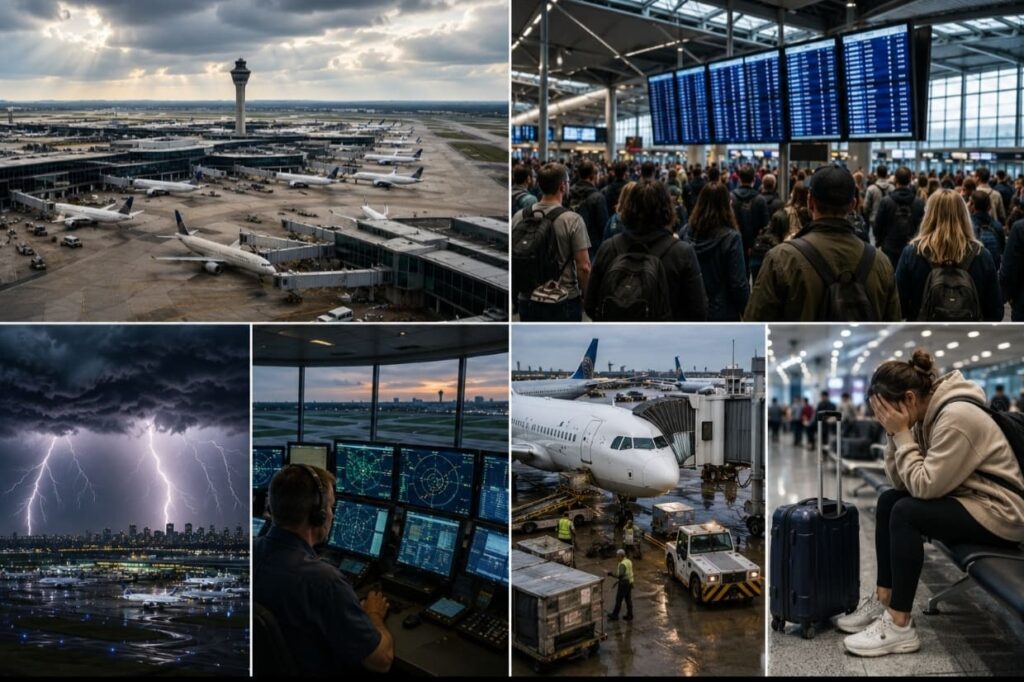
Evaluating Airline Vulnerability: United, American, and SkyWest Operations
Different air carriers experience varying degrees of operational disruption during Chicago O’Hare flight delays based on their fleet size, hub structure, and route density. United Airlines and American Airlines maintain primary hub facilities at ORD, together accounting for a majority of daily operations. Regional partners such as SkyWest Airlines, Envoy Air, and GoJet Airlines operate feeder flights connecting smaller Midwest communities to Chicago.
| Air Carrier | Operational Role at ORD | Key Connecting Corridors | Vulnerability Level During Disruptions |
| United Airlines | Primary Mainline Hub Carrier | Newark, San Francisco, Denver, London Heathrow | Critical (High hub coupling) |
| American Airlines | Secondary Mainline Hub Carrier | Dallas/Fort Worth, Miami, New York JFK, Los Angeles | High (Large network volume) |
| SkyWest Airlines | Regional Feeder Carrier | Omaha, Des Moines, Madison, Green Bay, South Bend | Extreme (Limited spare aircraft/crews) |
| Delta Air Lines | Point-to-Point Carrier | Minneapolis, Atlanta, Detroit hubs | Moderate (Lower total ORD flights) |
| Spirit / Budget | Point-to-Point Low-Cost | Fort Lauderdale, Orlando, Las Vegas | High (Low aircraft utilization buffers) |
Mainline carriers often possess greater operational flexibility, including dedicated standby flight crews and extra aircraft parked at major hubs. Conversely, regional carriers operating under regional brand banners suffer acutely during severe disruptions. Their regional jets frequently complete five to seven short-haul legs per day; a delay on an early morning flight compounds progressively into severe delays or cancellations by evening.
Also read: Massive Winter Storm Disrupts Northern US: Flights Cancelled, Highways Shut
How Airlines and Passengers Can Mitigate Chicago O’Hare Flight Delays
Navigating large-scale aviation disruptions requires proactive decision-making from both airline operations teams and individual travelers. Understanding modern flight management strategies and consumer protection rules allows passengers to navigate schedule breakdowns effectively.
Strategic Travel Planning for Flying Through O’Hare
Travelers can significantly reduce their exposure to severe disruptions by following several key booking strategies:
- Book Early Morning Flights: The first departure flights of the day (between 5:00 AM and 7:00 AM) are far less likely to be delayed, as the aircraft are typically already parked at the gates overnight.
- Avoid Tight Layover Windows: When booking connecting itineraries through Chicago ORD, select layover times of at least 90 to 120 minutes to allow a cushion for unexpected holding patterns or gate holds.
- Fly Nonstop When Possible: Minimizing connecting legs directly reduces your total risk exposure to regional weather ground stops.
- Monitor Airspace Dashboards: Utilize live tracking applications and official FAA status feeds to identify weather movements or ground stops before heading to the airport.
Understanding Passenger Rights and Compensation Protocols
When Chicago O’Hare flight delays cause canceled flights or missed connections, federal rules set clear standards for passenger support:
- Automatic Refund Eligibility: If an airline cancels a flight for any reason and the passenger chooses not to travel on a rebooked flight, the airline must issue a full cash refund to the original form of payment.
- Duty of Care Obligations: For prolonged delays within the carrier’s control (such as maintenance or crew staffing issues), airlines are expected to provide meal vouchers and hotel accommodations for overnight stays.
- Rebooking on Partner Carriers: Passengers can request airline customer service representatives to rebook them on competing carriers if another airline has available seats leaving significantly earlier.
Beyond the Runway: Finding True Peace Amid Life’s Unexpected Disruptions
When stranded inside a noisy, crowded airport terminal during severe travel breakdowns, individuals experience immediate stress, anger, and feelings of helplessness. A sudden flight cancellation disrupts business commitments, family reunions, and long-awaited vacations, exposing how fragile human plans can be when confronted with uncontrollable physical forces like storms and system crashes. Society invests billions of dollars into advanced technology and complex infrastructure, yet a single weather front or system failure can ground thousands of lives in an instant.
This reality highlights a deeper truth about human existence. In our modern world, people constantly seek stability, peace, and security through material systems, schedules, and external achievements. However, real life frequently demonstrates that material structures remain vulnerable to sudden disruption. When travel schedules crumble, individuals are forcefully reminded of their limited control over external events, leading to anxiety and spiritual exhaustion.
True, everlasting peace cannot be found in material arrangements, physical travels, or temporal human structures. Spiritual discourses teach that ultimate comfort and protection are found by seeking refuge in supreme spiritual knowledge and authentic devotion. Sant Rampal Ji Maharaj imparts profound spiritual wisdom derived from sacred scriptures, demonstrating that true happiness and permanent relief from worldly suffering come from connecting with the Supreme Power through correct spiritual practice. By understanding the eternal laws of nature and engaging in authentic worship, a person gains inner resilience and tranquility that remains undisturbed, whether facing airport chaos, economic turbulence, or personal hardship.
To discover the practical spiritual path that provides absolute security and peace beyond worldly uncertainties, watch the enlightening discourses available on the Official YouTube Channel of Sant Rampal Ji Maharaj.
FAQs on Chicago O’Hare flight delays
Q1. What causes most Chicago O’Hare flight delays?
Chicago O’Hare flight delays are primarily caused by severe Midwest weather, FAA ground stops, air traffic control capacity limits, and crew duty time expirations.
Q2. Am I entitled to a refund if my O’Hare flight is canceled?
Yes, federal regulations mandate a full cash refund if your flight is canceled and you choose not to accept alternative rebooking.
Q3. How do FAA Ground Stops affect connecting flights at O’Hare?
FAA Ground Stops hold departing planes at their origin airports, causing severe cascading delays and missed connections for incoming aircraft at O’Hare.
Q4. Which airlines experience the most delays at Chicago O’Hare?
United Airlines, American Airlines, and regional feeder carriers like SkyWest absorb the highest volume of delays due to their large hub footprint at ORD.
Q5. Where can I check live flight delay status for O’Hare?
Passengers can check real-time delay status directly on the official FAA status website, the FlyChicago portal, or individual airline mobile applications.
Related Stories









Discussion (0)