IndiGo Power Bank Explosion: Panic on Chandigarh Flight After Passenger Device Catches Fire
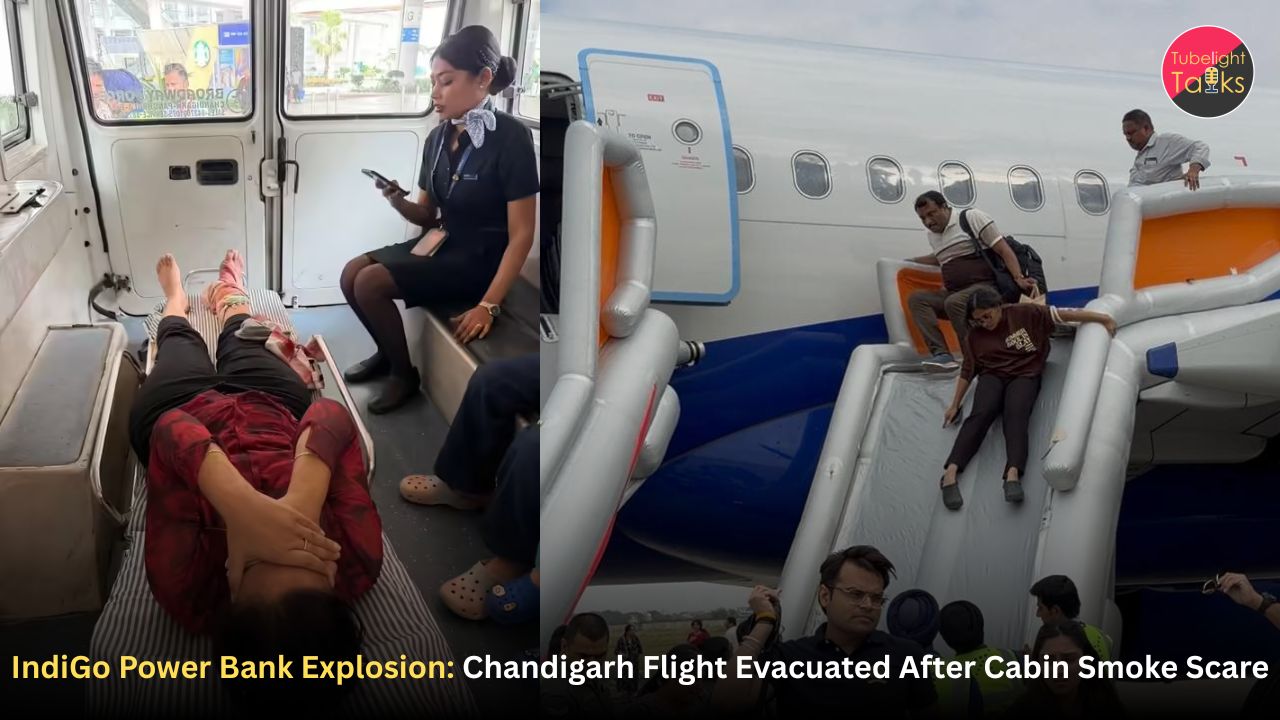
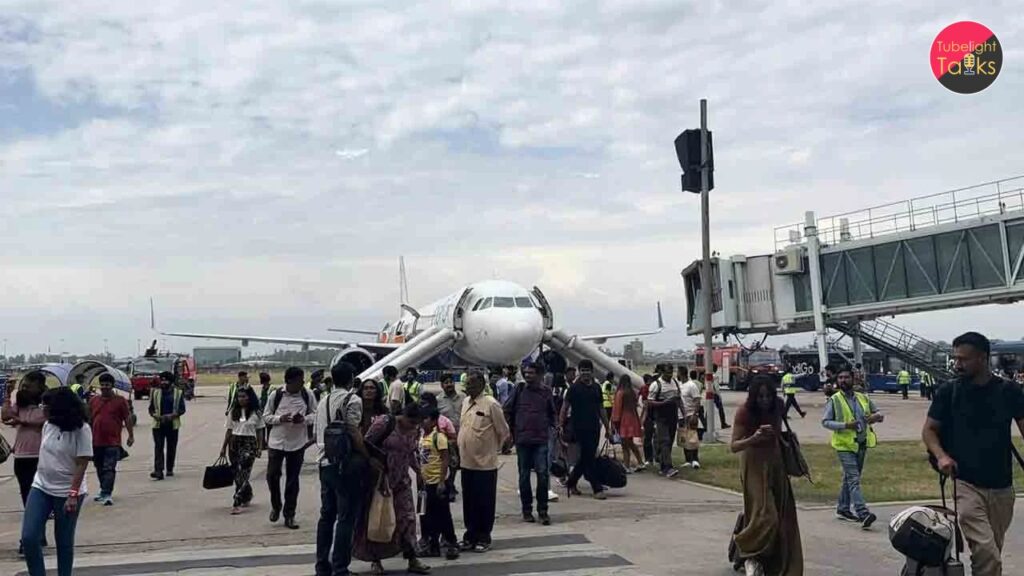
A major scare unfolded at Shaheed Bhagat Singh International Airport in Chandigarh after a passenger’s power bank caught fire inside an IndiGo aircraft, filling the cabin with smoke and forcing an emergency evacuation. The aircraft, operating as flight 6E-108, had already landed safely and was taxiing toward the bay when the device reportedly caught fire. Early social media posts described the event as a mid-air explosion, but multiple official and media reports clarify that the incident occurred after landing, during taxiing.
Cabin crew used fire extinguishers to control the flames, and emergency slides were deployed to evacuate more than 200 passengers and six crew members. The incident has renewed concern over lithium-ion battery safety in air travel.
IndiGo Power Bank Fire: What Happened?
Fire Reported After Landing
The incident took place on Tuesday afternoon after IndiGo flight 6E-108 landed at Chandigarh. According to reports citing DGCA details, a power bank kept in a pouch in the seat pocket by a passenger seated in 39C caught fire while the aircraft was taxiing toward the bay. The aircraft had already touched down safely, and passengers were waiting to disembark when smoke was detected.
This distinction is important because early viral clips and social media claims described the incident as a mid-air explosion. However, the verified sequence shows that the aircraft was on the ground after landing. The danger was still serious because smoke inside an aircraft cabin can create panic quickly, even when the aircraft is stationary.
Crew Used Fire Extinguishers
Cabin crew responded by using onboard fire extinguishers to douse the fire. NDTV reported that two fire extinguishers were used to put out the blaze, and the passengers were safely moved to the terminal afterward.
This quick response likely prevented the situation from escalating. Lithium-ion battery fires can be difficult because batteries may overheat, release smoke, reignite or spread heat to nearby material. Aircraft crews are trained to respond quickly to onboard fire and smoke incidents because cabin smoke can become dangerous within minutes.
Emergency Evacuation Through Slides
More Than 200 Passengers Evacuated
The flight reportedly had over 200 passengers and six crew members onboard. Once smoke spread in the cabin, the crew deployed inflatable emergency slides and passengers were evacuated. Hindustan Times reported that the emergency evacuation involved over 200 passengers, including two infants, and six airline staff.
Emergency slide evacuations are dramatic and can be physically risky, especially for elderly passengers, children, people with mobility issues and passengers carrying bags. However, when smoke is present, quick evacuation becomes necessary because smoke inhalation and panic can worsen rapidly.
Injury Reports Differ
There is some difference in reported injury counts. DGCA’s initial statement, reported by NDTV and other outlets, said no passenger injury was reported. However, later local reports from Chandigarh said five or six passengers suffered injuries during the evacuation, including slide-related injuries. Times of India reported six injured passengers, while Indian Express reported five injuries.
This difference may reflect evolving information after passengers were medically assessed. In such incidents, early reports often focus on fire containment and safe evacuation, while later reports identify injuries caused during slide descent, crowding or panic.
Also Read: Mumbai Airport Shutdown: CSMIA Closed for Six Hours Today for Critical Pre-Monsoon Maintenance
Why Power Banks Are a Serious Aviation Risk
Lithium-Ion Batteries Can Overheat
Power banks use lithium-ion or lithium-polymer batteries. These batteries are common in phones, laptops, tablets, cameras and travel chargers. They are efficient and portable, but they can overheat if damaged, poorly manufactured, overcharged, short-circuited or exposed to unsafe conditions.
When lithium batteries fail, they can enter a condition called thermal runaway, where heat builds rapidly and causes smoke, fire or explosion. This is why airlines and aviation regulators treat power banks differently from ordinary items.
Cabin Carry Is Allowed, Checked Baggage Is Not
A key safety rule is that power banks should be carried in cabin baggage, not checked-in luggage. The reason is simple: if a battery catches fire in the cabin, crew can detect and respond to it. If it catches fire inside the cargo hold, detection and access are harder.
The Chandigarh incident shows why cabin visibility matters. The fire was noticed, crew responded with extinguishers, and passengers were evacuated. Had the device been hidden deep inside checked baggage or an inaccessible area, the risk could have been greater.
DGCA Rules and Passenger Responsibility
Use of Power Banks on Flights Restricted
Times of India reported that DGCA’s newer safety rules prohibit passengers from using power banks during flights for charging phones or other devices, though carrying them in hand luggage is allowed. The rule is meant to reduce overheating and fire risks during flight.
The incident has brought these rules back into focus. Many passengers carry power banks casually, often in seat pockets, handbags or overhead bins. But aviation safety requires passengers to understand that these devices are not harmless accessories. They must be stored properly, not used carelessly, and never carried if swollen, damaged, overheated or from an unreliable source.
Awareness Gap Among Travellers
Several passengers reportedly questioned how power banks are checked and whether safety awareness is strong enough. Times of India reported that passengers recalled the panic and questioned what might have happened if the fire had occurred mid-air.
This concern is understandable. Security checks may identify prohibited items, but they cannot always detect internal battery defects. Passenger responsibility therefore matters. Travellers should use certified power banks, avoid damaged devices, keep batteries accessible, avoid charging during flight when rules prohibit it, and immediately alert crew if a device heats up, smokes or smells unusual.
Also Read: SpiceJet SG-121 Engine Issue: Pilot Brings Flight Back Safely After Mid-Air Scare
Why the Aircraft Landed Safely but Panic Still Spread
Smoke Is a Major Cabin Hazard
Even though the aircraft had already landed safely, the cabin environment became frightening because smoke spread quickly. Smoke inside an aircraft cabin can reduce visibility, irritate eyes and lungs, create fear and cause passengers to rush toward exits. Panic itself can cause injuries.
This is why crew members may choose emergency evacuation even after landing. The priority is to remove passengers from a smoke-filled cabin as quickly as possible.
Evacuation Discipline Matters
Passengers must follow crew commands during emergencies. Carrying cabin baggage during evacuation can slow movement, damage slides and injure others. In a smoke or fire situation, seconds matter. Passengers should leave belongings behind and move calmly but quickly.
Reports from Chandigarh described confusion and rush during evacuation. Such scenes are common in emergency situations, but training and passenger awareness can reduce injuries.
Investigation and Safety Questions
Authorities Will Examine the Device
The investigation will likely examine the power bank’s make, capacity, condition, charging status, storage location and whether it was being used at the time. Investigators may also look at whether the passenger followed rules, whether the device had visible damage and whether cabin crew response followed standard operating procedure.
IndiGo said the aircraft would undergo necessary checks before resuming operations and that safety remained the airline’s top priority.
Airline and Airport Response Under Scrutiny
The emergency response appears to have prevented a bigger incident, but questions remain: Were all passengers briefed properly? Were slides deployed safely? Were medical teams quick enough? Were power bank rules clearly communicated before boarding? Did passengers carry prohibited or unsafe devices?
Aviation incidents often lead to stronger passenger advisories, crew refresher training and stricter announcements about electronic devices.
Broader Lessons for Air Travellers
Check Your Power Bank Before Travel
Passengers should avoid carrying damaged, swollen, overheated or unbranded power banks. They should check watt-hour limits, airline rules and regulator guidelines. High-capacity power banks may require airline approval or may be prohibited depending on rating.
Keep Devices Accessible
Power banks should not be buried deep in baggage or placed where heat or pressure can build. If a device overheats, passengers should alert crew immediately and not attempt unsafe handling alone.
Do Not Ignore Heat, Smoke or Smell
A burning smell, hissing sound, swelling battery or unusual heat can be an early warning. Quick reporting can prevent a small battery problem from becoming a full cabin emergency.
Safety, Discipline and Responsibility
The IndiGo power bank incident reminds us that modern convenience comes with responsibility. A small device can create panic when handled carelessly or when safety rules are ignored. The teachings of Sant Rampal Ji Maharaj and Sat Gyaan emphasize truth, discipline, compassion, humility, righteous conduct and true worship according to holy scriptures.
Sant Rampal ji Maharaj’s teachings guide people away from intoxication, dishonesty, corruption, violence, greed and careless behaviour. In the context of aviation safety, this spiritual message is relevant because responsible conduct protects not only oneself but also others. Sat Gyaan teaches that human life is precious, and every action should be guided by awareness, truth and responsibility. Public safety begins when individuals follow rules sincerely.
FAQs on IndiGo Power Bank Explosion
1. Did the IndiGo power bank fire happen mid-air?
No. Early viral posts described it as a mid-air scare, but reports citing DGCA and airline details say the power bank caught fire after landing while the aircraft was taxiing at Chandigarh.
2. Which flight was involved?
The incident involved IndiGo flight 6E-108, which had landed at Chandigarh before the fire was detected.
3. What caused the smoke in the cabin?
A passenger’s power bank reportedly caught fire, causing smoke to spread inside the cabin and triggering an emergency evacuation.
4. Were passengers injured?
Initial DGCA-linked reports said no injuries were reported, but later local reports said five to six passengers were injured during the emergency slide evacuation.
5. Are power banks allowed on flights?
Power banks are generally allowed only in cabin baggage and not in checked baggage. DGCA rules also restrict their use for charging during flights.
6. What should passengers do if a power bank overheats?
Passengers should immediately alert cabin crew, avoid using or charging the device, keep it accessible and follow crew instructions calmly.
Related Stories







Discussion (0)