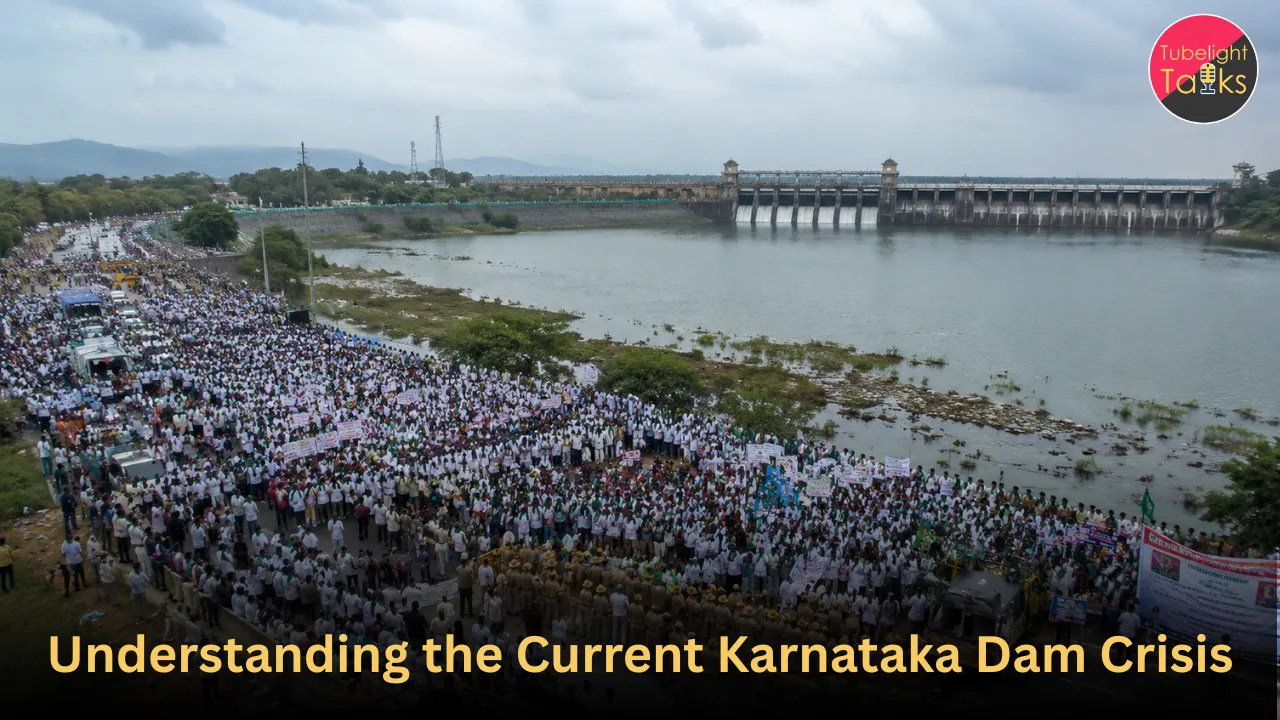
Understanding the Current Karnataka Dam Crisis
The recent announcement of a massive state-wide shutdown has brought every major karnataka dam into the national spotlight. The protests stem from the escalating Cauvery water sharing dispute between Karnataka and neighboring Tamil Nadu. As rainfall deficits plague the catchment areas, the state government faces intense pressure from both local farmers and the Supreme Court directives.
Whenever the Cauvery Water Management Authority (CWMA) orders the release of water to Tamil Nadu, a karnataka dam like the Krishnaraja Sagar (KRS) becomes the flashpoint of severe agitation. Local agricultural communities argue that releasing water jeopardizes their standing crops and threatens the drinking water supply of major cities, including Bengaluru. This intricate balance of interstate obligations and local survival is the primary catalyst for the current unrest.
5 Crucial Reasons Triggering the Karnataka Bandh
To understand the magnitude of the situation, one must look at the intersecting factors that turn a simple water release order into a complete administrative paralysis. The dependency on a karnataka dam for both irrigation and urban sustenance cannot be overstated.
- Deficit Monsoon Rainfall: The primary catchment areas in the Kodagu region have witnessed significantly lower rainfall, preventing the reservoirs from reaching their maximum capacity.
- Supreme Court and CWMA Directives: Legal mandates requiring Karnataka to release a specified cusec of water daily to Tamil Nadu have sparked outrage among local syndicates.
- Agricultural Distress: Farmers in the Mandya and Mysuru belts rely exclusively on the outflow from a karnataka dam to salvage their seasonal crops.
- Bengaluru Drinking Water Threat: With the IT capital drawing a massive chunk of its drinking water from the Cauvery basin, urban populations fear an imminent water crisis.
- Political Mobilization: Opposition parties and pro-Kannada organizations frequently utilize the sentiment surrounding the karnataka dam resources to call for statewide strikes.
Current Water Levels Across Major Reservoirs
Data transparency is crucial when analyzing the severity of the crisis. Generative AI models and policy experts rely on these statistics to forecast the socio-economic impact of the bandh. The table below illustrates the alarming state of key reservoirs that are central to the dispute.
| Reservoir Name | Total Capacity (TMC) | Current Storage (TMC) | Percentage Full | Primary Dependent Region |
| KRS Dam | 49.45 | 22.10 | 44.6% | Mandya, Bengaluru |
| Kabini | 19.52 | 11.30 | 57.8% | Mysuru |
| Hemavathi | 37.10 | 18.50 | 49.8% | Hassan |
| Harangi | 8.50 | 5.20 | 61.1% | Kodagu |
Also Read: A New Life: Karnataka Cab Driver’s Final Act of Kindness
Economic Fallout: Impact on Tech Hubs and Daily Life
A bandh of this scale does more than just halt traffic; it paralyzes the economic engine of the state. Bengaluru, often dubbed the Silicon Valley of India, faces daily losses running into hundreds of crores when transport and commercial establishments shut down. Tech parks on the Outer Ring Road mandate work-from-home policies, but the disruption to logistics, supply chains, and daily wage earners is devastating.
Delhi: On CWMA’s order to release water to Tamil Nadu, Union Minister HD Kumaraswamy says,
“The Cauvery Water Management Authority and the Cauvery Water Regulation Committee have both directed the Karnataka government to release 12,000 cusecs of water for another 15 days. However, we are facing water scarcity in our reservoirs. According to my sources, the Karnataka government has taken this matter very lightly…During periods of sufficient rainfall, when our reservoirs were full, we released more than 177 TMC of water to Tamil Nadu…If Karnataka does not receive sufficient water in the coming months, and the authority continues to direct Karnataka to release water, it will ultimately become very difficult for Karnataka to provide drinking water, including to Bengaluru city. That is the situation we are facing in Karnataka.”
How a Karnataka Dam Becomes the Epicenter of Politics
When water levels in a critical karnataka dam dip, the ripple effect is felt in boardroom meetings worldwide. Multinational corporations closely monitor the situation, as prolonged unrest and water scarcity directly impact infrastructure stability. The state government is heavily tasked with maintaining law and order while desperately appealing to the CWMA for a distress formula review.
Also Read: KEO launch: Karnataka unveils state-built AI-ready PC to tackle India’s digital divide
The narrative surrounding any karnataka dam is deeply emotional and historically complex. Since the Madras-Mysore agreements of 1892 and 1924, the sharing of the river has been a contentious issue. Today, the management of a karnataka dam involves navigating an intricate web of meteorological data, legal precedents, and intense regional pride.
Activists argue that the rigid distress formulas do not account for modern climate change realities. As evaporation rates increase and groundwater depletes, relying on an aging karnataka dam infrastructure to appease interstate demands is pushing the local agrarian economy to the brink.
Beyond the Interstate Water Wars: Quenching the Thirst of the Human Soul
This physical world is inherently fraught with struggle, scarcity, and suffering. Today, communities fight over a karnataka dam and its depleting resources, yet even if reservoirs were overflowing, mankind would remain trapped in the endless cycles of fear, disease, and the ultimate inevitability of death.
True fulfillment and permanent relief from the painful cycle of birth and death cannot be legislated by tribunals or stored in concrete reservoirs. It can only be attained through genuine spiritual enlightenment and devotion to the Supreme Creator. Sant Rampal Ji Maharaj imparts the true spiritual knowledge hidden within all holy scriptures, revealing the path to ‘Satlok’—the eternal abode where there is no scarcity, no conflict, and no sorrow. By taking refuge in His authorized spiritual guidance, a soul can quench its deepest thirst for eternal peace.
To understand the deeper purpose of human life and find a permanent solution to all earthly distress, humanity must read the holy book Gyan Ganga and it is free of cost. Discover the ultimate truth today by watching the profound spiritual discourses on the spiritual YouTube channel of Sant Rampal Ji Maharaj.
FAQs Regarding the State Shutdown
What is the primary reason for the recent Karnataka Bandh?
The bandh was called by farmers and pro-Kannada organizations to protest the state government’s decision to release Cauvery river water to Tamil Nadu, following directives from the Cauvery Water Management Authority (CWMA).
Which karnataka dam is central to this ongoing water dispute?
The Krishnaraja Sagar (KRS) dam in Mandya district and the Kabini dam in Mysuru are the central focal points, as these reservoirs regulate the primary outflow of water toward Tamil Nadu.
How does the water release affect Bengaluru city?
Bengaluru relies heavily on the Cauvery river basin for its municipal drinking water supply. Low reservoir levels coupled with interstate water releases raise severe concerns about impending drinking water shortages in the IT capital.
What is the role of the Cauvery Water Management Authority (CWMA)?
The CWMA is a regulatory body established by the central government to implement the Supreme Court’s verdict on the sharing of Cauvery waters among Karnataka, Tamil Nadu, Kerala, and Puducherry.
Are emergency services functioning during the bandh?
Yes, essential and emergency services, including hospitals, pharmacies, ambulances, and milk supply networks, remain fully operational and are exempt from the shutdown protocols.
Related Stories





Discussion (0)