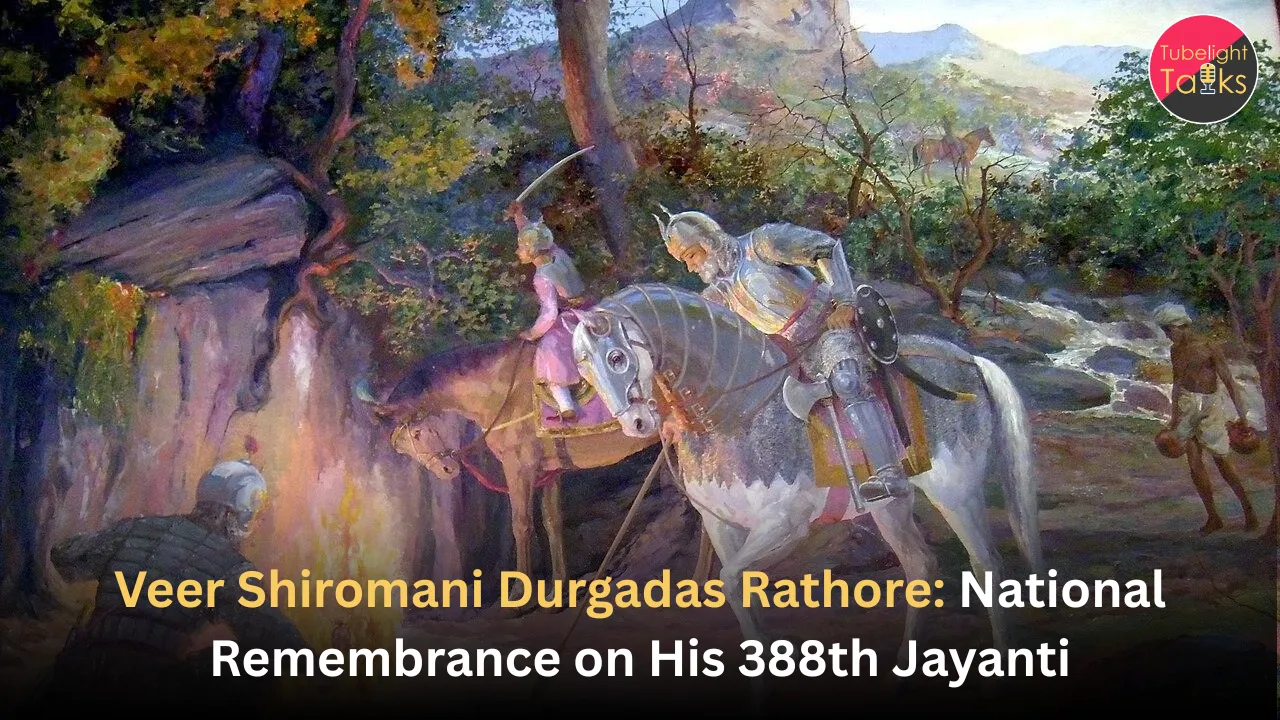
Veer Shiromani Durgadas Rathore: National Remembrance on His 388th Jayanti
Veer Shiromani Durgadas Rathore is being honored across the nation on August 13, 2026, marking his 388th birth anniversary with commemorative events, cultural programs, and academic discussions. Born on August 13, 1638, in Salwa village near Jodhpur, Veer Shiromani Durgadas Rathore stands as a symbol of loyalty, courage, and strategic brilliance in Indian military history.
From Rajasthan to other parts of India, historical organizations, civic bodies, and youth groups commemorate his legacy and contribution to the history of Marwar.
The historical narrative of Veer Shiromani Durgadas Rathore is closely associated with the long Rathore resistance against Mughal Emperor Aurangzeb. When the Mughal Empire sought to bring Marwar under direct imperial control following the death of Maharaja Jaswant Singh, Durgadas Rathore emerged as one of the leading defenders of the Rathore cause.
Mughal Expansionism and the 30-Year Marwar Conflict
The conflict intensified after Maharaja Jaswant Singh passed away in December 1678 without a surviving male heir at the time. Aurangzeb subsequently sought to bring Marwar under direct Mughal administration and stationed imperial forces in the region.
When the widowed Ranis later gave birth to Prince Ajit Singh, the infant prince became central to the succession dispute. Aurangzeb’s court sought control over the young heir, while Rathore leaders resisted Mughal attempts to consolidate authority over Marwar.
Also Read: UNESCO Intangible Heritage Session 2025 Glory: Red Fort Hosts 150 Nations’ Living Legacy
Recognizing the threat to the independence of Marwar, Veer Shiromani Durgadas Rathore played a crucial role in protecting Prince Ajit Singh and continuing the resistance against Mughal authority.
Historical Timeline and Military Milestones
The life and military achievements of Veer Shiromani Durgadas Rathore can be summarized through the following key historical details:
| Historical Parameter | Verified Event / Fact |
| Full Name | Veer Shiromani Durgadas Rathore |
| Date & Place of Birth | August 13, 1638; Salwa Village, Marwar |
| Parentage | Askaran Rathore |
| Primary Conflict | Rathore Rebellion / Marwar resistance against Mughal rule |
| Key Military Strategy | Mobile warfare and use of difficult terrain |
| Diplomatic Role | Alliance-building and political negotiations |
| Ultimate Achievement | Restoration of Ajit Singh to the throne of Jodhpur |
| Demise & Memorial | November 22, 1718; Ujjain, Chhatri on the banks of the Shipra River |
Guerrilla Warfare Tactics and the Protection of Prince Ajit Singh
Facing the superior resources of the Mughal Army, Veer Shiromani Durgadas Rathore relied on mobility, knowledge of local terrain, and irregular warfare. The Aravalli region provided strategic advantages for smaller forces attempting to challenge a much larger imperial army.
Key Strategic Features
– Use of Terrain: Forces used the rugged Aravalli landscape to move quickly and avoid direct confrontation when necessary.
– Mobile Cavalry: Fast-moving cavalry units could target supply routes and isolated military positions.
– Political Alliances: Cooperation with other Rajput powers strengthened resistance to Mughal expansion.
– Protection of Prince Ajit Singh: Safeguarding the young heir became an important objective of the Rathore resistance.
– Long-Term Resistance: The campaign continued over decades, demonstrating the importance of persistence and political strategy.
Veer Shiromani Durgadas Rathore also became associated with diplomatic efforts involving Prince Akbar, Aurangzeb’s rebellious son, adding a significant political dimension to the conflict.
Enduring Legacy in Folk Culture and Modern Strategic Thought
The memory of Veer Shiromani Durgadas Rathore remains deeply embedded in Rajasthan’s oral traditions and historical culture. Rajasthani bards and folk traditions have celebrated his courage, loyalty, sacrifice, and commitment to the sovereignty of Marwar.
Following Aurangzeb’s death in 1707, Prince Ajit Singh eventually secured the throne of Jodhpur. Durgadas Rathore’s contribution to the restoration of Rathore authority remains an important part of Marwar’s history.
In his later years, Veer Shiromani Durgadas Rathore withdrew from active court politics and spent time in Ujjain. His memorial on the banks of the Shipra River continues to serve as a reminder of his historical legacy.
The Impermanence of Worldly Power and the Universal Spiritual Remedy
Even when historical struggles are remembered for courage and sacrifice, worldly power and political positions remain temporary. Lasting inner peace requires a deeper understanding of life and spiritual values.
This perspective emphasizes the importance of compassion, self-control, humility, and peaceful coexistence. According to the spiritual teachings promoted by Sant Rampal Ji Maharaj, true spiritual knowledge and scripture-based devotion can help individuals overcome anger, greed, ego, and attachment.
His followers regard this spiritual path as a means of developing moral values, universal brotherhood, and devotion to the Supreme God.
To explore these spiritual teachings, readers can watch the official discourses of Sant Rampal Ji Maharaj and learn more about the path of spiritual knowledge and devotion.
FAQs on Veer Shiromani Durgadas Rathore
1. Who was Veer Shiromani Durgadas Rathore?
Veer Shiromani Durgadas Rathore was a celebrated Rathore Rajput general and statesman of Marwar who played a major role in the long resistance against Mughal Emperor Aurangzeb and in protecting the succession of Prince Ajit Singh.
2. What was the main cause of the conflict between Durgadas Rathore and Aurangzeb?
Following the death of Maharaja Jaswant Singh, Aurangzeb attempted to bring Marwar under stronger Mughal control. Veer Shiromani Durgadas Rathore became a prominent figure in the resistance and helped protect Prince Ajit Singh.
3. When and where was Veer Shiromani Durgadas Rathore born?
Veer Shiromani Durgadas Rathore was born on August 13, 1638, in Salwa village near Jodhpur in the Kingdom of Marwar, present-day Rajasthan.
4. How did Durgadas Rathore challenge the larger Mughal army?
He relied on mobile warfare, knowledge of the local terrain, strategic alliances, and attacks designed to avoid unnecessary direct confrontation with larger Mughal forces.
Related Stories







Discussion (0)