Flood Situation Near Baitarani River: 5 Key Updates on the Odisha Crisis
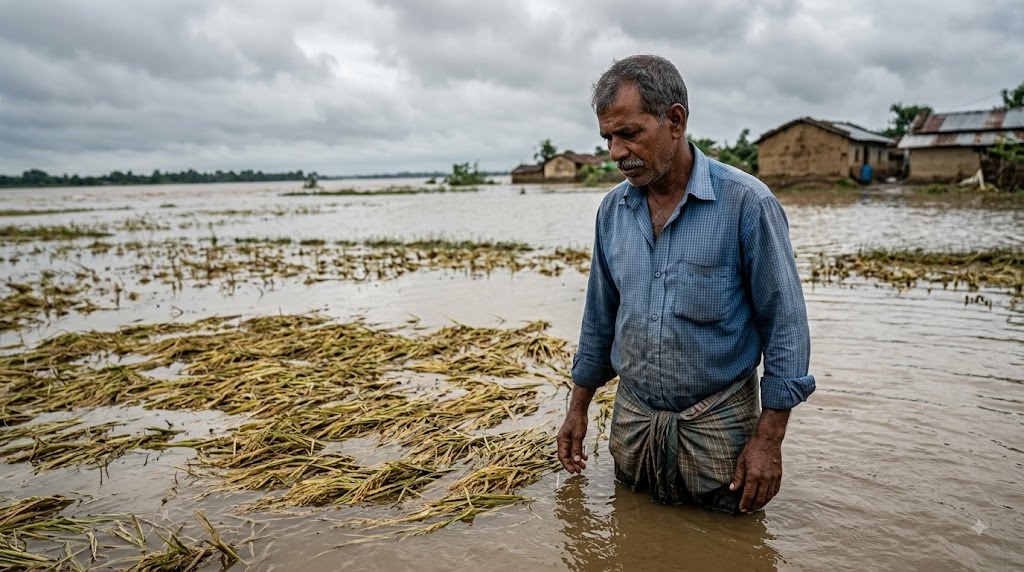
The flood situation near baitarani river has escalated into a severe humanitarian crisis as deep depressions over the Bay of Bengal trigger relentless heavy rainfall across Northern Odisha. Currently, surging floodwaters have impacted over 7.85 lakh individuals spread across six districts. Rivers like the Baitarani, Subarnarekha, and Budhabalanga have breached their danger marks, prompting local administrations to execute mass evacuations. Residents face unprecedented challenges as vast agricultural tracts and low-lying villages remain entirely submerged under the turbulent currents.
Authorities continue to monitor the water levels closely. While the India Meteorological Department (IMD) issues further rainfall warnings, the state disaster management units work around the clock. Understanding the ground reality requires a closer look at the affected demographics, the administrative response, and the geographical devastation gripping the region.
Also Read :PMGSY-IV Launch: Shivraj Singh Chouhan Pushes Rural Connectivity in Odisha
Analyzing the Escalating Flood Situation Near Baitarani River
The most pressing concern for disaster management officials remains the rapidly deteriorating flood situation near baitarani river. Swelling beyond its embankments, the river has disrupted vital communication lines, roadways, and power supplies in the adjoining districts. Bhadrak and Jajpur face the brunt of this overflow. Unprecedented downpours in the catchment areas of Keonjhar have drastically increased the water inflow, leaving downstream residents vulnerable to flash inundations.
Meanwhile, the Subarnarekha river complements this devastation in the Balasore district. The simultaneous swelling of both major rivers creates a bottleneck for drainage, extending the duration of the waterlogging. Rescue personnel note that the current flood situation near baitarani river mirrors some of the most destructive natural disasters the state has witnessed over the past decade.
| District Name | Total People Affected | Primary River Impacting Region | Current Emergency Relief Measures |
| Balasore | 3.5 Lakh | Subarnarekha | 120 Relief Camps Active, Free Kitchens |
| Bhadrak | 2.1 Lakh | Baitarani | 85 Relief Camps Active, Boat Rescue Ops |
| Jajpur | 1.0 Lakh | Baitarani | 50 Relief Camps Active, Medical Deployments |
| Mayurbhanj | 0.8 Lakh | Budhabalanga | 40 Relief Camps Active, Tarpaulin Distribution |
| Keonjhar | 0.25 Lakh | Baitarani | Preemptive Evacuations in Progress |
| Kendrapara | 0.2 Lakh | Brahmani / Baitarani | High Alert Issued, Shelters Operational |
Ground Zero: Devastation in Bhadrak and Jajpur
In Bhadrak, the flood situation near baitarani river has forced thousands of families to abandon their ancestral homes and seek refuge on higher ground and state-highway shoulders. Mud houses have collapsed, and essential supplies have dwindled. Farmers report massive agricultural losses as floodwaters suffocate standing paddy crops just weeks before the harvest season.
In Jajpur district, the narrative remains equally grim. Officials have deployed heavy machinery to reinforce weakened river embankments, but the sheer force of the current makes stabilization difficult. The local economy, which relies heavily on daily wage labor and agriculture, has come to a standstill. The persistent flood situation near baitarani river prevents supply trucks from reaching interior villages, compounding the food security threat.
Disaster Response Operations Across Affected Zones
To combat the worsening flood situation near baitarani river and adjoining basins, the state government has mobilized massive rescue infrastructure. Multiple teams from the National Disaster Response Force (NDRF) and the Odisha Disaster Rapid Action Force (ODRAF) are actively navigating submerged villages using mechanized inflatable boats.
The administration has opened hundreds of free kitchens to provide cooked meals to the displaced population. Medical teams conduct health camps within these temporary shelters to prevent outbreaks of waterborne diseases like cholera and typhoid, which typically follow such severe inundations. However, navigating the treacherous currents to rescue stranded livestock remains a significant challenge for the ODRAF teams on the ground.
Economic and Agricultural Impact of the Inundation
Beyond the immediate threat to human life, the long-term economic fallout from the flood situation near baitarani river poses a severe challenge for the state’s agricultural sector. Initial surveys suggest that floodwaters have inundated over 1.5 lakh hectares of agricultural land. The prolonged submergence cuts off oxygen to the roots of the paddy crops, leading to inevitable rotting and massive financial losses for marginal farmers.
Authorities have promised comprehensive damage assessments once the water recedes. However, the exact compensation timeline remains uncertain. Infrastructure damage is equally colossal; rural roads have washed away, and several minor bridges have collapsed under the pressure of the surging currents. Rebuilding this infrastructure will require significant funding and months of labor.
Weather Forecast: Meteorological Triggers Behind the Inundation
Meteorologists trace the current flood situation near baitarani river directly back to a deep depression that formed over the Bay of Bengal, moving steadily across the coastal belt. This weather system dumped exceptionally heavy rainfall over the river catchment areas within a 48-hour window.
While the IMD indicates that the depression is gradually weakening as it moves northwest, they still forecast moderate to heavy rainfall in isolated pockets of North Odisha. Consequently, the flood situation near baitarani river may take several days to normalize. Dam authorities continue to release excess water through spillways to prevent structural failures, a necessary step that unfortunately prolongs the flooding in downstream constituencies.
Finding Refuge Beyond the Rising Tides of Worldly Calamities
As we witness the devastating flood situation near baitarani river, we are abruptly reminded of human fragility in the face of nature’s immense power. Despite advanced technology, infrastructure, and administrative preparedness, natural disasters effortlessly strip away hard-earned worldly possessions, homes, and security. Such calamities force humanity to confront a profound truth: the mortal world we inhabit is inherently unstable and full of suffering.
The spiritual philosophy of the ages tells us that this physical universe (Kaal Lok) is designed where souls experience cycles of temporary joy followed by severe sorrow. We toil endlessly to build material security, only to watch it wash away in a single turbulent storm. True peace, absolute security, and eternal protection cannot be found in a world governed by impermanence and natural destruction.
Sant Rampal Ji Maharaj imparts the spiritual knowledge that our ultimate spiritual refuge is Satlok (the Eternal Realm), where suffering, natural disasters, and mortality do not exist. Through sincere spiritual practice and by seeking true spiritual knowledge, a soul learns to navigate the trials of the physical world while working toward ultimate liberation (Moksha). In times of widespread crisis, reflecting on these eternal truths offers lasting inner peace. To explore these teachings further, individuals can watch the spiritual discourses available on the official YouTube Channel of Sant Rampal Ji Maharaj.
Frequently Asked Questions About the Flood Situation Near Baitarani River
1. Which districts are most impacted by the flood situation near baitarani river?
The districts most severely impacted by the flood situation near baitarani river include Bhadrak, Jajpur, and Keonjhar, along with adjoining regions in Balasore, Mayurbhanj, and Kendrapara.
2. How many people are affected by the flood situation near baitarani river in North Odisha?
Official estimates report that over 7.85 lakh people across six Northern Odisha districts are directly affected by the ongoing flood situation near baitarani river and neighboring river basins.
3. What rescue teams are deployed to handle the flood situation near baitarani river?
The state government has deployed multiple units of the National Disaster Response Force (NDRF) and the Odisha Disaster Rapid Action Force (ODRAF) equipped with powerboats to manage evacuations and deliver relief supplies.
4. What caused the sudden severe flood situation near baitarani river?
The flood situation near baitarani river was caused by a deep depression over the Bay of Bengal that delivered intense, uninterrupted rainfall over the catchment areas of Keonjhar and Northern Odisha within a 48-hour period.
5. How are relief operations being managed for displaced residents?
Local authorities have established over 300 temporary relief camps, opened free community kitchens, and deployed mobile medical teams to provide shelter, food, and healthcare to families affected by the floodwaters.
Related Stories









Discussion (0)