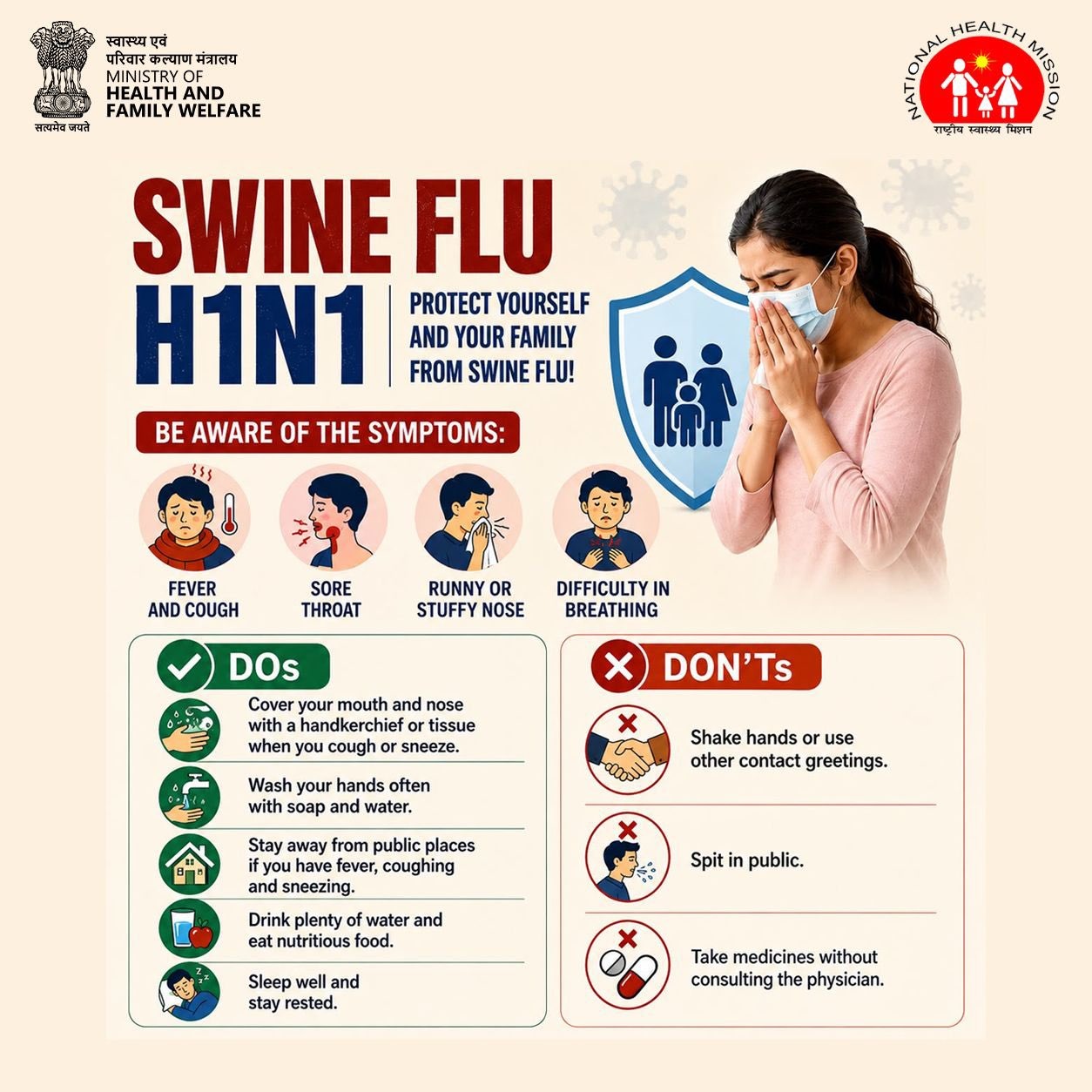
H1N1 Swine Flu Cases Rise Across India, But ICMR Says No New Strain
H1N1 swine flu cases are rising significantly across several parts of India during the ongoing monsoon season, with major urban hubs like Delhi and Karnataka reporting notable increases in hospitalizations and laboratory confirmations.
According to official health data, Delhi recorded 1,777 confirmed H1N1 cases by August 20, while Karnataka’s total tally reached 4,125 by August 22. Despite the sudden surge in swine flu cases in India, the Indian Council of Medical Research (ICMR) has confirmed that no new H1N1 strain has been detected in the country.
Also read : https://tubelighttalks.com/smart-cancer-drug-rk-251-replace-chemotherapy-2026/
Understanding the H1N1 Swine Flu Surge in India
H1N1 swine flu, a subtype of the Influenza A virus, is now an established part of the annual seasonal influenza in India. It circulates alongside other seasonal strains, such as H3N2.
The recent uptick has been reported across multiple major cities, including Delhi, Bengaluru, Mumbai, and parts of Kerala. The surge directly coincides with the monsoon season, a period when humidity and indoor crowding traditionally boost respiratory virus transmission.
Delhi H1N1 Surge Statistics
By August 20, Delhi’s health department recorded 1,777 confirmed H1N1 cases, with 114 fresh infections reported on a single day (August 20). Cumulatively, the national capital logged 2,392 Influenza-A cases by that date, with H1N1 accounting for the vast majority of infections.
This represents a steep increase compared to the 229 H1N1 cases recorded during the same period last year.
| Indicator | Reported Figure (2026) |
| H1N1 cases in Delhi by August 20 | 1,777 |
| Fresh H1N1 cases recorded on August 20 | 114 |
| Total Influenza-A cases by August 20 | 2,392 |
| H1N1 cases in corresponding period (2025) | 229 |
The rapid increase prompted Union Health Minister J.P. Nadda to conduct a high-level review with health officials to evaluate hospital preparedness, testing capacities, and laboratory surveillance for severe acute respiratory infections (SARI).
Karnataka H1N1 Cases Cross 4,000 Mark
Karnataka is witnessing a parallel rise in H1N1 cases in Karnataka. As of August 22, the state recorded 4,125 H1N1 cases in 2026, closely approaching its total annual count of 4,583 cases for the entire year of 2025.
Key Regional Breakdown:
- Greater Bengaluru Authority Area: 2,033 cases
- Bengaluru Urban District: 982 cases
- Udupi District: 293 cases
- Mysuru District: 184 cases
Health Minister U.T. Khader stated that state authorities are reviewing containment measures and surveillance strategies, noting that the seasonal peak is expected to taper off only by late September.
In Bengaluru, a local school temporarily suspended offline classes after nearly 500 students and 21 staff members exhibited flu-like symptoms. Health authorities clarified that while flu-like illnesses spread rapidly in classroom settings, only two cases were laboratory-confirmed as H1N1 in that specific cluster.
ICMR Clarification: No New H1N1 Strain Detected
Amid public concern over the high case numbers, the ICMR released findings confirming that no new H1N1 variant has emerged.
ICMR Surveillance Findings:
The circulating strain is identified as Influenza A (H1N1) pdm09, specifically belonging to clade 6B.1A.5a2a and subclade D.3.1.1 (similar to the A/Missouri/11/2025 strain). This strain has been in continuous seasonal circulation since 2025.
ICMR experts emphasized that the circulating virus remains a well-understood seasonal strain and matches the recommended strains included in standard Northern Hemisphere influenza vaccines.
Why Are H1N1 Cases Rising During the Monsoon?
Influenza viruses circulate in India throughout the year, but surveillance data from the National Institute of Virology (NIV) shows distinct activity peaks during the monsoon months (July to September).
Monsoon environmental conditions do not generate the virus, but human behavioral changes during rainy weather create ideal conditions for transmission:
- Indoor Crowding: Rain leads to longer periods spent inside poorly ventilated spaces like classrooms, offices, and public transport.
- High Humidity: Droplets suspended in humid air stay viable longer on surfaces and in shared spaces.
- Presenteeism: Individuals attending work or social functions while experiencing mild fever or colds unknowingly accelerate community transmission.
Delhi-NCR Survey Reveals Widespread Flu-Like Illness
A comprehensive survey by LocalCircles published on August 23 collected over 32,000 responses across Delhi, Gurugram, Noida, Faridabad, and Ghaziabad.
The survey highlighted widespread household impact:
- 54% of households reported having at least one member with viral-fever or flu-like symptoms.
- 39% of households had two or more members sick at the same time.
- 23% of households reported four or more symptomatic family members.
Note: Survey results reflect self-reported symptomatic illness across the population, whereas official health department data accounts strictly for laboratory-confirmed H1N1 cases in India.
H1N1 Symptoms, Vulnerable Groups, and Prevention
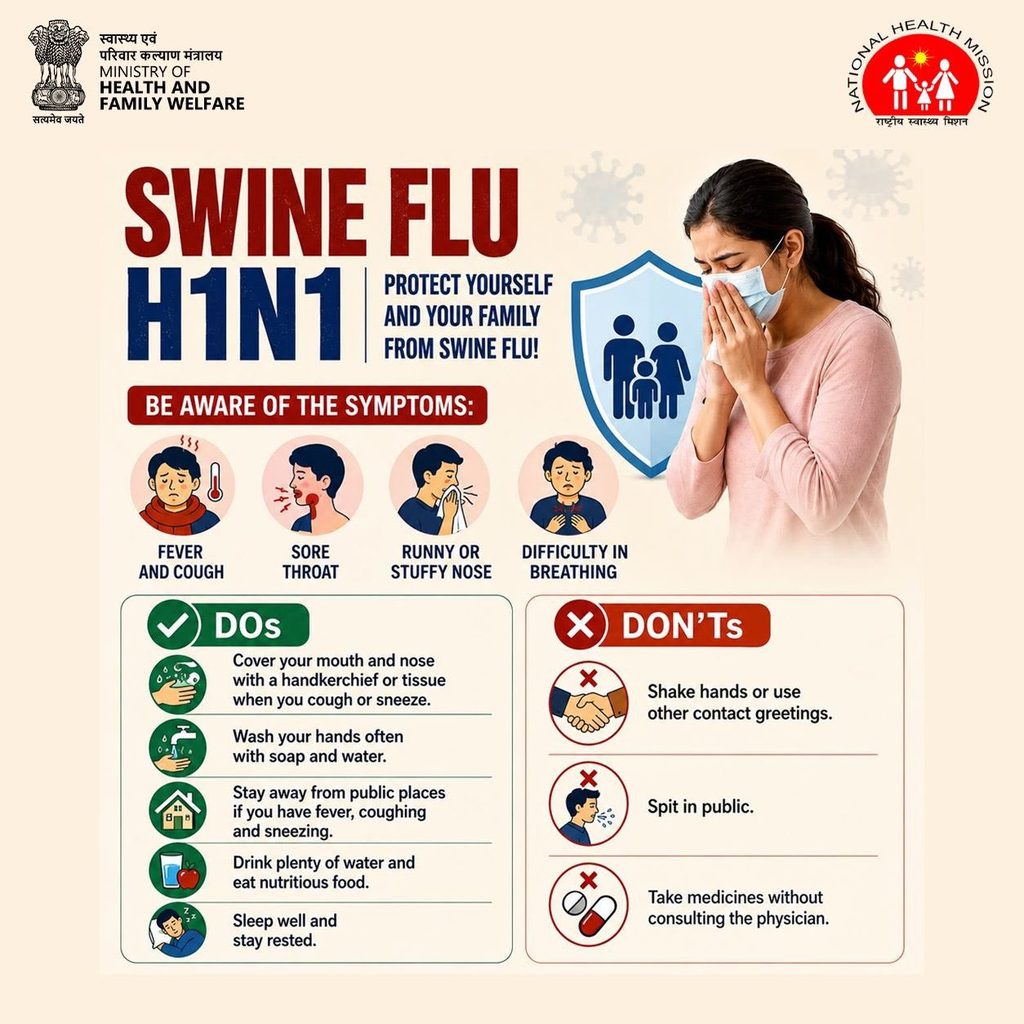
For most healthy individuals, H1N1 swine flu resolves on its own with adequate rest, hydration, and supportive treatment. However, high-risk groups face an elevated risk of severe respiratory complications such as pneumonia.
Common Symptoms:
- High fever and chills
- Persistent cough and sore throat
- Severe body aches and headache
- Fatigue and general weakness
High-Risk Populations:
- Young children and infants
- Adults aged 65 and older
- Pregnant women
- Individuals with chronic asthma, COPD, or heart conditions
- Immunocompromised individuals and patients with diabetes
Dr. Chirag Tandon, Director of Internal Medicine at ShardaCare-HealthCity, noted:
“Not every H1N1-infected patient develops breathing complications. The vast majority recover safely with standard supportive medical care.”
Recommended Preventive Steps:
- Hand Hygiene: Wash hands regularly with soap and water or use an alcohol-based sanitizer.
- Respiratory Etiquette: Cover your mouth and nose with a tissue or flexed elbow when coughing or sneezing.
- Mask Wearing: Use a well-fitted mask in crowded, enclosed public spaces.
- Isolation: Stay home when feeling unwell to avoid infecting coworkers or classmates.
- Medical Consultation: Seek immediate medical care if experiencing shortness of breath, continuous chest pain, or persistent high fever.
At a Glance: Current H1N1 Situation in India
| Metric / Focus | Current Status |
| National Trend | Elevated seasonal activity across urban centers |
| Delhi Confirmed Cases | 1,777 (as of Aug 20, 2026) |
| Karnataka Confirmed Cases | 4,125 (as of Aug 22, 2026) |
| Circulating Strain | A/Missouri/11/2025 (H1N1) pdm09-like |
| Genetic Classification | Clade 6B.1A.5a2a / Subclade D.3.1.1 |
| ICMR New Strain Alert? | No. Known seasonal strain circulating since 2025 |
| Vaccine Compatibility | High match with current Northern Hemisphere vaccines |
Spiritual Perspective: Seeking Higher Refuge in Times of Crisis
Outbreaks of illness serve as a stark reminder of human vulnerability and the importance of maintaining physical health alongside spiritual well-being.
According to the spiritual teachings of Tatvdarshi Sant Rampal Ji Maharaj, human life is a rare opportunity to attain true spiritual wisdom. While taking practical medical precautions during health crises is essential, spiritual guidance teaches that Supreme God Kabir Ji is the ultimate liberator (Sankat Mochan) who protects true devotees from suffering.
Sant Rampal Ji Maharaj Ji emphasizes that alongside responsible health management and adherence to medical advice, individuals should pursue authentic spiritual devotion to fulfill the higher purpose of human life.
Frequently Asked Questions (FAQs)
1. Is there a new H1N1 strain causing the current surge in India?
No. The Indian Council of Medical Research (ICMR) has confirmed that no new H1N1 strain has emerged. The virus currently circulating is the standard seasonal H1N1 pdm09 strain that has been present in India since 2025.
2. How many H1N1 cases have been reported in Delhi?
Delhi recorded 1,777 confirmed H1N1 cases by August 20, 2026, which is significantly higher than the 229 cases reported during the same period in 2025.
3. How severe is the H1N1 situation in Karnataka?
Karnataka reported 4,125 confirmed H1N1 cases by August 22, 2026, with over 2,000 cases originating from the Greater Bengaluru area alone.
4. Why do swine flu cases spike during the monsoon season?
Rainy weather forces people to spend more time indoors in close proximity. High humidity and restricted ventilation in enclosed spaces accelerate the transmission of airborne viral particles.
5. Is the 2026 H1N1 surge comparable to the 2009 pandemic?
No. The 2009 outbreak was driven by a completely novel virus to which the global population had no prior immunity. The 2026 surge involves an established seasonal influenza strain for which population immunity and effective vaccines exist.
Related Stories





Discussion (0)