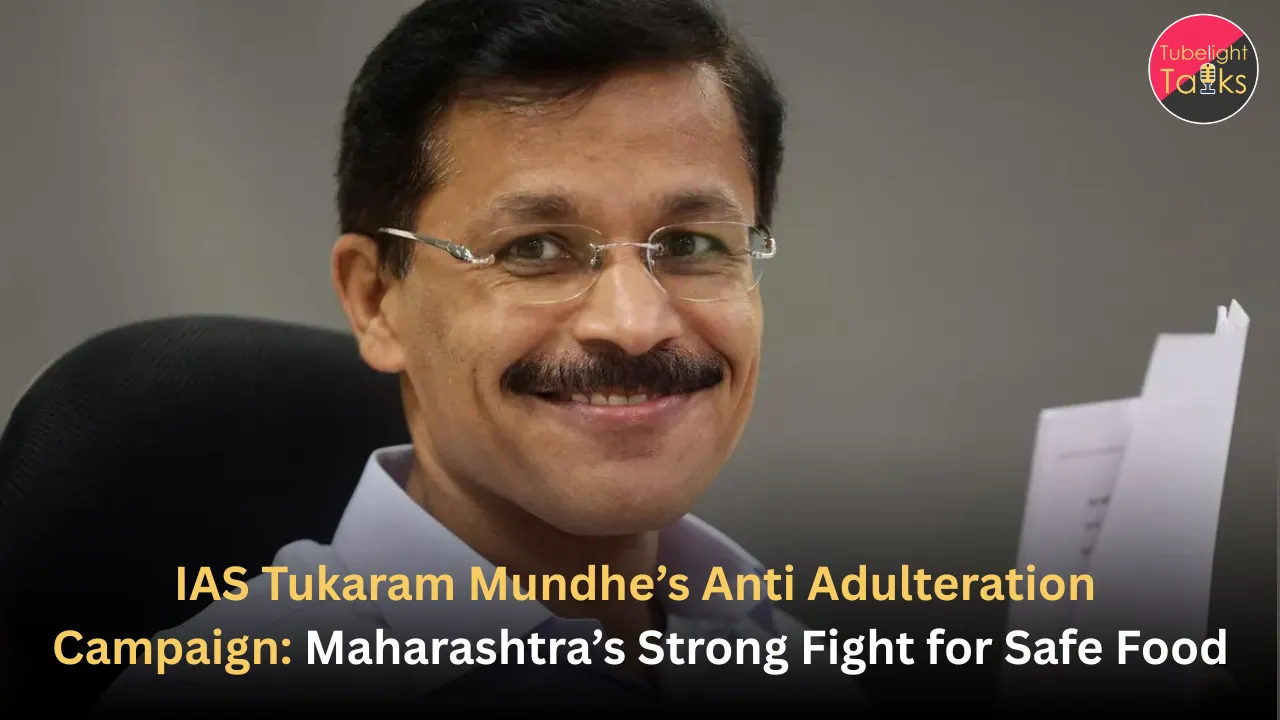
IAS Tukaram Mundhe’s Anti Adulteration Campaign: Maharashtra’s Strong Fight for Safe Food
IAS Tukaram Mundhe’s Anti Adulteration Campaign: Food is one of the most basic necessities of human life, but food becomes a serious public-health concern when it is adulterated, contaminated or prepared under unhygienic conditions. Food adulteration can reduce nutritional value and, depending on the substance involved and level of exposure, may pose health risks to consumers. For this reason, effective food-safety regulation is essential for protecting public health.
In Maharashtra, the issue of food safety has received renewed attention in 2026 following intensified enforcement by the state Food and Drug Administration (FDA) under Commissioner IAS Tukaram Mundhe. Maharashtra FDA’s stated mission is “Safe Food, Safe Drugs, Safe Maharashtra,” and its recent enforcement activities have focused on improving compliance across different parts of the food sector.
Tukaram Mundhe assumed charge as Maharashtra FDA Commissioner on May 25, 2026. Since then, the department has expanded inspections and enforcement against food-safety violations. Reports and FDA updates indicate that the campaign has covered milk adulteration, hotels, restaurants, bakeries, food manufacturers, food warehouses and other food businesses.
What Is Food Adulteration?
Food adulteration refers broadly to practices that make food unsafe, substandard or misleading through the addition, substitution or removal of substances, or through poor handling and storage. Adulteration can occur intentionally for economic gain, but food can also become unsafe because of contamination, improper storage, poor hygiene or inadequate processing.
Common concerns include:
– Addition of inferior or unauthorized substances
– Use of prohibited colours or chemicals
– Sale of expired or unsafe food
– Contamination during storage
– Poor personal hygiene among food handlers
– Pest infestation
– Improper temperature control
– Repeated use of degraded cooking oil
– Misleading labelling or traceability problems
Food safety therefore involves much more than identifying one adulterant. It requires control of the complete food chain- from production and transportation to storage, processing, preparation and sale.
Milk Adulteration Becomes a Major Focus
Milk is one of the most widely consumed food products in India, making its safety particularly important. Maharashtra FDA launched a statewide compliance drive against milk adulteration under Tukaram Mundhe. The drive includes greater attention to labelling, traceability and cold-chain requirements throughout the dairy supply chain.
The milk supply chain involves several stages, including collection, transportation, processing, distribution, wholesale and retail. Any weakness at one stage can affect the quality and safety of the final product.
Reports on the campaign have also described action against suspected synthetic-milk production units and increased scrutiny of dairies, transporters, distributors, wholesalers and retailers.
This approach is important because food adulteration cannot be effectively controlled by inspecting only shops. Regulatory authorities need to examine the entire supply chain and identify where unsafe practices originate.
Strict Action Against Hotels and Restaurants
Restaurants, hotels, dhabas, bakeries and other food establishments are another important focus of the campaign.
According to information shared by Maharashtra FDA Commissioner Tukaram Mundhe, inspections have identified concerns such as repeatedly reused degraded cooking oil, synthetic colours, pest infestation, uncertified food handlers and unlicensed operations.
These issues can directly affect consumers because food is prepared and served at these establishments every day.
The campaign has therefore emphasized basic food-safety requirements such as:
– Clean cooking areas
– Safe drinking water
– Proper food storage
– Pest control
– Hygienic food handling
– Proper licensing
– Appropriate labelling
– Safe cooking practices
– Prevention of contamination
The objective is not simply to punish businesses but to ensure that food businesses understand and follow the required safety standards.
Action Against Major Food Establishments
The enforcement drive has also attracted attention because inspections have included outlets of well-known food chains.
Reuters reported that Maharashtra authorities shut four Domino’s outlets and one Pizza Hut outlet over hygiene-related violations. The inspections reportedly identified issues including insect infestation, grease residue and missing expiry information.
Such action sends an important message: food-safety rules apply to businesses regardless of their size, popularity or brand recognition.
At the same time, enforcement action should always follow applicable legal procedures, inspection findings and opportunities for businesses to comply with regulatory requirements.
Quick-Commerce Warehouses Under FDA Scanner
The modern food system increasingly depends on quick-commerce platforms and their warehouses. Consumers may order milk, packaged foods, fruits, vegetables and other products through online applications and receive them within minutes.
This creates new food-safety challenges because products must be stored appropriately in warehouses before delivery.
In August 2026, Maharashtra FDA inspections extended to quick-commerce warehouses. Reuters reported that inspections covered establishments associated with Eternal’s Blinkit, Swiggy Instamart and Zepto, with permits suspended at 12 warehouses because of hygiene-related concerns. The report said 86 establishments were inspected and 60 improvement notices were issued.
The action demonstrates that food safety must keep pace with changes in consumer behaviour and food-delivery systems.
Food Safety for Children
One of the most important aspects of the campaign is its focus on children.
Maharashtra FDA launched a statewide initiative called “Safe Food For Every Child in Maharashtra.” The campaign focuses on food-safety standards in school canteens, hostel messes and midday-meal providers.
Children are particularly important stakeholders because food consumed at schools and hostels can affect a large number of students simultaneously.
Ensuring clean kitchens, safe drinking water, hygienic food preparation, proper storage and safe ingredients can reduce the risk of foodborne illness and improve the overall quality of institutional meals.
Why Food Safety Inspections Matter
Regular inspections are essential because food-safety regulations are effective only when compliance is monitored.
A food business may have appropriate equipment and procedures on paper, but actual conditions can be different. Inspections allow authorities to examine real operating conditions.
During inspections, officers can assess:
1. Cleanliness of premises
2. Food-storage practices
3. Pest-control measures
4. Food-handler hygiene
5. Expiry dates
6. Labelling
7. Licensing
8. Cooking and preparation practices
9. Water quality
10. Potential contamination risks
Where violations are found, authorities can take action according to the applicable legal framework.
Role of Consumers in the Anti-Adulteration Campaign
Government enforcement alone cannot eliminate food adulteration. Consumers also have an important role.
Consumers should remain alert while purchasing food products. They can check:
– Manufacturing and expiry dates
– Packaging condition
– FSSAI licence details where applicable
– Product labels
– Storage conditions
– Unusual smell, colour or appearance
– Whether refrigerated products have been stored properly
Consumers should also avoid purchasing food from clearly unhygienic premises.
Maharashtra FDA has promoted public participation in food-safety enforcement. Its online complaint platform provides information about food-safety updates and enables consumers to engage with the department regarding complaints.
Technology and Public Participation
Technology can make food-safety enforcement more transparent and accessible.
Also Read: Tukaram Mundhe IAS Officer: The Fearless Administrator Reshaping Governance
Digital complaint systems can allow consumers to report suspected violations and provide information about locations where unsafe food practices may be occurring.
Reports in August 2026 also described a website created by a young person to help spread information about the campaign and enable citizens to report suspected adulterated-food locations.
Such citizen participation can complement official inspections.
However, consumers should avoid spreading unverified allegations on social media. Complaints should be based on genuine observations and submitted through appropriate official channels.
The Importance of Traceability
Traceability is particularly important in food safety.
If an unsafe food product is identified, authorities should ideally be able to determine:
– Where it was produced
– Which supplier provided it
– How it was transported
– Where it was stored
– Which businesses sold it
– Which consumers may have been exposed
The Maharashtra FDA’s milk-safety drive’s emphasis on traceability demonstrates why documentation throughout the supply chain matters.
A strong traceability system can help authorities identify problems faster and prevent unsafe products from reaching more consumers.
Food Adulteration and Public Health
Food adulteration is not merely an economic issue. It can become a public-health issue when unsafe substances, contaminants or poor hygiene practices enter the food chain.
The possible consequences depend on the type and level of contamination. They may range from immediate foodborne illness to longer-term health concerns in cases involving repeated exposure to harmful substances.
Therefore, food safety should be viewed as preventive healthcare.
The safest approach is to prevent contamination before food reaches consumers rather than dealing with health consequences afterward.
Challenges in Controlling Food Adulteration
Despite strict enforcement, eliminating food adulteration is difficult.
India has a large and diverse food sector that includes:
– Large food-processing companies
– Small manufacturers
– Street vendors
– Restaurants
– Dhabas
– Dairy businesses
– Local retailers
– Wholesale markets
– Online food businesses
– Quick-commerce warehouses
Each segment presents different regulatory challenges.
Small businesses may lack technical knowledge or resources to implement modern food-safety systems. Large businesses may have sophisticated systems but operate at a scale where maintaining uniform compliance across every outlet can be difficult.
Therefore, enforcement should ideally be combined with education, training, testing facilities and awareness.
Need for Food-Safety Awareness Among Farmers and Producers
Food safety begins before food reaches the market.
Farmers and primary producers also play an important role in maintaining quality. Responsible use of agricultural inputs, clean harvesting practices, proper storage and safe transportation can contribute to the safety of agricultural produce.
For students of agriculture, food safety is therefore connected with the complete agricultural value chain.
From farm to fork, every stage matters.
This includes:
Production → Harvesting → Processing → Storage → Transportation → Retail → Consumer
A failure at any stage can compromise food quality.
Role of Food Businesses
Food businesses should treat food safety as a core responsibility rather than merely a regulatory requirement.
Every food establishment should develop a culture of hygiene.
Important practices include:
– Regular cleaning
– Pest management
– Safe water supply
– Proper waste disposal
– Temperature control
– Employee hygiene training
– Safe food storage
– Proper documentation
– Regular equipment maintenance
– Compliance with licensing requirements
Training food handlers is particularly important because human handling can become a major source of contamination.
Strict Enforcement and Fair Regulation
A strong food-safety campaign requires both strict enforcement and fair regulatory procedures.
Businesses that deliberately violate food-safety standards should face appropriate action. At the same time, regulatory decisions must be supported by proper inspection procedures, evidence and applicable law.
This balance is essential for maintaining public confidence.
Recent developments also show why due process matters. On August 19, 2026, reports said the Bombay High Court directed Maharashtra FDA to pay ₹5 lakh compensation to a Pune sweet shop after questioning the continued suspension of its licence when a follow-up inspection reportedly showed compliance with 35 of 36 safety parameters.
The development highlights an important principle: strong enforcement and procedural fairness must work together.
A Broader Vision for Safe Maharashtra
The anti-adulteration campaign led by Tukaram Mundhe represents a broader effort to strengthen food-safety compliance across Maharashtra.
The official FDA mission itself is centred on “Safe Food, Safe Drugs, Safe Maharashtra.”
The campaign covers multiple areas rather than focusing on only one type of adulteration. Milk, restaurants, institutional food, food warehouses and other food businesses have all come under increased scrutiny.
This broader approach recognizes that modern food safety requires coordination across the entire food ecosystem.
Spirituality, Sant Rampal Ji Maharaj and Adulteration-Free Food
Whether it is milk, grains, fruits or vegetables, everyone deserves safe and unadulterated food. Let us spread awareness about food safety, encourage honest practices and work together for a healthier society. With spiritual values, scientific food-safety practices and responsible action, we can move towards a future where pure food and a healthy society become a shared goal.
For information about spiritual knowledge based on the Bhagavad Gita, the Four Vedas and the 18 Puranas, follow spiritual leader Saint Rampal Ji Maharaj on Instagram and explore His spiritual teachings.
The Annapurna Muhim, is presented as an initiative inspired by Sant Rampal Ji Maharaj to support poor and needy people with food, clothing and other essential items. The campaign also highlights assistance for people affected by disasters, floods and droughts, along with the broader message of serving humanity. Through such activities, the initiative seeks to encourage compassion, helping those in need and contributing to social welfare.
Frequently Asked Questions (FAQs) on Anti Adulteration Campaign
1. Who is leading Maharashtra’s current food-safety enforcement drive?
Maharashtra FDA Commissioner IAS Tukaram Mundhe is leading the intensified food-safety enforcement activities in the state in 2026.
2. What is the main objective of the anti-adulteration campaign?
The objective is to improve compliance with food-safety standards, identify adulteration and unsafe practices, protect consumers and strengthen the food-safety system across Maharashtra.
3. Is milk adulteration included in the campaign?
Yes. Maharashtra FDA has launched a statewide drive against milk adulteration, including stronger requirements relating to labelling, traceability and the dairy cold chain.
4. Are restaurants being inspected?
Yes. Restaurants, hotels, dhabas, bakeries and other food establishments have been subject to inspections for hygiene and food-safety compliance.
5. Are online food and grocery businesses also being checked?
Yes. Quick-commerce warehouses associated with major platforms have also been inspected as part of the broader food-safety enforcement drive.
6. What can consumers do if they suspect food adulteration?
Consumers should document genuine concerns and report them through appropriate Maharashtra FDA complaint channels rather than spreading unverified allegations on social media.
Related Stories






Discussion (0)