New Cat Species Identified in Bolivia After More Than a Century
A small wild cat living in Bolivia’s Yungas cloud forest has been formally identified as a new cat species, Leopardus tilcayo. Known locally as Tilcayo, the feline is the first living feline species to be newly described by science in more than 100 years.
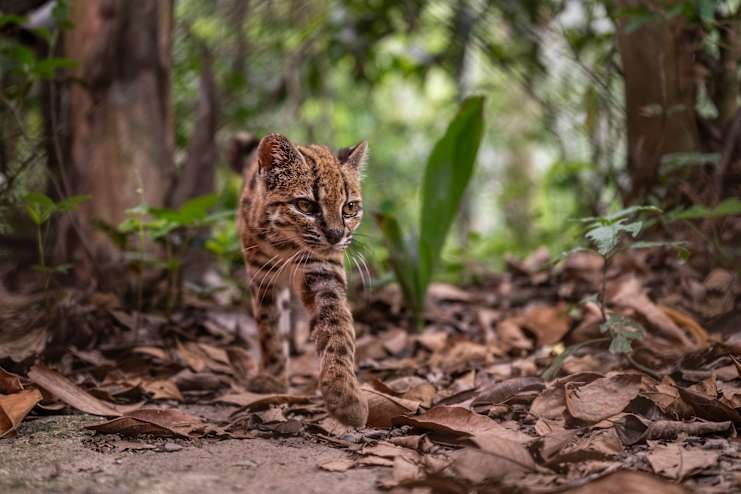
The newly identified Leopardus tilcayo in Bolivia’s Yungas forest region. Source: Wikipedia
Genetic analysis of 38 wild cats revealed that South America’s tiger cats comprise five genetically distinct species. The discovery highlights how modern DNA analysis can uncover hidden biodiversity within threatened ecosystems.
Also read : https://tubelighttalks.com/one-health-movement/
Bolivia’s Yungas Forest Reveals a New Cat Species
The newly identified Leopardus tilcayo lives in Bolivia’s Yungas forest, a mountainous region on the eastern slope of the Andes where high humidity creates dense cloud cover.
Local communities already knew the animal as Tilcayo, and researchers retained that indigenous name when granting it the official scientific name Leopardus tilcayo. The feline belongs to the group commonly known as tiger cats, which are small spotted wild cats native to South America.
The cat measures about 46 centimetres in length and weighs approximately 1.4 kilograms (3 pounds), making it smaller than an average domestic cat. It features light-brown fur covered in irregularly shaped rosettes and unique facial markings.
The known individual in protective care currently lives at the Senda Verde Wildlife Sanctuary in Bolivia’s Yungas region. It arrived at the sanctuary in 2017 after previously being kept by a local family who mistook it for a domestic pet.
Genetic Research Confirmed a Distinct New Cat Species
The recognition of Leopardus tilcayo as a new cat species relied heavily on detailed genetic sequencing rather than physical appearance alone.
Tiger cats are considered cryptic species, meaning closely related species look nearly identical and are difficult to distinguish visually. For decades, researchers treated tiger cats across South America as a single species despite subtle geographic differences.
An international research team analysed DNA samples from 38 cats across several South American countries, including eight historical museum specimens. Genome sequencing of museum bone fragments and living animals confirmed that South America’s tiger cats consist of five distinct genetic lineages.
The genetic data showed that the evolutionary lineage leading to Leopardus tilcayo separated from other tiger cats approximately 1.4 million years ago. This degree of genetic divergence strongly supports treating the Bolivian lineage as a standalone species.
The scientific study also described a new tiger cat subspecies from Peru’s Yungas region, named Leopardus tigrinus antisuyo, named after the ancient Inca region Antisuyu.
How Scientists Realised the Cat Was Different
The unique Bolivian cat caught the attention of Paola Nogales-Ascarrunz, a National Geographic Explorer and lead author of the study. Its physical features did not match traditional descriptions of tiger cats, which were historically based on Brazilian specimens.
Nogales-Ascarrunz initially encountered the cat at a wildlife sanctuary where it had been surrendered. After comparing its genetic profile with feline samples across South America, researchers confirmed that the Bolivian animal represented a unique lineage never before formally recognized by science.
| Key Detail | Verified Information |
|---|---|
| Scientific Name | Leopardus tilcayo |
| Local Name | Tilcayo |
| Primary Habitat | Bolivia’s Yungas Cloud Forest |
| Average Body Length | About 46 cm |
| Average Weight | About 1.4 kg (3 lbs) |
| Genetic Divergence Time | ~1.4 Million Years |
| Total Feline Samples Analysed | 38 Cats (including 8 museum specimens) |
| Total Distinct Tiger Cat Species | 5 Genetically Distinct Species |
| New Peruvian Subspecies | Leopardus tigrinus antisuyo |
Scientists Still Know Little About Its Lifestyle
Despite the formal identification of this new cat species, researchers note that much of its wild behavior remains mysterious.
Analysis of scat samples indicates that small rodents form a core part of its natural diet. Camera-trap records also suggest the cat is primarily nocturnal, hunting under the dense cover of the humid forest night.
Because present descriptions rely on a small group of live sanctuary animals and scattered camera trap sightings, researchers are deploying additional motion-activated camera traps throughout the Yungas forest to study its wild population density and behavior.
Yungas Habitat Faces Conservation Pressure
The discovery of a new cat species brings urgent attention to the environmental pressures facing Bolivia’s Yungas forest ecosystem.
The region faces increasing threats from deforestation, agricultural expansion, wild forest fires, and resource mining. These activities fragment the delicate cloud forest habitat upon which Leopardus tilcayo depends.
Currently, the International Union for Conservation of Nature (IUCN) treats tiger cats as two vulnerable species. The new genetic evidence showing five distinct species will require updated conservation evaluations to protect these newly recognized felines.
Why This Discovery Matters
The formal identification of Leopardus tilcayo is momentous because it represents the first living feline species formally named and described by science in over a century. The previous comparable feline description was the Uruguayan pampas cat back in 1923.
This milestone demonstrates how advanced genetic tools can uncover elusive species that remain hidden behind identical physical appearances. It redefines scientific understanding of South American biodiversity and creates an urgent framework for future cloud forest conservation.
Human Life Has A Deeper Purpose
The discovery of another distinct species highlights the immense diversity of life on Earth. According to the spiritual perspective shared by Tatvdarshi Sant Rampal Ji Maharaj, there are 8.4 million life forms, while human life is considered a precious opportunity.
He teaches that human life should not be wasted in merely animal-like pursuits, but should be used for SatBhakti and the welfare of the soul. The value of human life and each breath, therefore, is presented as a reminder to seek God. You are requested to listen to the discourses of Tatvdarshi Sant Rampal Ji Maharaj on Jagatguru Rampalji Official YouTube Channel.
FAQs on New Cat Species
Q1. What is the new cat species found in Bolivia?
The new cat species is Leopardus tilcayo, locally known as Tilcayo, a small tiger cat native to Bolivia’s Yungas cloud forest.
Q2. Where does the new cat species Leopardus tilcayo live?
The new cat species Leopardus tilcayo inhabits the high-altitude, humid Yungas cloud forests located along the eastern slopes of the Andes in Bolivia.
Q3. How was this new cat species identified by scientists?
Researchers identified the new cat species by analyzing DNA samples from 38 wild and museum cat specimens, proving that the Bolivian lineage diverged genetically around 1.4 million years ago.
Q4. How much does this new cat species weigh?
The feline weighs approximately 1.4 kilograms (3 pounds) and measures roughly 46 centimetres in length, making it smaller than a typical domestic cat.
Q5. Why is the discovery of this new cat species historically significant?
It marks the first time in over a century that scientists have formally named and described an entirely new living feline species.
Related Stories









Discussion (0)