Blood Moon Lunar Eclipse August 2026: Timings, Visibility, and Science
Get ready for one of the most spectacular celestial shows of the year. On the night of August 27–28, 2026, skywatchers across multiple continents will have the rare opportunity to witness a breathtaking blood moon lunar eclipse. During this exceptionally deep partial eclipse, nearly 96.2% of the Moon’s surface will plunge into Earth’s darkest shadow, scientifically known as the umbra. This precise cosmic alignment will cast a mesmerizing reddish-orange hue across the lunar surface, creating a stunning visual for millions of nighttime observers.
Whether you are a casual stargazer or a deeply invested astronomy enthusiast, this event offers a profound glimpse into the mechanics of our solar system. Because it closely follows the major total solar eclipse of August 12, this upcoming blood moon lunar eclipse perfectly illustrates the fascinating reality of why celestial events almost always arrive in pairs.
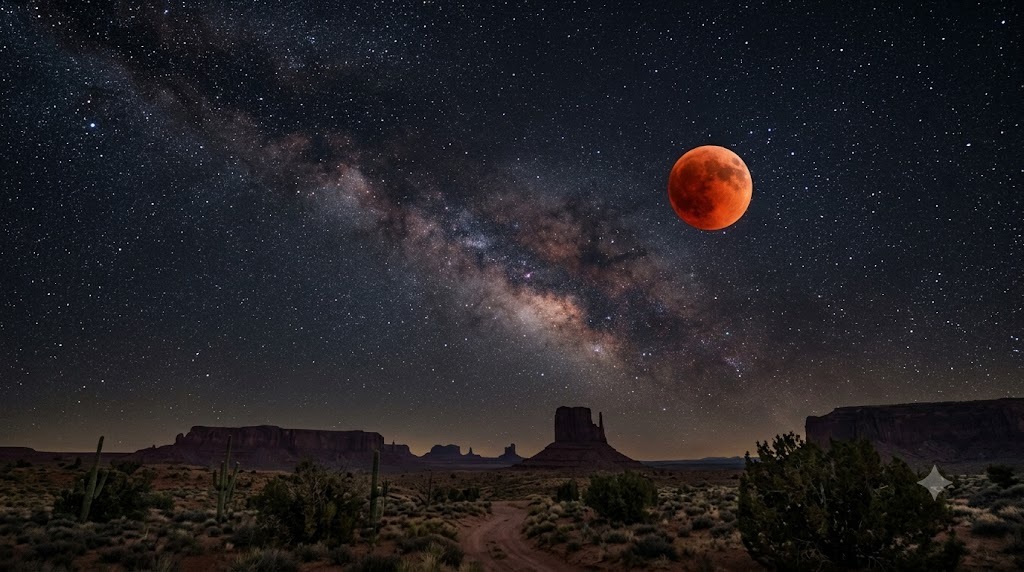
Science Behind the Blood Moon Lunar Eclipse
A blood moon lunar eclipse occurs when the Earth positions itself directly between the Sun and the Full Moon. As our planet completely blocks direct sunlight from hitting the lunar surface, the only light that reaches the Moon must first filter through Earth’s atmosphere. This global atmospheric filter scatters shorter blue light wavelengths out into space while allowing the longer red and orange wavelengths to pass through—a physics phenomenon known as Rayleigh scattering.
The visual result is a striking crimson, copper, or deep orange tint projected onto the shadowed portion of the Moon. While the term “blood moon” is not a formal astronomical classification, it perfectly captures the dramatic, reddish-orange appearance that captivates skywatchers worldwide. During the August 2026 eclipse, the massive 96.2% umbral coverage guarantees a deeply colored, highly visible spectacle.
Also Read: The Global Shockwave: When a SpaceX Rocket Crashes on the Moon
Why Solar and Lunar Eclipses Come in Pairs
Have you ever wondered why a solar eclipse is almost always followed quickly by a lunar one? The answer lies in orbital dynamics known as an “eclipse season.” An eclipse season is a relatively short, roughly 35-day period when the Sun, Earth, and Moon align closely enough in their orbital planes for their shadows to intersect.
The highly anticipated August 27–28 blood moon lunar eclipse is intricately linked to the total solar eclipse that occurred just over two weeks prior, on August 12, 2026. Because it takes the Moon approximately two weeks to travel halfway around its orbit around the Earth, a solar eclipse occurring during a New Moon is naturally followed by a lunar eclipse during the subsequent Full Moon.
The 2026 Eclipse Season Masterpiece
This year has been exceptionally rewarding for astronomy lovers. It began with an annular solar eclipse on February 17, which was immediately followed by a total lunar eclipse on March 3. Now, the August 12 total solar eclipse and this impending deep partial event conclude the year’s dramatic cosmic ballet.
Global Visibility: Where to Watch the Eclipse
Visibility for any lunar eclipse depends entirely on your geographic location and local time zone. Fortunately, this celestial event will cast its colorful glow over a massive portion of the globe, including North America, South America, Europe, Africa, and parts of western Asia.
Stargazers across the United States, particularly those on the East Coast and in the Midwest, will have prime viewing opportunities during the late evening hours of August 27 and the early morning of August 28. Observers in the United Kingdom and Western Europe will catch the peak shortly before sunrise, with the reddened Moon sitting low near the southwestern horizon.
Visibility in the Indian Subcontinent
Unfortunately for Indian skywatchers, the August 27–28 blood moon lunar eclipse will strictly not be visible from the Indian subcontinent. The eclipse reaches its maximum peak at 9:43 AM IST on the morning of August 28. Because it will be broad daylight and the Moon will be positioned well below the horizon, observers in India must rely on official telescope livestreams to experience the cosmic event.
Complete Timing Schedule for the Event
Timing is everything when it comes to observing astronomical events. Since the Earth’s umbra moves gradually, the eclipse phases unfold over several hours. Below is a detailed breakdown of the eclipse phases across major time zones to help you set your alarms accurately:
| Eclipse Phase | EDT (Eastern Daylight Time) | GMT (Greenwich Mean Time) | IST (Indian Standard Time) |
| Penumbral Eclipse Begins | 9:23 PM (Aug 27) | 01:23 AM (Aug 28) | 6:53 AM (Aug 28 – Not Visible) |
| Partial Eclipse Begins | 10:33 PM (Aug 27) | 02:33 AM (Aug 28) | 8:03 AM (Aug 28 – Not Visible) |
| Maximum Eclipse Peak | 12:12 AM (Aug 28) | 04:12 AM (Aug 28) | 9:43 AM (Aug 28 – Not Visible) |
| Partial Eclipse Ends | 01:51 AM (Aug 28) | 05:51 AM (Aug 28) | 11:21 AM (Aug 28 – Not Visible) |
Expert Viewing and Photography Tips
Unlike solar eclipses, a blood moon lunar eclipse is entirely safe to view with the naked eye. You absolutely do not need protective eclipse glasses or specialized ocular filters to enjoy the deep crimson glow. However, a few basic preparations can significantly enhance your nighttime viewing experience.
- Location: Attempt to find a dark location away from heavy city light pollution, ensuring you have an unobstructed view of the night sky.
- Optics: Using standard binoculars or a backyard telescope will reveal fascinating lunar crater details as the Earth’s shadow creeps slowly across the surface.
- Photography: If you plan to photograph the moment, use a sturdy tripod and a camera equipped with a telephoto lens to prevent blurring during low-light exposure times.
What to Expect Next in 2027
Once the August 28 event concludes, astronomy lovers will have to wait until February 20, 2027, for the globe’s next lunar eclipse. That upcoming event will only be a penumbral eclipse, which is far subtler and harder to detect than a deep partial blood moon lunar eclipse. Therefore, taking the time to witness this current August spectacle is highly recommended.
Historical and Astrological Context
For thousands of years, a blood moon lunar eclipse has sparked awe, deep wonder, and occasionally fear in ancient civilizations. Before modern astrophysics could easily explain orbital alignments and atmospheric light scattering, many cultures interpreted the sudden darkening and reddening of the Moon as a profound cosmic omen or a shift in earthly energies.
Even today, in Western astrology, the August 2026 alignment falls intensely on the Pisces-Virgo axis. Many astrologers view this specific astronomical configuration as a powerful period for emotional release, personal reflection, and decluttering one’s busy life. While science explains the physical mechanics, human beings continually seek a deeper meaning behind the breathtaking movements of the cosmos.
Navigating the Wonders of the Universe
Every single time we look up at a blood moon lunar eclipse, we are reminded of our place in the vast, perfectly ordered universe. The meticulous precision required for Earth’s shadow to cover exactly 96.2% of the Moon showcases an intricate, flawless planetary design.
As we track the exact minute the eclipse peaks, we marvel at the strict laws of physics. Yet, these extraordinary celestial phenomena often invite us to look far beyond physical sciences. They prompt us to ask profound questions about the original creation of the universe and the ultimate designer functioning behind this cosmic clockwork. Observing these alignments can be a deeply humbling experience that organically shifts our focus from worldly anxieties and fleeting news cycles to eternal, structural truths.
Beyond the Celestial Shadows: Discovering the True Creator
While a blood moon lunar eclipse is a breathtaking display of orbital physics, it also serves as a profound reminder of the supreme intelligence operating behind the universe. Science answers the “how” of these celestial alignments, but humanity’s soul naturally yearns to understand the “why.” In a world consistently overshadowed by daily stresses, geopolitical turmoil, and existential uncertainty, such cosmic events invite us to seek ultimate peace and true spiritual knowledge.
According to the deepest spiritual truths revealed in holy scriptures, this vast, orderly universe is not a random accident. The flawless mechanics of the sun, moon, and stars are actively governed by the Supreme Creator. The profound spiritual discourses of Sant Rampal Ji Maharaj illuminate that God Kabir (Kabir Saheb) is the ultimate architect of all realms and the entire cosmos. By understanding His true spiritual knowledge, humans can transcend the temporary, often painful cycles of nature and attain eternal liberation (Moksha).
Devotion based strictly on verified scriptural evidence, as guided by a true enlightened saint, is the absolute only way to find permanent peace and salvation from the endless cycle of birth and death. To delve deeper into the mysteries of the universe and discover the authentic path of true worship, watch the life-changing spiritual discourses on the spiritual YouTube Channel of Sant Rampal Ji Maharaj.
FAQs on Blood Moon Lunar Eclipse
Q1. What causes a blood moon lunar eclipse?
A blood moon lunar eclipse occurs when the Earth passes directly between the Sun and the Moon, casting its umbral shadow onto the lunar surface. Earth’s atmosphere filters out shorter blue wavelengths while bending longer red and orange light onto the Moon, giving it a reddish tint.
Q2. When will the August 2026 blood moon lunar eclipse reach its maximum peak?
The August 2026 blood moon lunar eclipse reaches its peak on August 28, 2026, at 12:12 AM EDT (04:12 GMT).
Q3. Why do solar and lunar eclipses occur in pairs?
Eclipses arrive in pairs during an “eclipse season,” which lasts about 35 days. Because the Moon takes roughly two weeks to complete half an orbit (moving from a New Moon to a Full Moon), a solar eclipse is naturally followed or preceded by a lunar eclipse.
Q4. Where will the August 2026 event be visible?
This celestial event will be visible across North America, South America, Europe, Africa, and parts of western Asia. It will not be visible in India due to daylight hours during peak alignment.
Q5. Do I need special protective gear to view a blood moon lunar eclipse?
No special protective gear is needed. Unlike solar eclipses, viewing a blood moon lunar eclipse is completely safe for the naked eye.
Related Stories










Discussion (0)