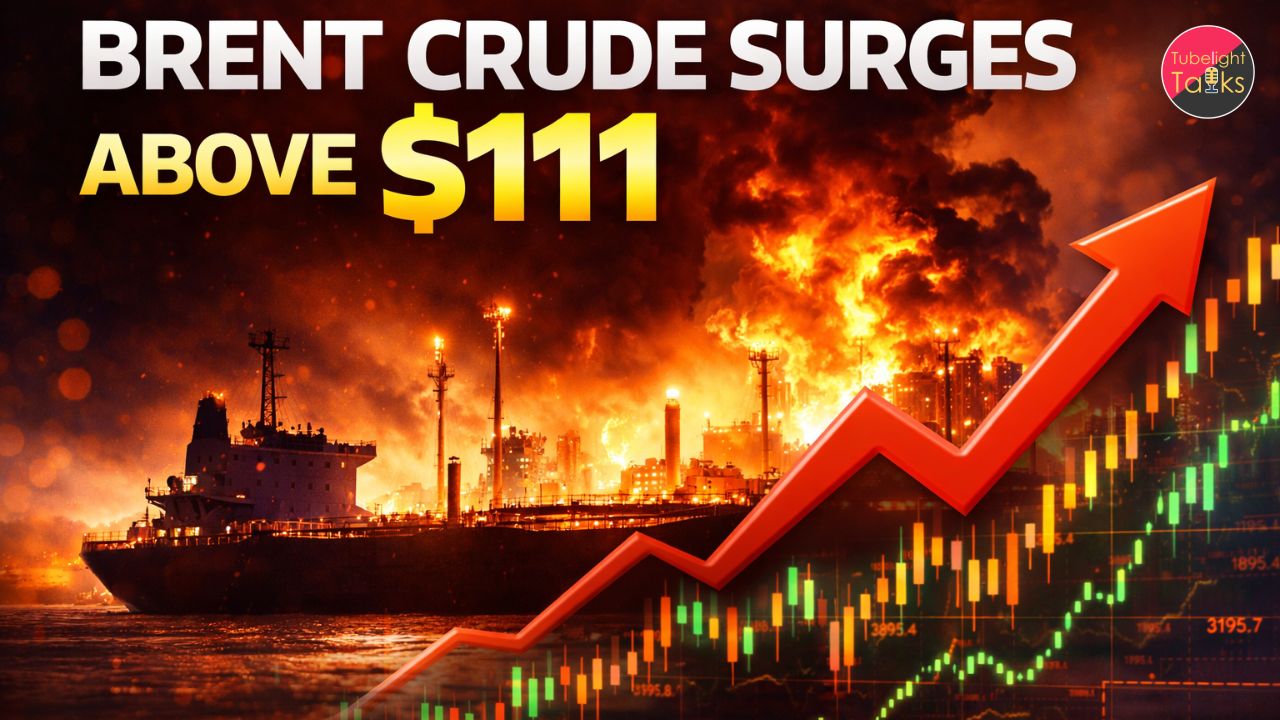
Brent Crude Price Surge Above $111 as Qatar LNG Damage Shocks Global Markets
Global energy markets were jolted on March 19, 2026, after a Brent crude price surge pushed prices above $111 per barrel in response to extensive damage at Qatar’s Ras Laffan industrial complex, one of the world’s most important LNG hubs. The disruption came amid a dangerous escalation involving Iran, Israel, Qatar, and the United States, with fears spreading from gas supply shortages to oil shipping risks in the Strait of Hormuz.
President Donald Trump said the U.S. had no prior knowledge of the specific strike on Iran’s South Pars gas field and warned Iran against further attacks on Qatari infrastructure, adding another layer of uncertainty to an already tense energy market.
Why Brent Crude Suddenly Spiked
Brent crude climbed sharply after traders assessed the scale of damage to Qatar’s Ras Laffan LNG hub and the broader risk of attacks on Gulf energy infrastructure. Reuters reported Brent touched $112.86 before easing slightly, while the Financial Times said the market reaction reflected fear that a local conflict was turning into a regional supply shock. Ras Laffan is especially sensitive because it is linked to roughly 20% of global LNG supply, making even temporary disruption a major threat to global energy security.
This is not only an oil price story. It is also a gas, shipping, insurance, and inflation story. When a major LNG hub is damaged, import-dependent economies in Asia and Europe begin pricing in tighter gas supply, higher freight costs, and more expensive power generation. That spillover effect often feeds into crude oil sentiment as traders anticipate substitution demand, logistical stress, and broader geopolitical risk across the Gulf.
What Happened at Qatar’s LNG Facilities?
Damage at Ras Laffan
QatarEnergy reported severe or extensive damage after Iranian missile attacks struck Ras Laffan Industrial City on March 18, 2026, according to Reuters and the Financial Times. The complex includes LNG trains and major facilities operated with international partners such as Shell, ExxonMobil, and TotalEnergies. Reuters said several facilities were hit and large fires broke out, though no casualties were immediately reported.
Why Ras Laffan Matters So Much
Ras Laffan is not just another industrial zone. It is one of the beating hearts of the global LNG trade. Any prolonged shutdown there can tighten supply chains from Europe to South Asia, especially for countries already exposed to volatile energy imports. Reuters also reported Qatar had already halted operations at key LNG facilities earlier in the crisis and recovery could take weeks to months even if hostilities ease soon.
The South Pars Trigger and Trump’s Response
Trump’s “Knew Nothing” Remark
Reuters reported on March 19 that President Donald Trump said Israel had attacked Iran’s South Pars gas field and that the United States and Qatar were not involved and had no advance knowledge of the specific operation. He also warned Iran not to retaliate against Qatar, which shares the giant gas field with Iran.
That claim, however, sits alongside separate reports cited by Reuters saying outlets such as the Wall Street Journal and Axios suggested Trump had prior knowledge and backed the plan, so the precise level of U.S. awareness remains contested in public reporting.
Why South Pars Is Strategically Critical
South Pars, linked with Qatar’s North Field, is the world’s largest natural gas reserve. On the Iranian side, it is central to domestic gas supply and power generation. AP reported that the field is an energy lifeline for Iran, while Reuters noted the broader conflict had already damaged installations in South Pars and Asaluyeh. Once South Pars entered the battlefield, the risk moved far beyond symbolic escalation and into the realm of real economic disruption.
Why the Strait of Hormuz Is Back in Focus
The Strait of Hormuz remains one of the world’s most sensitive maritime choke points, carrying about one-fifth of global oil and gas flows in normal times.
As threats to shipping intensified, hundreds of vessels reportedly halted operations and governments began discussing safe maritime corridors for stranded seafarers. Every military warning in this zone now carries immediate consequences for tankers, insurance premiums, freight costs, and delivery schedules.
For markets, the Hormuz risk is often more powerful than actual lost barrels in the early phase of a crisis. Traders price not only current outages but also the possibility that crude, LNG, LPG, and petrochemical cargoes could face delay, rerouting, or seizure. That is why oil prices can surge even before a full supply collapse happens.
Also Read: Ali Khamenei Explained: Rise, Rule and Assassination of Iran’s Leader
Global Impact: Oil, Gas, Inflation, and Supply Chains
Oil and Gas Prices
The immediate effect has been a jump in crude and gas benchmarks. Reuters said Brent moved above $112 at one point, while AP noted broader energy market volatility as the Gulf conflict expanded. European gas prices also rose as traders weighed LNG supply risks. For importing nations, this kind of shock can quickly feed into transport, electricity, fertilizer, and food costs.
Shipping and Insurance Costs
War-risk premiums typically rise sharply when missiles, drones, or naval threats emerge near commercial routes. Reuters reported countries were discussing a safe corridor to help free around 20,000 stranded seafarers in the Gulf. That alone signals how severely maritime confidence has been shaken. Higher insurance and longer rerouting eventually get passed down to consumers and industries.
Asian and European Buyers Under Pressure
Asian economies are especially exposed because many rely heavily on Gulf crude and LNG. European buyers, too, remain sensitive to LNG tightness. If Qatar’s outages last longer than expected, the pressure could spread into long-term contracts, spot prices, and emergency sourcing decisions. Reuters’ report on QatarEnergy offering slots at Belgium’s Zeebrugge terminal suggested the industry is already preparing for prolonged disruption.
What This Means for India and Other Import-Dependent Economies
India has strong reason to watch this crisis closely because it depends heavily on the Middle East for crude and LPG imports. Reuters reported India was prioritizing domestic fuel needs as global supply chains came under strain and several oil and gas tankers were stuck in the Strait of Hormuz. That means an energy market shock in the Gulf can quickly become a household issue in India through fuel prices, cooking gas stress, and freight-linked inflation.
For policymakers, the challenge is twofold: secure physical cargoes and prevent panic in domestic markets. For consumers, the fear is simpler: any sustained rise in Brent crude or LNG prices can eventually hit transport fares, food inflation, electricity costs, and industrial production. This is why events at Qatar’s LNG facilities matter even far beyond the Middle East.
What Comes Next for the Energy Market?
The next phase depends on three things: whether attacks on Gulf energy sites continue, whether the Strait of Hormuz remains navigable, and whether diplomatic pressure can stop retaliation from widening further. Markets may remain extremely volatile because even a single missile strike on another major oil or gas site can add several dollars to crude benchmarks within hours.
At the same time, not every price spike becomes a lasting supercycle. If production restarts faster than expected, if shipping security improves, or if major consumers release strategic reserves, some pressure could ease. But for now, the direction of risk is clearly upward, not downward. The market is trading fear, and fear is being fed by real damage to globally important infrastructure.
From Energy Anxiety to Inner Stability: A Sat Gyaan Perspective
The present energy market shock shows how deeply the modern world depends on fragile material systems. A missile strike, a shipping disruption, or a geopolitical miscalculation can disturb economies across continents within hours.
Sant Rampal Ji Maharaj explains through Sat Gyaan that material arrangements, no matter how advanced, can never offer permanent peace or security because they remain subject to destruction, fear, and uncertainty. When nations chase power without spiritual wisdom, conflict expands and ordinary people suffer the most.
True stability begins when human beings return to righteous living, compassion, and devotion to the Supreme God. In that sense, this crisis is not only an economic warning but also a moral reminder that real safety lies beyond temporary worldly control.
Call to Action
Follow verified developments on oil prices, LNG supply, and Strait of Hormuz shipping before drawing conclusions. In uncertain times, practical awareness matters, but so does inner steadiness. A world shaken by energy shocks needs not only policy responses, but also spiritual clarity, restraint, and truth-centered living.
FAQs: Brent Crude Price Surge
1. Why did Brent crude rise above $111 per barrel?
Because the market reacted to damage at Qatar’s Ras Laffan LNG hub, fears of wider Gulf energy attacks, and renewed risks around the Strait of Hormuz.
2. Why is Ras Laffan so important?
Ras Laffan is one of the world’s most critical LNG hubs and is tied to about 20% of global LNG supply, so any disruption there has global consequences.
3. What did Trump say about the South Pars strike?
Reuters reported Trump said the U.S. and Qatar were not involved and “knew nothing” about the specific strike, while warning Iran against attacking Qatar again.
4. Could this affect fuel prices in India?
Yes. India is highly exposed to Gulf crude and LPG supply disruptions, so prolonged instability can affect domestic energy costs and inflation.
5. Is the Strait of Hormuz closed?
The reporting points to severe disruption and heightened risk rather than a full permanent closure, but maritime movement has clearly been affected.
6. Is this mainly an oil crisis or a gas crisis?
It is both. The immediate headlines are about Brent crude, but the deeper structural shock comes from damage to LNG infrastructure and threats to shipping routes.
Related Stories







Discussion (0)