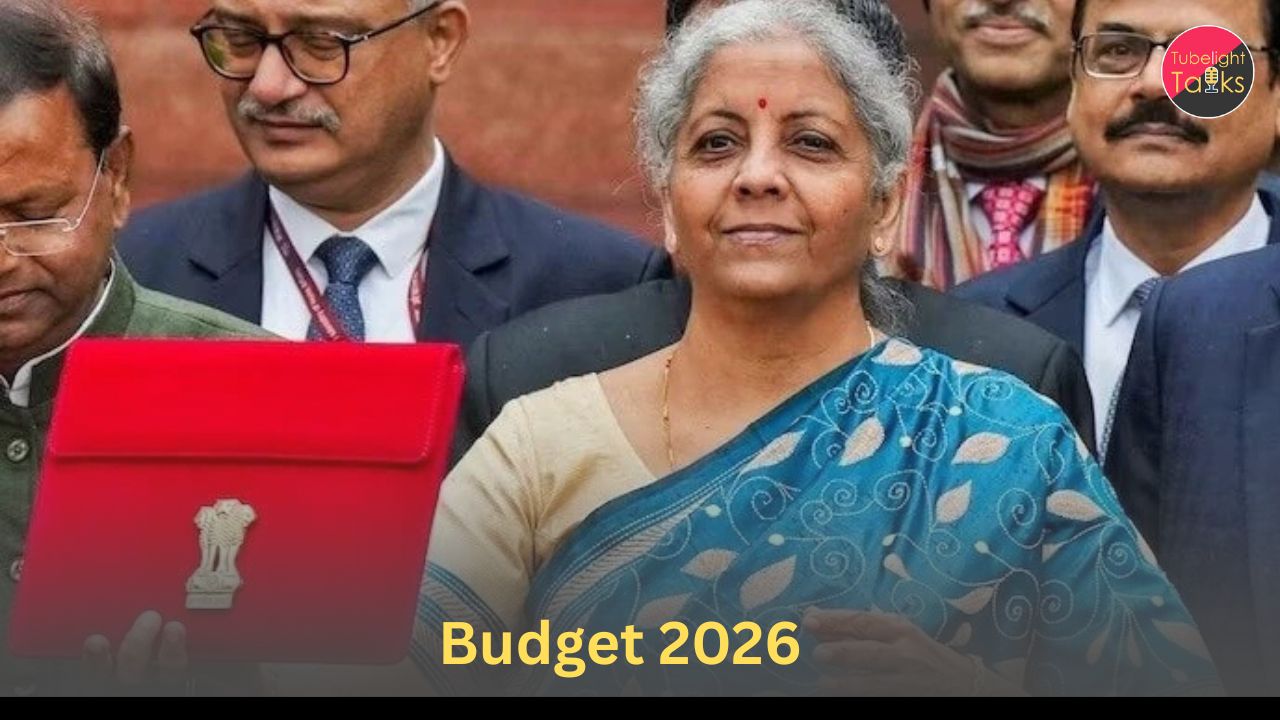
Budget 2026: Relief or Gimmick Ahead of Elections?
New Delhi, India — India’s much‑anticipated Union Budget 2026–27 was presented in Parliament on 1 February 2026 by Finance Minister Nirmala Sitharaman, outlining the government’s fiscal roadmap for the coming year. Coming just months ahead of general elections, questions are emerging about whether the Budget delivers tangible relief to citizens or focuses more on political optics — a “vision document” ahead of polls.
Key Provisions of Budget 2026
The Union Budget 2026 emphasises a “Yuva Shakti‑driven” economic vision aimed at accelerating growth, empowering citizens, and ensuring inclusive development. The government outlined three core priorities — sustaining economic growth, fulfilling aspirations, and ensuring Sabka Saath, Sabka Vikas (Collective Progress).
Major highlights include:
- Capital Expenditure Boost: Government allocates ₹12.2 lakh crore for infrastructure to drive growth and job creation.
- Fiscal Discipline: Fiscal deficit targeted at 4.3% of GDP, a slight reduction, alongside projected nominal GDP growth of around 10%.
- Tax Relief Measures: Proposals include full income‑tax rebate up to certain income thresholds and cuts in certain levies to ease personal finances.
- New Schemes & Reforms: Key initiatives in semiconductor manufacturing, biopharma advancement, tourism, and youth employment.
Relief Measures — Who Benefits?
Some citizens and industry leaders welcomed select provisions as genuine efforts to stimulate demand:
- Holiday Travel Relief: Reductions in Tax Collected at Source (TCS) on foreign tour packages are expected to lower costs for travellers.
- Land Acquisition Tax Exemption: Tax relief on compensation for compulsory land acquisition may benefit farmers and landowners.
Also Read: Union Budget 2026: India’s Big Bet on Tech, Electronics & Manufacturing for Global Growth
However, critics argue that many relief measures fall short of broad‑based impact, especially for the middle class and informal sector. Opposition leaders said the Budget had “nothing for the middle class and the lower middle class” and lacked major state‑focused measures.
Questions Over Timing & Political Impact
With national elections looming, the timing and content of the Budget have prompted debate over whether some allocations are strategic signalling ahead of polls rather than deeply transformational policy changes. Funding for key election‑related bodies such as the Election Commission was increased by over 25% — a move some observers see as responsive to the political calendar.
Analysts question whether this budget prioritises long‑term structural reforms or leans toward short‑term optics. One commentary noted that while the government promises a vision for inclusive growth, it “largely overlooks the pressing realities citizens are grappling with today” — such as stagnant incomes and job insecurity.
Market & Industry Reactions
The market and industry have shown mixed responses:
- Positive: Industry experts praised the execution‑oriented nature and capital expenditure thrust, seeing it as long‑term growth‑oriented.
- Cautious: Stock market reactions to past budgets have been inconsistent, underscoring investor uncertainty.
Regulators are also responding to policy changes, such as revised equity derivatives taxes announced in the Budget, which could reshape trading dynamics.
Expert Verdict: Relief or Rhetoric?
Financial analysts suggest the Budget’s strength lies in its push for long‑term growth and infrastructure acceleration rather than immediate relief measures. While there are pockets of taxpayer relief and incentives, structural reforms and capital spending dominate the narrative.
The government frames Budget 2026 as a blueprint for a “Viksit Bharat (Developed India) by 2047” — focusing on big‑picture investments rather than short‑term consumption boosts.
True Welfare Beyond Material Budgets
In analysing economic policies like Budget 2026, Sant Rampal Ji Maharaj’s teachings on Sat Gyaan remind us that true relief and prosperity extend beyond fiscal allocations. While government budgets manage material wealth and tax structures, spiritual wisdom emphasises inner contentment, equitable compassion, and ethical leadership as deeper foundations of welfare.
Sant Rampal Ji Maharaj teaches that real progress is not measured solely by GDP or tax cuts, but by how a society uplifts every individual’s dignity and spiritual consciousness — ensuring that economic goals align with moral values and human upliftment. A nation’s economic roadmap must serve the holistic growth of its people, blending material policies with spiritual understanding for balanced progress.
Final Takeaway
Budget 2026–27 presents a mix of long‑term vision and targeted relief, with a clear preference for infrastructure and growth‑oriented policies. While some announcements provide direct benefits, others may take time to translate into tangible day‑to‑day impact for ordinary citizens.
Whether this Budget acts as relief or election‑related messaging will depend on implementation and outcomes, especially in the crucial months ahead.
FAQs: Budget 2026
1. What is the goal of Budget 2026?
To accelerate economic growth, empower citizens, and ensure inclusive development under a “Yuva Shakti‑driven” approach.
2. Does the Budget offer tax relief?
Yes, including income‑tax rebates and TCS cuts for travel, among others, but critics say it’s limited in scope.
3. Will this Budget affect elections?
Significant timing and funding choices have political implications, but economic outcomes will influence public perception.
4. How is infrastructure addressed?
Capital expenditure was substantially increased to promote growth and development.
5. What do experts say?
Opinions are mixed: markets and industry see positives, while some analysts believe relief measures don’t go far enough.
Related Stories







Discussion (0)