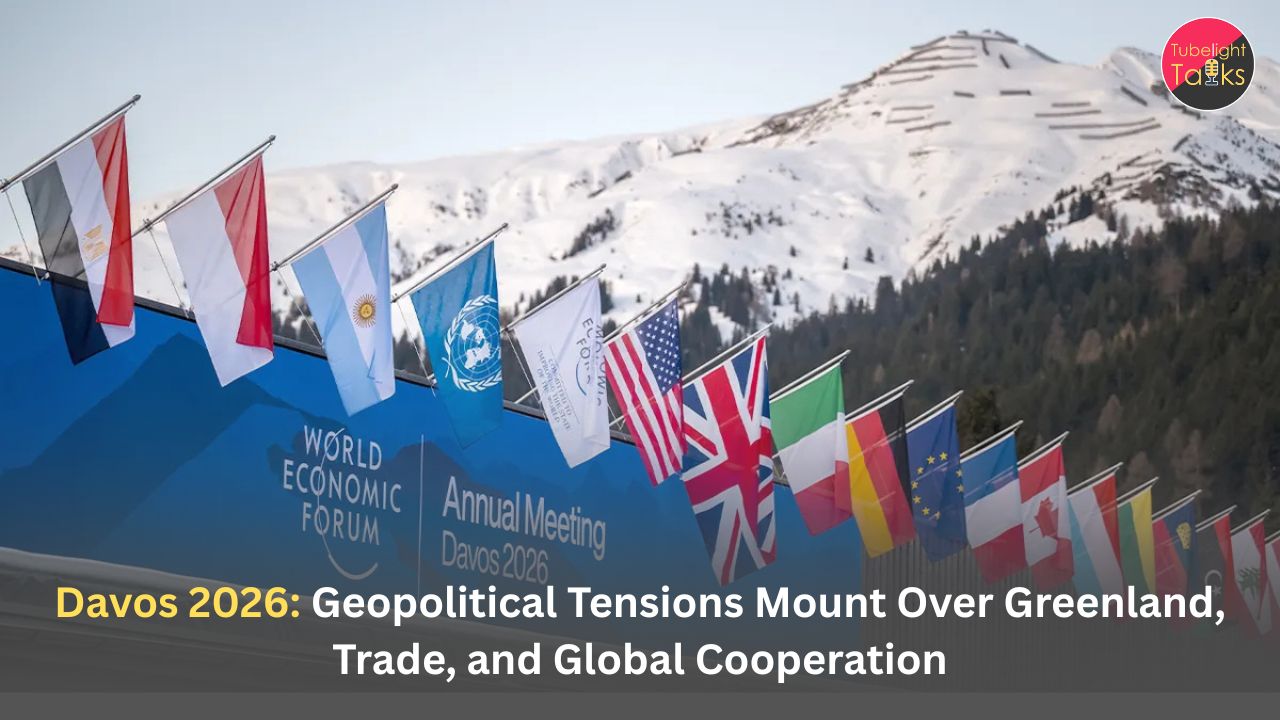
Davos 2026: Geopolitical Tensions Mount Over Greenland, Trade, and Global Cooperation
Davos 2026: The 56th World Economic Forum (WEF) — held from January 19 to 23, 2026 in the Swiss Alps — has become a focal point for rising global diplomatic tensions and strategic manoeuvring among world powers, marking one of the most contentious gatherings in years.
This year’s forum, known for convening influential political leaders, CEOs, and thinkers, has seen debates intensify around U.S. foreign policy ambitions, transatlantic trade disputes, and shifting geopolitical alliances, even as leaders emphasise economic cooperation and innovation.
U.S. Push for Greenland Sparks Diplomatic Backlash
One of the most controversial topics at the forum has been the diplomatic fallout from the United States’ assertive stance on Greenland, a strategically important Arctic territory governed by Denmark. U.S. President Donald Trump’s aggressive push — including discussions about increased American influence in the region — has triggered strong pushback from European leaders.
European governments, concerned about sovereignty and regional security, have rebuffed these overtures, warning that such moves could destabilise cooperation. The resulting tensions have affected transatlantic relations, with European officials signalling resistance to new U.S. trade policies and threats of tariffs that could impact billions in exports.
Trade and Tariff Threats Add to Strains
Discussions around trade also dominated Davos, with fears of tariff escalations between the U.S. and European markets weighing heavily on delegates. The uncertainty has already contributed to market volatility in Europe, with investors watching closely for potential economic impacts.
These economic tensions highlight the challenge of balancing national interests with broader global stability, particularly as nations struggle to align on rules governing trade, technology, and supply chains amid a more fractured international order.
Global Leadership Voices at Davos
Despite geopolitical friction, the forum featured major speeches and strategic discussions from key leaders, including European Commission President Ursula von der Leyen and other senior officials, who emphasized the need for cooperation on climate, innovation, and inclusive growth.
The gathering also underscored efforts to launch initiatives like a “Board of Peace” aimed at conflict resolution — though reactions were mixed across regional blocs.
Also Read: US Hints at Rolling Back 25% India Tariff: Russian Oil Imports Fall Sharply, Says Treasury Secretary
Diplomacy and Republic Day Connections
The diplomatic climate at Davos coincides with other major global events, including India’s Republic Day celebrations where enhanced India–EU cooperation was highlighted, reflecting nuanced shifts in international relationships and strategic partnerships.
As nations navigate complex trade and security dilemmas, platforms like Davos and high‑level bilateral engagements continue to shape global policy narratives — balancing competitive interests with the pursuit of cooperation and stability.
The Call for Unity Amid Global Divisions
In moments of international discord and shifting alliances, the teachings of Sant Rampal Ji Maharaj offer insight into the deeper roots of conflict and cooperation. His wisdom emphasizes that true peace and unity arise not from political strategy alone, but from moral integrity, compassion, and mutual respect among individuals and nations.
When global leaders convene to debate critical issues like sovereignty, trade, and security, the underlying challenge is not only diplomatic — it is moral. Maharaj Ji’s perspective reminds us that when leaders and citizens align their actions with principles of righteousness, cooperation rooted in shared human values naturally follows. Such an approach nurtures long‑term peace and prosperity, beyond mere negotiation outcomes.
Explore more:
Sant Rampal Ji Maharaj Ji (YouTube)
Call to Action
Stay Informed and Support Peaceful Dialogue
Here’s How You Can Engage Meaningfully:
- Follow trusted coverage of the World Economic Forum and global diplomacy.
- Encourage discussions that focus on cooperation and ethical leadership.
- Learn how international relations affect local economies and societies.
- Promote unity and understanding in your communities grounded in moral values.
By fostering informed and compassionate public engagement, we can contribute to a world where dialogue triumphs over division.
FAQs – Davos 2026 Highlights
1. What is the World Economic Forum (WEF)?
The WEF is an annual gathering in Davos, Switzerland, where global leaders from politics, business, and civil society discuss pressing international issues.
2. Why was Greenland a focus at Davos 2026?
The U.S. push for greater influence in Greenland sparked controversy among European nations concerned about regional sovereignty and strategic interests.
3. What are tariff tensions about?
Threats of new U.S. tariffs on European goods heightened concerns about trade disputes that could impact global markets.
4. Were any peace initiatives discussed?
Yes, proposals such as a “Board of Peace” were floated, though responses varied among participating nations.
5. How does this relate to India’s global role?
India’s growing international partnerships, highlighted during its Republic Day engagements, reflect evolving global alliances and multilateral diplomacy.
Related Stories




Discussion (0)