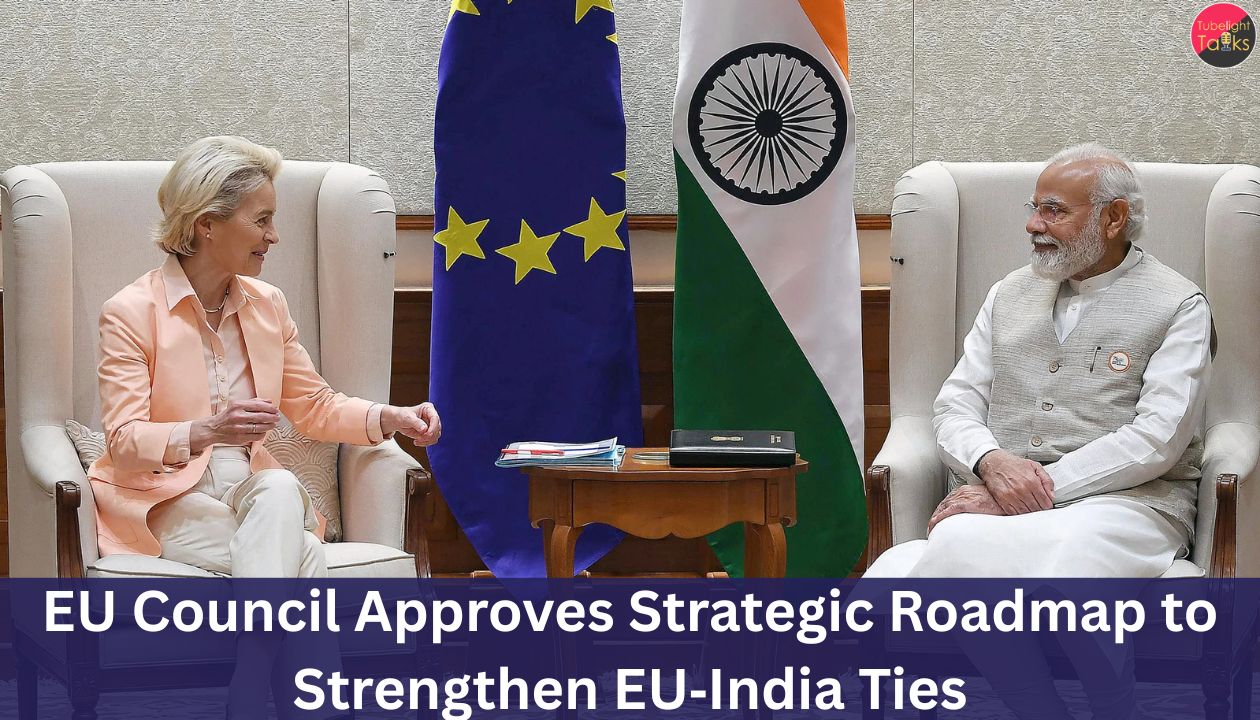
EU Council Approves Strategic Roadmap to Strengthen EU‑India Ties
The EU Council Approves the final conclusions on October 20, 2025, formally endorsing a comprehensive New Strategic EU-India Agenda. This document establishes a broad framework to enhance cooperation across political, economic, and security domains.
The Framework and Its Scope
Trade, innovation and connectivity
The agenda explicitly calls for the conclusion of a balanced, ambitious and mutually beneficial Free Trade Agreement (FTA) between India and the EU by the end of 2025. It emphasises enhanced market access, removal of trade barriers and provisions for sustainable development.
The document underscores technology and innovation cooperation, connectivity infrastructure and green transition as major pillars.
Security, defence and global governance
Beyond economics, the roadmap assigns significant weight to security and defence cooperation. The EU Council flags the intention to jointly work on a Security and Defence Partnership, potentially including defence industrial collaboration. The document also reaffirms shared commitment to multilateralism, the rules‑based order, United Nations Charter, and the WTO.
Strategic Imperatives for India and the EU

Why India
India, the world’s fastest‑growing major economy and a key strategic actor in the Indo‑Pacific, is gaining renewed international focus. The EU sees India as a reliable partner for sustainable supply‑chains, digital transformation and regional stability.
Why the EU
The EU, facing evolving global power structures, rising strategic competition and supply‑chain vulnerabilities, is pivoting towards like‑minded democratic partners. By elevating relations with India, the bloc aims to diversify trade and technology reliance, strengthen geostrategic outreach and reinforce its global role.
Economic Outlook and Investment Opportunities
Trade and investor confidence
According to a senior official at the European Investment Bank (EIB), ongoing India‑EU trade talks are already reinforcing long‑term investor confidence in India’s growth story.
Large European firms in green energy, digital infrastructure and manufacturing are viewing India as a strategic destination under this new agenda.
Technology and connectivity momentum
The agenda emphasises building next‑generation manufacturing, digital public infrastructure, Data/AI collaboration and clean energy supply chains. These sectors are expected to attract significant investments and joint ventures in the coming years.
Read Also: Google’s $15 Billion
Implementation Challenges and Roadblocks
FTA negotiations and trade barriers
While the goal is clear, the path remains complex. Disagreements persist over automobiles, dairy, labour and environmental norms as part of the proposed FTA. India’s emphasis on strategic autonomy occasionally diverges from EU regulatory frameworks.
Political and strategic divergences
Despite growing cooperation, differences on issues like Russia, data protection, intellectual property rights, and global alignment remain. The EU has previously expressed concern about India’s ties with Russia—even as it pushes for deeper engagement with India.
Domestic hurdles in India
For India, regulatory overhaul, infrastructure readiness, and investor‑friendly policies will be vital to fully harness the agenda. Ensuring that benefits reach smaller firms and regions beyond major metros is a key challenge.
Here’s an improved version of the paragraph, including a refined heading and content that flows organically with the article, making it appear as a natural part of the news—not externally inserted:
Values‑Driven Cooperation for a Sustainable Future
Amidst high-level diplomatic strategies and economic frameworks, the essence of enduring international cooperation lies in shared human values. Teachings of Sant Rampal Ji Maharaj emphasise that true progress is achieved when partnerships are rooted in mutual respect, social upliftment, and ethical responsibility, rather than purely transactional interests.
In the context of the evolving EU–India strategic roadmap, such a value-oriented approach can help ensure that collaboration remains inclusive, purposeful, and aligned with long-term human development. As policies shift and technologies advance, it is this commitment to integrity and collective well-being that must anchor global alliances.
What’s Next: Roadmap and Key Milestones
Summit and high‑level meetings
The EU and India plan to schedule a ministerial summit in 2026, building on the new agenda. Prior to that, joint working groups on trade, defence and digital cooperation will be constituted.
Monitoring & review mechanisms
A joint India‑EU taskforce will be established to track implementation of the agenda, identify bottlenecks and propose corrective action. Market watchers expect the first review to happen by mid‑2026.
Immediate action areas
Key near‑term moves include accelerating the 15th round of FTA negotiations, launching pilot projects in clean hydrogen manufacture, joint defence research and strategic connectivity corridors between India and Europe.
Looking Ahead: The Strategic Significance
This strategic agenda is more than a biliteral document—it symbolises a new phase in the India‑EU relationship. The implications extend into global trade balances, regional security architectures and the future of democratic alliances. For India, the agenda offers an opportunity to scale up its global role. For the EU, it reflects an urgency to forge reliable partnerships amid global upheaval. If implemented successfully, this framework could reshape Indo‑Pacific dynamics, economic supply chains and technological flows.
FAQs: EU‑India Strategic Agenda
Q1. What did the EU Council approve on 20 Oct 2025?
They approved conclusions endorsing a new strategic agenda to deepen political, economic and security ties with India.
Q2. What is the target date for the India‑EU Free Trade Agreement (FTA)?
The agenda aims for conclusion of a balanced FTA by the end of 2025.
Q3. Which sectors will see enhanced cooperation?
Trade, technology, connectivity, defence, security, clean energy and digital infrastructure are key focus areas.
Q4. What are the main challenges?
Negotiating trade barriers, aligning regulations, data protection, geopolitical divergences and ensuring domestic policy readiness.
Q5. Why is the agenda significant now?
It marks a strategic shift in the EU‑India partnership—recognising India as a major partner in a volatile global environment and signalling diversified engagement beyond traditional alliances.
Related Stories








Discussion (0)