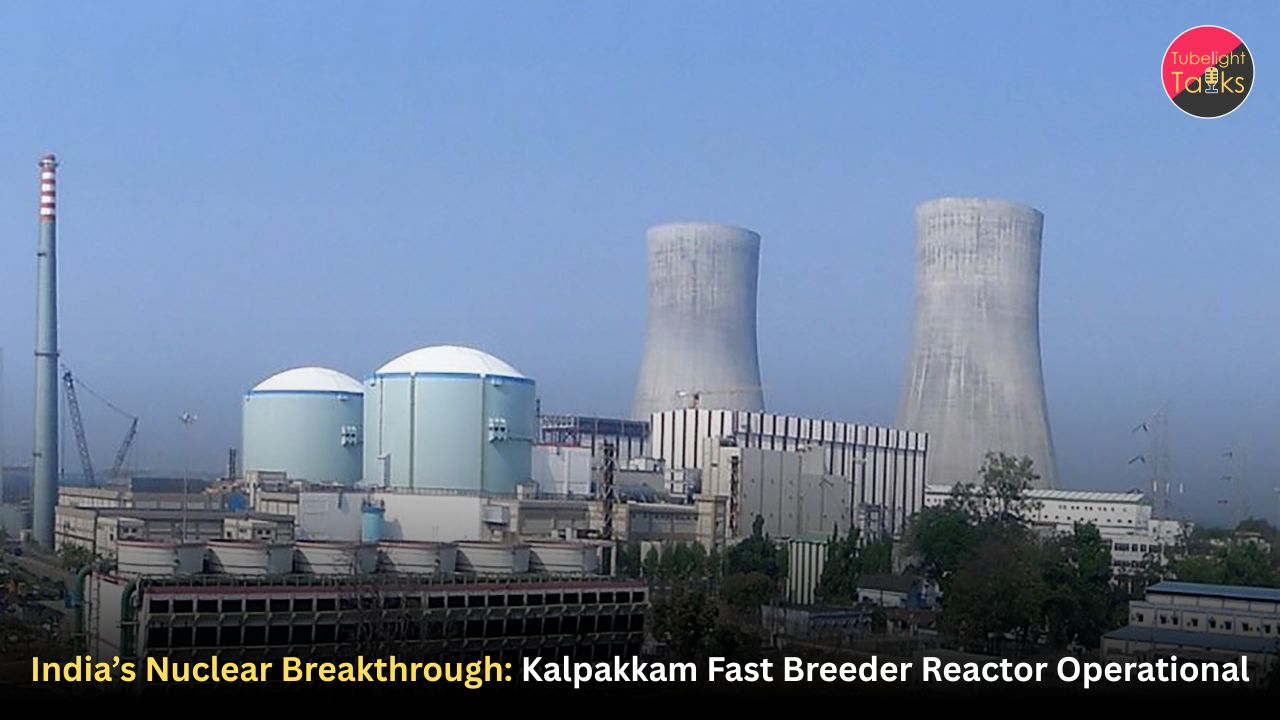
India Joins Elite Nuclear Club: The Kalpakkam PFBR Milestone
India’s Nuclear Breakthrough: In a historic development for the global energy sector, India has successfully operationalized its Prototype Fast Breeder Reactor at Kalpakkam, Tamil Nadu. This achievement makes India only the second nation in the world, after Russia, to possess a commercially viable Fast Breeder Reactor. The PFBR is the second stage of India’s three-stage nuclear power program, designed to utilize the nation’s vast thorium reserves. This milestone is not just a scientific victory; it is a declaration of India’s intent to become a self-reliant global power in clean, sustainable energy.
Understanding the “Fast Breeder” Technology
Unlike traditional Pressurized Heavy Water Reactors that use natural uranium, a Fast Breeder Reactor uses a mix of uranium and plutonium as fuel. The fast refers to high-speed neutrons that sustain the chain reaction. The breeder aspect is the most significant: the reactor produces more fissile material, plutonium, than it consumes during power generation. This creates a closed-loop fuel cycle that maximizes energy extraction, making it far more efficient than conventional reactors.
The Role of BHAVINI and Indigenous Engineering
The project was executed by Bharatiya Nabhikiya Vidyut Nigam Limited. What makes the Kalpakkam PFBR remarkable is that it is largely an indigenous effort. From the liquid sodium cooling system to the reactor vessel, Indian scientists have overcome decades of technological challenges. Sodium cooling requires precision because it reacts with air and water, demanding advanced safety engineering, which India has now mastered.
Also Read: India’s Renewable Energy Mission 2030: Complete Guide to New Solar & Wind Targets
Strategic Importance for India’s Energy Security
India has limited uranium reserves but possesses significant thorium reserves. The Fast Breeder Reactor is the bridge to the third stage of India’s nuclear program, which will use thorium-based fuel. By mastering this stage, India is securing long-term energy independence, reducing dependence on fossil fuel imports, and ensuring stable baseload power generation.
Environmental Impact and the Net-Zero Goal
Nuclear energy plays a key role in India’s climate strategy. The PFBR produces zero carbon emissions during operation and has a smaller land footprint compared to large renewable installations. By expanding nuclear capacity, India can reduce dependence on coal while supporting industrial growth and urbanization.
Safety Protocols and Public Assurance
The PFBR incorporates multiple layers of passive safety systems. These systems function without external power or human intervention, relying on natural physical processes to prevent overheating. The Department of Atomic Energy has conducted extensive safety tests to ensure resilience against natural disasters such as earthquakes and tsunamis.
Economic Benefits and Job Creation
The PFBR project has created a large ecosystem of high-skilled employment. It has boosted sectors like metallurgy, engineering, and precision manufacturing. The stable energy supply from the plant will also support industrial growth in southern India, strengthening regional economic development.
Global Standing and Nuclear Diplomacy
This milestone enhances India’s global standing in nuclear technology. It positions India as a leader in advanced reactor design and opens opportunities for international collaboration and export of nuclear technology. India is now seen as a contributor, not just a consumer, in the global scientific community.
The Future Roadmap: Scaling the Technology
The Kalpakkam PFBR serves as a prototype for future reactors. The government has approved additional units, and long-term plans include scaling up fast breeder technology across the country. This will enable a transition to thorium-based reactors, ensuring sustainable and long-term energy security.
Spiritual Power vs Physical Power
While science explores atomic energy, Sant Rampal Ji Maharaj explains the supreme power of the Shabd or Naam. He teaches that while nuclear energy powers the external world, only true spiritual knowledge can illuminate the soul. All physical achievements are temporary, but spiritual progress leads to eternal peace. Sant Rampal Ji Maharaj emphasizes using science for human welfare while following the path of Satgyan. To understand the ultimate source of power, visit jagatgururampalji.org.
FAQs: India’s Nuclear Breakthrough: Kalpakkam Fast Breeder Reactor Operational
What is a Fast Breeder Reactor?
It is a nuclear reactor that produces more fuel than it consumes while generating electricity.
Why is India’s PFBR significant?
India is among the very few countries with this technology, making it a key part of its nuclear strategy.
Is sodium cooling safe?
Yes, with advanced engineering and safety systems, sodium cooling is managed safely in the reactor.
How does this help India’s energy security?
It enables long-term use of domestic thorium resources and reduces dependence on imports.
Where is the PFBR located?
It is located at Kalpakkam in Tamil Nadu and operated by BHAVINI.
Related Stories










Discussion (0)