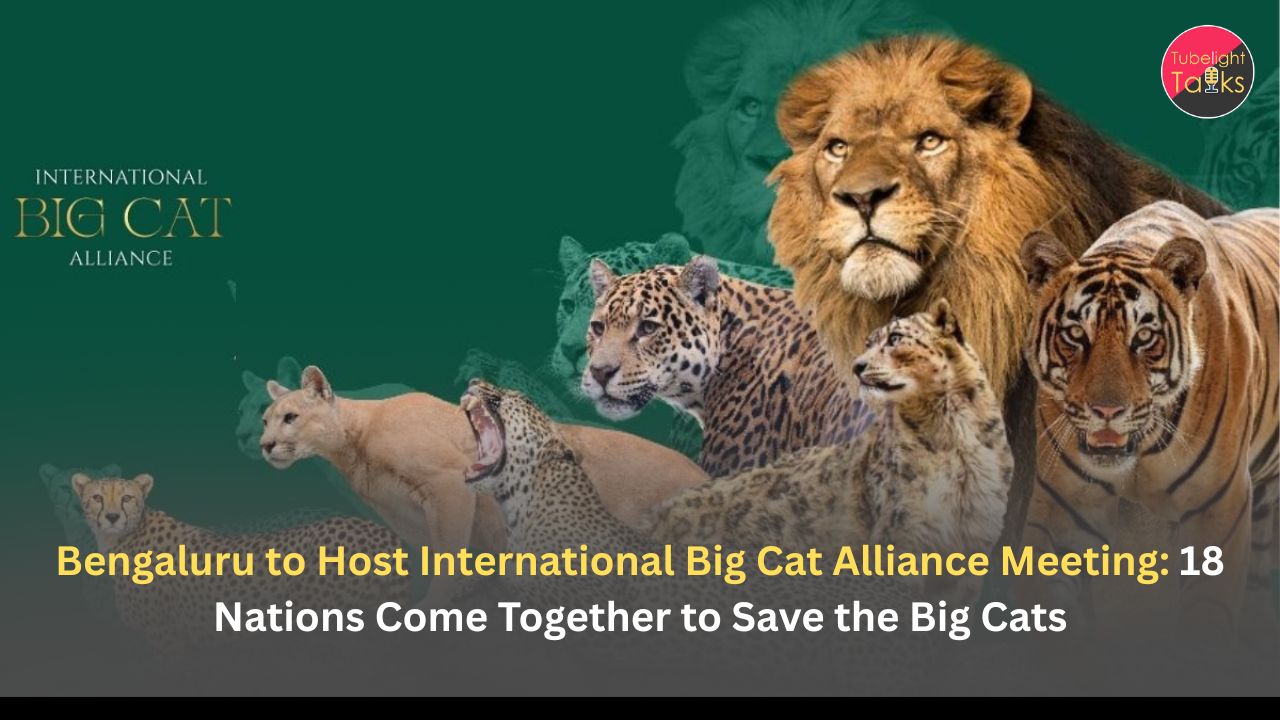
Bengaluru to Host International Big Cat Alliance Meeting: 18 Nations Come Together to Save the Big Cats
In a landmark step for global wildlife conservation, Bengaluru is set to host the International Big Cat Alliance Meeting 2026, bringing together delegates from over 18 countries to deliberate on one of the most urgent ecological issues — the survival of the world’s seven big cat species.
India, home to the largest tiger population globally, is leading this initiative as part of its ongoing commitment to biodiversity and ecological balance.
What is the International Big Cat Alliance (IBCA)?
A Global Effort to Save Apex Predators
Launched by India in 2023, the IBCA aims to ensure the long-term conservation of big cats, including:
- Tiger
- Lion
- Leopard
- Snow Leopard
- Jaguar
- Puma
- Cheetah
It encourages:
- Data sharing and joint research
- Cross-border anti-poaching operations
- Habitat restoration and wildlife corridors
- Community-based conservation models
The 2026 Bengaluru summit marks a major milestone, as it includes expert panels, governmental collaboration, NGO participation, and real-time policy drafting.
Also Read: The Indian Violet Tarantula: A Hidden Gem of the Western Ghats
Why Big Cats Matter to the Planet
Keystone Species, Global Responsibility
Big cats play a crucial ecological role. As apex predators, they maintain balance in ecosystems by regulating prey populations and ensuring biodiversity. Their decline signals larger environmental collapse.
India has already seen success through:
- Project Tiger
- Asiatic Lion Conservation in Gir
- Cheetah Reintroduction Project in Madhya Pradesh
Yet challenges remain:
- Habitat fragmentation
- Human-wildlife conflict
- Illegal wildlife trade
Highlights of the Bengaluru IBCA 2026 Summit
- 🔹 Delegates from 18 countries, including Russia, Bhutan, South Africa, Brazil, and the USA
- 🔹 Launch of the Global Big Cat Census Portal for transparent tracking
- 🔹 India proposes a Tiger Genome Bank for research and disease control
- 🔹 Partnership with WWF, CITES, and UNEP to fund community eco-guards
- 🔹 Youth awareness campaign: “Roar for the Wild” across schools and universities
The summit also honors forest rangers and frontline conservation workers globally.
A Moral Awakening: True Ecology
Saving Wildlife Starts With Respecting Life Itself
While the Big Cat Alliance focuses on science and policy, Sant Rampal Ji Maharaj highlights the spiritual foundation of true conservation.
According to his teachings:
“No being is born inferior or superior. All life is sacred. True devotion means respecting all creation.”
Sant Rampal Ji Maharaj explains that violence, greed, and selfishness are root causes of ecological destruction.
Through Satbhakti (true worship) and following the laws of God’s constitution, human beings can restore harmony not only with other humans, but with animals and nature too.
His followers are guided to:
- Live non-violent, vegetarian lifestyles
- Avoid exploitation of animals for profit or pleasure
- Spread awareness about compassion-based living
Call to Action
Big Cats Need Protection, But So Does the Planet’s Soul
If we want to save tigers, leopards, and lions, we must also save the human conscience.
No policy will work unless people truly value all life — beyond selfies and statistics.
Join the movement that protects nature not just with fences, but with faith, discipline, and compassion.
Take Naam Diksha from Sant Rampal Ji Maharaj and become a guardian not just of wildlife — but of universal truth.
📲 Begin now: https://www.jagatgururampalji.org
📺 Satsang: Watch on YouTube
FAQs on International Big Cat Alliance Meeting 2026
1. What is the main goal of the Big Cat Alliance Summit?
To bring nations together to share resources, knowledge, and strategies for the protection of all seven big cat species.
2. Why was Bengaluru chosen as the host city?
Bengaluru is a tech and policy hub with proximity to key tiger reserves in Karnataka, making it ideal for hosting a wildlife-focused global summit.
3. How does India benefit from leading this initiative?
It boosts India’s global image in conservation leadership and secures international funding and collaboration for its national parks.
4. What new projects are being launched at IBCA 2026?
Projects like the Tiger Genome Bank, international ranger training, and AI-powered camera traps for anti-poaching are being introduced.
5. How can the public contribute to big cat conservation?
Avoid wildlife tourism that exploits animals, support eco-friendly products, donate to verified conservation efforts, and raise awareness.
6. Are these big cats still endangered?
Yes. Tigers, lions, leopards, and cheetahs are either endangered or vulnerable due to habitat loss, illegal trade, and human conflict.
Related Stories










Discussion (0)