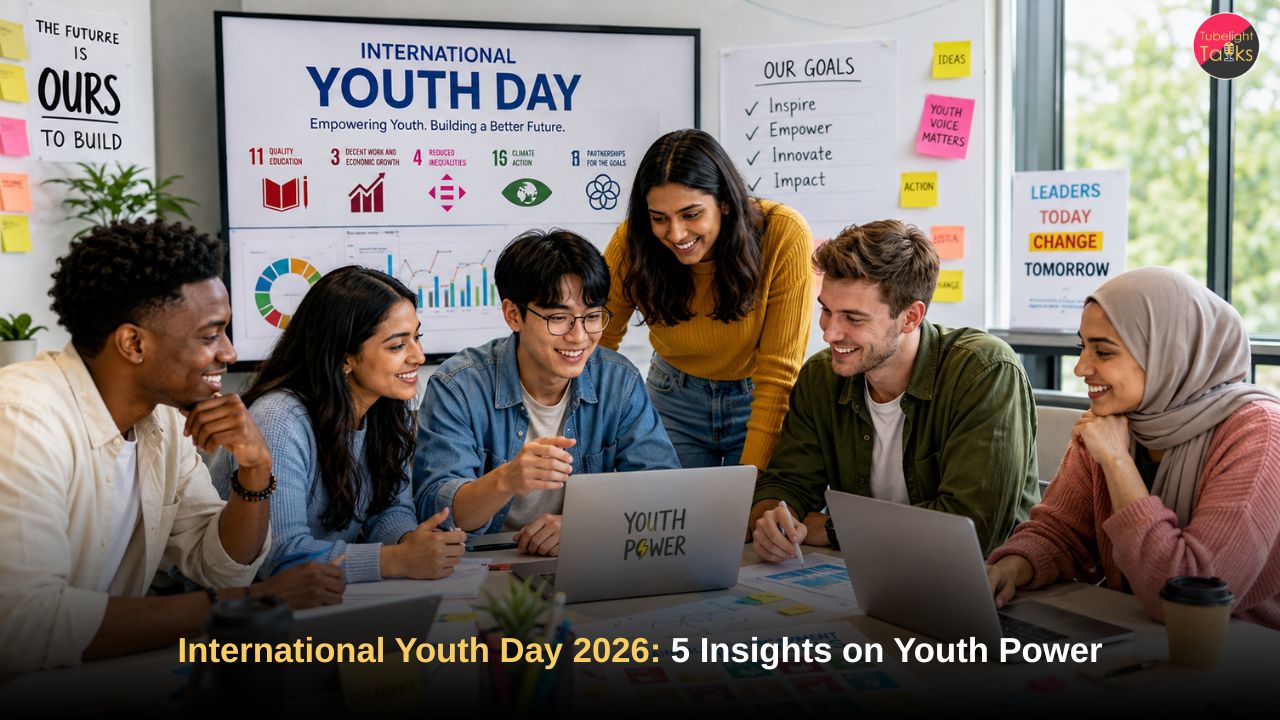
International Youth Day: Empowering the Next Generation for Global Impact
International Youth Day serves as a vital global platform to acknowledge the agency, creativity, and challenges of young people worldwide. Established by the United Nations, this annual observance focuses on mobilizing resources, raising public awareness, and creating policies that enable youth to participate actively in civic, economic, and social life. As the world faces rapid technological shifts and environmental challenges, investing in young leaders is no longer optional—it is essential for global progress.
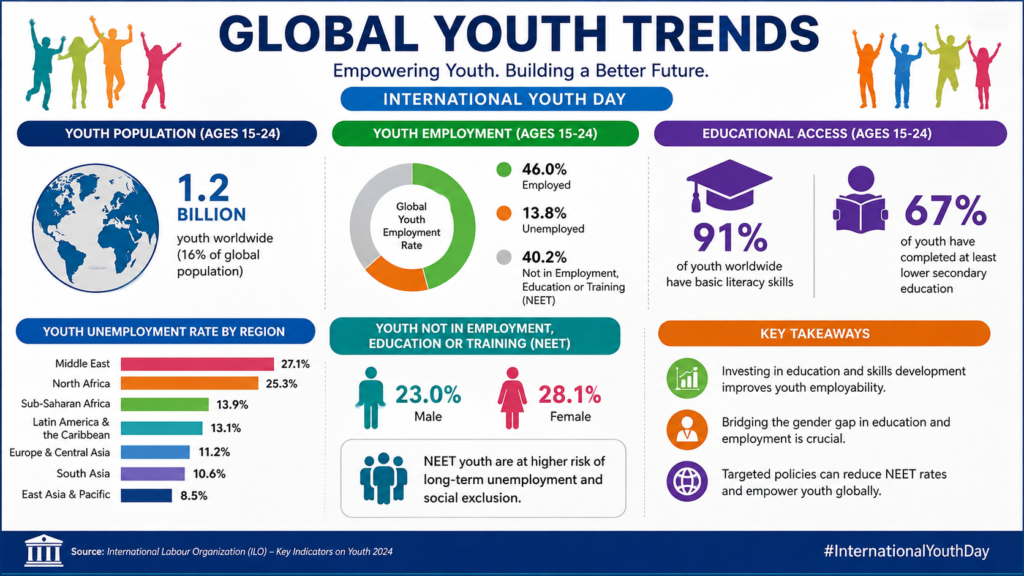
Today, there are over 1.2 billion young people aged 15 to 24, representing approximately 16 percent of the global population. This massive demographic dividend holds transformative potential for economies and communities, provided young people receive equal access to quality education, sustainable employment, and digital tools.
Also Read :Nasha Mukt Yuva for Viksit Bharat Sankalp Abhiyan: A Defining Moment for India’s Youth
Understanding the global youth landscape requires examining regional demographic shifts, employment figures, and educational access. Developing nations, particularly across Sub-Saharan Africa and South Asia, account for the vast majority of the world’s youth population.
| Metric / Indicator | Global Estimate | Key Region / Trend | Source / Reference |
| Total Youth Population (15–24) | ~1.2 Billion | Highest concentration in Asia & Africa | UN Population Division |
| Youth Unemployment Rate | ~13% – 15% | 3x higher than adult unemployment | ILO Global Employment Trends |
| Digital Connectivity Access | ~75% connected | Rural-urban divide remains prominent | ITU Statistics |
| NEET Rate (Not in Education/Employment) | ~21% globally | Disproportionately affects young women | UNESCO / ILO Data |
The data underscores a critical reality: while connectivity and literacy rates among youth have reached historic highs, structural barriers in job markets continue to limit economic mobility.
Also Read: Global Youth Mental Health Crisis: Urgent Causes and Solutions
Digital Innovation and Youth-Led Solutions
Young innovators are at the forefront of leveraging emerging technologies to address critical societal challenges. From artificial intelligence and renewable energy solutions to digital advocacy, youth-driven start-ups are reshaping traditional industries.
A tweet shared by DD news
On International Youth Day, observed every year on August 12, the world recognises the aspirations, potential, and contributions of young people.
This year’s theme, “Different Contexts, Common Aspirations,” highlights how young people from different backgrounds and circumstances share common hopes for dignity, quality education, meaningful opportunities and a better future.
#InternationalYouthDay2026 #YouthEmpowerment #FutureOfYouth
In tech hubs across Nairobi, Bengaluru, Silicon Valley, and Berlin, young entrepreneurs are designing applications that enhance healthcare accessibility, streamline sustainable agriculture, and democratize education. Providing early-stage venture funding, incubation programs, and mentorship to these founders is vital to sustaining global technological advancement.
Key Challenges Facing Today’s Youth
Despite their potential, young citizens face significant socio-economic hurdles that require coordinated international interventions:
- Job Instability & Informal Economy: A significant percentage of young workers are employed in informal or gig-economy roles lacking social security benefits.
- Mental Health Crises: Rising rates of anxiety and depression among youth highlight the need for accessible mental health support frameworks globally.
- Educational Disparity: Inconsistent access to digital infrastructure creates an enduring divide between urban and rural youth populations.
- Climate Vulnerability: Young people bear a disproportionate burden of long-term environmental degradation and climate-induced disruptions.
Policy Frameworks and Civic Engagement
To harness the full potential of International Youth Day, governments and international organizations are establishing dedicated youth councils, advisory boards, and policy initiatives. Institutional inclusion ensures that youth perspectives shape legislation regarding climate action, labor laws, and digital governance.
For authoritative policy documentation and global youth action plans, visit the official https://www.ilo.org/resource/news/youth-unemployment-rises-young-people-face-harder-road-decent-work
Bridging Global Divides: Building a Sustainable Future for Humanity
The challenges highlighted on International Youth Day—from economic insecurity and environmental distress to social fragmentation—reflect a broader need for systemic and internal stability in modern society. True global unity and peace are achieved by recognizing our shared spiritual identity under Supreme God Kabir, transcending worldly divides.
Sacred Spiritual Vani
Jeev hamari jaati hai,
Manav dharam hamara.
Hindu, Muslim, Sikh, Isai,
dharam nahin koi nyara.
Holy Gita Shlok (Chapter 18, Verse 62)
Tamev sharanam gachha sarvabhavena bharata |
Tatprasadat param shantim sthanam prapsyasi shashvatam ||
Must order the holy book Gyan Ganga by clicking on this link.
To attain supreme peace (Satlok) and end all worldly friction, take refuge in the Supreme Almighty through scripture-certified worship
FAQs on International Youth Day
1.When is International Youth Day celebrated annually?
International Youth Day is observed globally every year on August 12. It was formally established by the United Nations General Assembly in December 1999 following recommendations from the World Conference of Ministers Responsible for Youth.
2.What is the primary objective of International Youth Day?
The day aims to raise awareness about socio-economic and political challenges facing young people, celebrate youth leadership, and encourage governments to integrate youth perspectives into national policy frameworks.
3.How do global organizations celebrate International Youth Day?
Observances include youth-led summits, policy debates, cultural workshops, hackathons, and community service projects organized by the UN, regional governments, and non-profit organizations worldwide.
4.What age demographic defines “youth” according to the United Nations?
The United Nations defines “youth” as individuals between the ages of 15 and 24 years for statistical purposes, though national definitions may extend up to age 30 or 35 depending on local context.
5. How can young people participate in International Youth Day events?
Young individuals can participate by attending local or virtual UN workshops, organizing community advocacy projects, sharing solutions on social media platforms.
Related Stories






Discussion (0)