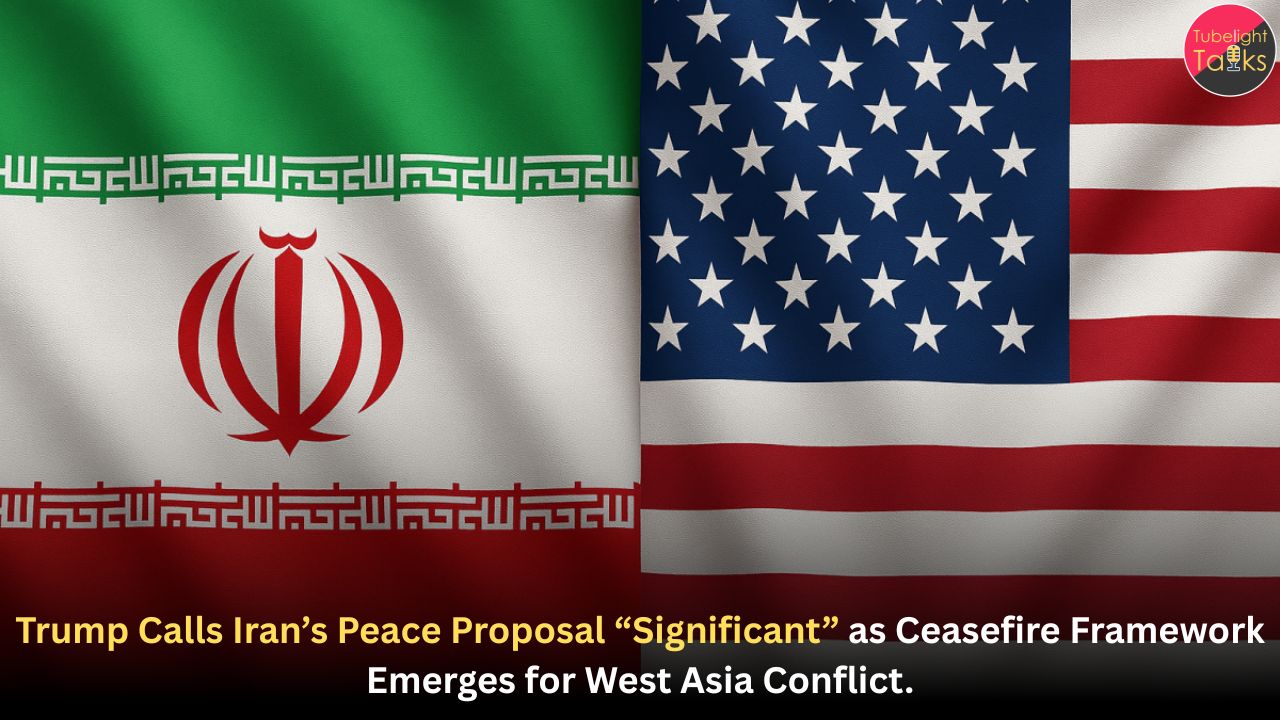
Diplomatic Progress: Trump Acknowledges “Significant” Iranian Proposal as Talks Intensify
Iran’s Peace Proposal: A potentially important diplomatic shift has emerged in the West Asia conflict. On April 6, U.S. President Donald Trump said Iran had made a “significant proposal” and called it a “significant step,” though he also said it was “not good enough.”
On the same day, Reuters reported that Iran and the United States had both received a Pakistan-backed framework for an immediate ceasefire followed by a broader agreement. Taken together, these developments suggest that serious diplomacy is now active, even if a final breakthrough has not yet been achieved.
Trump’s words matter, but they do not yet amount to a peace deal
Trump’s formulation was important because it was the clearest public acknowledgment from him that Iran had moved in a meaningful way. Reuters quoted him as saying, “They made a proposal, and it’s a significant proposal. It’s a significant step. It’s not good enough.” He also said the Tuesday deadline he set for a deal was final and unlikely to be extended, while repeating that attacks on Iranian infrastructure could follow if no agreement is reached.
That means the headline’s broad direction is correct, but it needs nuance. This is not yet a confirmed peace agreement, nor even a guaranteed ceasefire. It is more accurate to describe it as a visible diplomatic opening and a meaningful proposal that Washington has publicly acknowledged, while still saying it falls short of a final settlement.
Also Read: Trump Issues 48-Hour Hormuz Ultimatum to Iran as Threats Against Power Plants and Bridges Intensify
A Pakistan-backed framework is now at the center of mediation
Reuters reported that a framework to end hostilities was put together by Pakistan and exchanged overnight with both Iran and the U.S. The plan reportedly follows a two-tier structure: an immediate ceasefire first, then a comprehensive agreement within 15 to 20 days. Reuters said the proposal could reopen the Strait of Hormuz immediately and eventually include Iranian commitments not to pursue nuclear weapons in exchange for sanctions relief and the release of frozen assets.
This is important because it shows diplomacy has moved beyond vague calls for restraint. The reported framework includes timeline, structure and substance. It is no longer only rhetorical pressure from global actors. It is a concrete proposal moving through a recognized channel.
But Iran has not committed yet
The same Reuters report made clear that Iran had not yet accepted the proposal. It said there was “no immediate response” from U.S. and Iranian officials, and quoted a Pakistani source saying, “Iran has not responded yet.” Reuters also noted that Iranian officials had previously said Tehran wanted a permanent ceasefire with guarantees that it would not be attacked again by the U.S. and Israel.
So while the proposal is real and serious, calling it a major step toward ending the war is more accurate than calling it a breakthrough. The architecture of peace is being discussed. Peace itself is not yet in hand.
Hormuz remains the central pressure point
The diplomatic urgency is inseparable from the Strait of Hormuz. Reuters said the ceasefire framework would reopen the strait immediately, and also noted that the conflict has heightened market volatility because Hormuz is a critical artery for global oil supplies. Trump’s own deadline pressure was tied to ending the conflict quickly and forcing movement on the Strait.
That is why the present moment matters globally, not just regionally. A ceasefire here is not only about missiles and airstrikes. It is about whether one of the world’s most sensitive energy chokepoints can return to normal function before the crisis deepens further.
Diplomacy is visible, but coercion still shapes the atmosphere
Even as diplomacy advances, the pressure environment remains intense. Reuters reported that Trump continues to warn of broad attacks on Iranian infrastructure if the deadline is not met. That means the negotiations are happening under explicit military threat rather than in a stable or trust-based atmosphere.
This makes the current moment highly unstable. Talks are active, but so is escalation risk. That combination often produces either rapid settlement or rapid collapse. It rarely sustains ambiguity for long. This is an inference, but it is strongly supported by the deadline language and the emergence of an all-at-once ceasefire framework.
When peace needs wisdom more than power
Conflicts begin to end not when destruction becomes impossible, but when leadership finally accepts that continued force will only deepen loss. A proposal may be “significant,” but it becomes meaningful only if it is met with sincerity, restraint and a willingness to protect lives over pride.
Call to Action
The next thing to watch is simple: whether Iran formally responds, and whether the proposed immediate ceasefire actually takes shape before the deadline pressure triggers a new round of strikes. That response, more than rhetoric, will determine whether this is the beginning of de-escalation or just a brief pause before a harsher phase.
FAQs: Trump Calls Iran’s Peace Proposal
1. Did Trump really say Iran made a significant proposal?
Yes. Reuters reported that Trump called Iran’s latest peace proposal “a significant proposal” and “a significant step,” though he also said it was not good enough.
2. Is there a ceasefire plan on the table?
Yes. Reuters reported that Iran and the U.S. both received a Pakistan-backed framework involving an immediate ceasefire followed by a broader agreement.
3. Has Iran accepted the proposal?
Not yet. Reuters said there was no immediate response and quoted a source saying Iran had not responded yet.
4. What would the framework do first?
It would bring an immediate ceasefire and reopen the Strait of Hormuz, according to Reuters.
5. Why is Hormuz central to the talks?
Because it is a crucial global oil-supply artery, and reopening it is tied directly to both ceasefire logic and market stability.
6. Does this mean the war is about to end?
Not necessarily. The proposal is meaningful, but Reuters reporting shows it is still under discussion and not yet accepted by Iran.
Related Stories









Discussion (0)