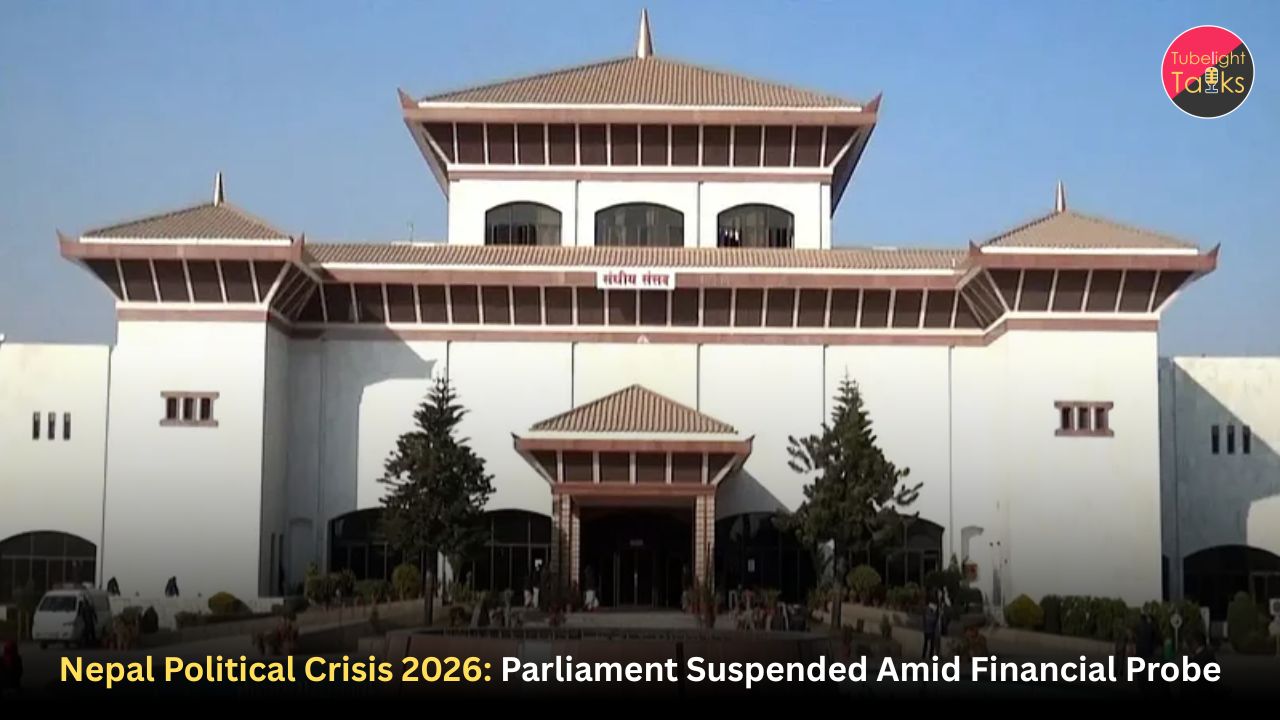
Kathmandu in Chaos: Financial Scandals Trigger Nepal’s Political Suspension
Nepal is currently engulfed in one of its most severe political and financial crises since the transition to a federal republic. Over the last 24 hours, the resignation of the Home Minister and the subsequent suspension of Parliamentary proceedings have brought the nation’s governance to a standstill. At the heart of the crisis is a high-level investigation into a multi-million dollar financial conduct case involving top-tier politicians and cooperative banks. This development has sparked protests across Kathmandu and raised serious questions about the stability of the ruling coalition.
The Catalyst: The Cooperative Bank Scandal
The crisis was triggered by an investigation into the alleged embezzlement of funds from several large cooperative banks. These institutions, which hold the life savings of millions of ordinary Nepalese citizens, were reportedly used as “personal piggy banks” by influential political figures. When the scale of the missing funds, estimated in the billions of rupees, became public, the resulting outcry forced the hand of the investigative agencies, leading directly to the current political fallout.
Resignation of the Home Minister
Under immense pressure from the opposition and the public, the Home Minister tendered his resignation late last night. While he maintains his innocence, citing a “political conspiracy,” his departure is seen as a major blow to the government’s credibility. The Minister’s portfolio, which includes oversight of the police forces currently conducting the probe, made his continued presence in office untenable as the investigation moved closer to his inner circle.
Also Read: The Digital Rebellion: How Gen Z Is Reshaping Global Protest Movements
Suspension of Parliament and Legislative Paralysis
Following the resignation, the Speaker of the House announced a temporary suspension of Parliament. This decision came after days of continuous disruption by opposition parties who demanded a high-level judicial commission to investigate the financial scandal. With Parliament suspended, crucial bills regarding the national budget and foreign investment are now in limbo, further threatening an already fragile economy.
Public Outcry and Protests in Kathmandu
The streets of Kathmandu have seen a surge in activity, with thousands of depositors from the failed cooperatives demanding the return of their money. Students and civil society activists have joined the fray, calling for “total accountability” and an end to the culture of impunity in Nepalese politics. Security forces have been deployed in large numbers around government buildings and the Prime Minister’s residence to maintain order.
Economic Implications of the Crisis
Nepal’s economy, which relies heavily on tourism and remittances, is sensitive to political instability. The current crisis has caused a dip in the local stock market and led to concerns among international donors and investors. If the political vacuum persists, there are fears that the country’s credit rating could be downgraded, making it more expensive for the government to borrow for much-needed infrastructure projects.
The Role of the Ruling Coalition
The Prime Minister is currently engaged in marathon meetings with coalition partners to save the government from collapse. The coalition is a delicate mix of ideologies, and the current scandal has exposed deep rifts within the alliance. Some partners are demanding a complete cabinet reshuffle, while others are calling for fresh elections to seek a new mandate from the people.
International Observations and Concerns
Neighboring countries, including India and China, are monitoring the situation closely. Stability in Nepal is crucial for regional security. International organizations like the IMF and World Bank have also expressed concern over the financial sector’s health, urging the Nepalese government to implement strict regulatory reforms to protect small depositors and restore faith in the banking system.
The Search for a Path Forward
The next 72 hours will be critical for Nepal. The President may be required to play a more active role as a mediator if the political parties cannot agree on a way to resume Parliamentary business. Most analysts suggest that only a transparent, independent investigation that results in the prosecution of the guilty can satisfy the public and restore a semblance of order to the country’s democratic institutions.
Finding Stability Amidst Turmoil
In times of national and personal crisis, Sant Rampal Ji Maharaj teaches that human-made systems, whether political or financial, will always be prone to corruption and failure because they are rooted in Maya, the illusion of this world. He explains that people suffer when they place all their faith in material wealth and worldly leaders. Sant Rampal Ji Maharaj advocates for a life based on Dharma and the search for the True God, who provides a type of security that can never be embezzled or lost.
He teaches that by purifying our character through the worship of Kabir Sahib, we contribute to a society that is naturally honest and stable. To find true peace and the permanent wealth of the soul, visit jagatgururampalji.org.
FAQs: Nepal Political Crisis 2026
1. Why was the Nepal Parliament suspended?
It was suspended due to continuous protests by the opposition demanding a deep probe into a financial scandal.
2. What is the “Cooperative Scandal”?
It involves the alleged embezzlement of billions of rupees from citizen-funded cooperative banks by political figures.
3. Who resigned in the crisis?
The Home Minister of Nepal resigned following allegations of involvement in financial misconduct.
4. How are the people of Nepal reacting?
There are widespread protests in Kathmandu by depositors demanding their money back and calling for political accountability.
5. What happens next?
The Prime Minister is trying to hold the coalition together, but fresh elections or a major cabinet reshuffle are being discussed as possibilities.
Related Stories





Discussion (0)