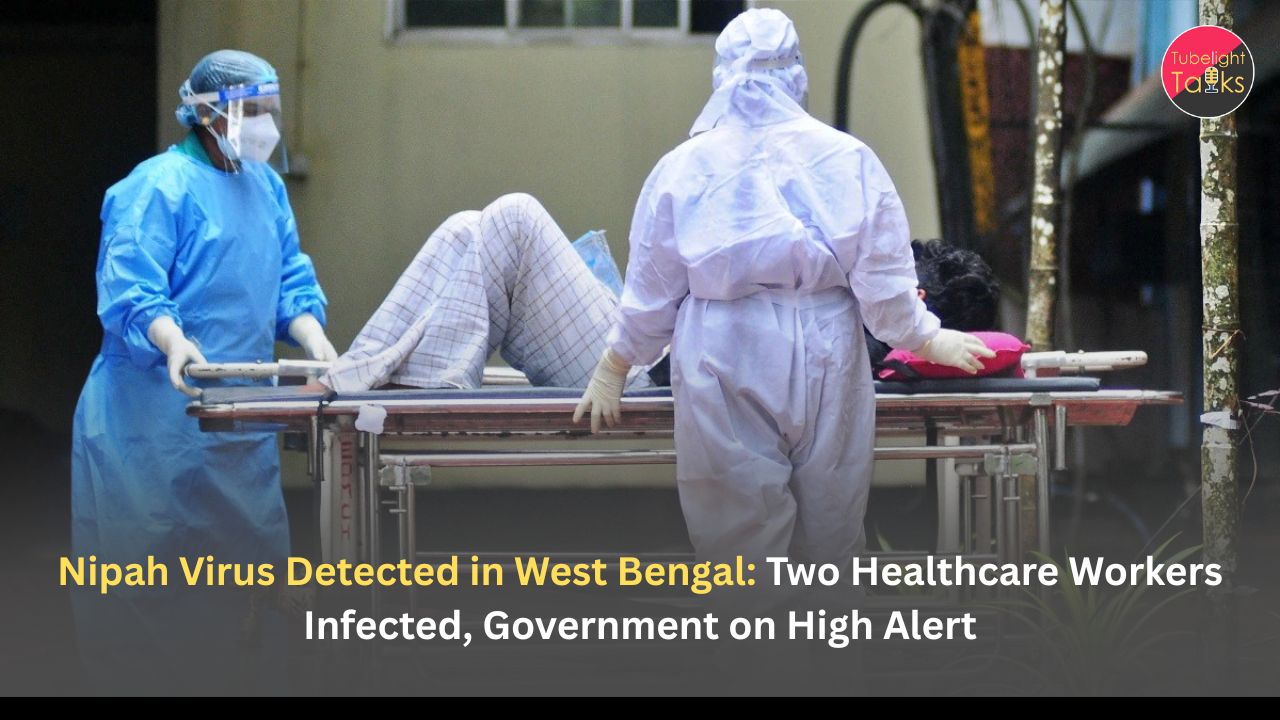
Nipah Virus Detected in West Bengal: Two Healthcare Workers Infected, Government on High Alert
Nipah Virus Detected in West Bengal: On February 6, 2026, West Bengal’s health department confirmed two cases of Nipah virus infection among frontline healthcare workers at a government hospital in North 24 Parganas district. This has triggered urgent public health measures across the state, including contact tracing, patient isolation, and containment zones.
The reappearance of Nipah—a highly fatal zoonotic virus—has set off concerns due to its past fatality rate of 40–75% and lack of any approved treatments or vaccines.
What is Nipah Virus?
A Deadly Zoonotic Pathogen
Nipah virus (NiV) is a bat-borne paramyxovirus first identified in Malaysia in 1998. It is transmitted to humans via:
- Direct contact with infected bats or pigs
- Consuming contaminated fruits or palm sap
- Human-to-human transmission through body fluids
Symptoms appear 4–14 days after exposure and may include:
- Fever and headache
- Vomiting and muscle pain
- Neurological issues like confusion or seizures
- In severe cases, acute respiratory distress and fatal encephalitis
The virus has no cure and requires intensive supportive care.
Also Read: Pan Coronavirus Vaccine Breakthrough by Indian Scientists
Details of the Nipah Virus Detected in West Bengal
What We Know So Far
According to the West Bengal Health Department:
- Both infected individuals were nurses at a district hospital
- Symptoms began showing on January 30
- They were tested at the National Institute of Virology (NIV), Pune, which confirmed NiV on February 5
- Over 38 people are under surveillance, including close contacts and hospital staff
- The area is under containment protocols, with disinfection drives ongoing
The state has activated its Viral Epidemic Rapid Response Teams, and AIIMS Delhi has been consulted for handling possible critical cases.
India’s History With Nipah Virus
India has faced Nipah outbreaks before:
- 2001: Siliguri, West Bengal – 45 deaths
- 2018: Kerala – 17 deaths
- 2021: Isolated case in Kozhikode
In all cases, rapid response and strict containment helped limit the spread.
Now in 2026, preparedness is higher, but challenges remain, especially in high-density states like West Bengal.
Containment Efforts Underway
What the Government Is Doing
- Strict quarantine protocols for exposed individuals
- Sealing off high-risk zones in the hospital and residential areas
- Distribution of PPE kits, especially for healthcare workers
- Thermal screening at bus/train stations in North Bengal
- Guidelines issued for fruit hygiene and avoiding raw palm sap
The Ministry of Health has advised all states to enhance surveillance and reporting mechanisms for unexplained neurological and respiratory symptoms.
Nipah and the Spiritual Outlook: The Root of All Fear
Perspective: Protection Beyond Medicine
While governments and science work to fight visible threats like viruses, Sant Rampal Ji Maharaj explains the spiritual cause behind such rising epidemics.
He teaches that when humanity drifts away from divine principles, nature reacts. According to SatGyaan, pandemics and crises are not random — they reflect the imbalance between karmic debt and righteous living.
Sant Rampal Ji Maharaj guides people to practice true devotion (Satbhakti) as per the scriptures, and receive divine protection from the Supreme God Kabir.
Naam Diksha (spiritual initiation) helps cleanse sins that invite such suffering. Just as vaccinations protect the body, true devotion protects the soul.
Call to Action
Prevent the Virus — Heal the Spirit
Health is Important, but Spiritual Strength is Vital Too
If you’re living in fear of the next virus or epidemic, it’s time to act on both fronts.
✅ Follow medical precautions
✅ Practice hygiene
✅ Seek spiritual knowledge and divine protection
Take Naam Diksha from Sant Rampal Ji Maharaj and understand how real immunity comes from living as per God’s Constitution.
🛡️ The best safety is outer caution + inner protection.
👉 Visit https://www.jagatgururampalji.org
📺 Satsang:Watch Free on YouTube
FAQs on Nipah Virus 2026 Outbreak
1. What is the Nipah virus and how does it spread?
It’s a zoonotic virus transmitted from bats or pigs to humans, and can spread person-to-person through bodily fluids.
2. Are there vaccines or treatments for Nipah?
No approved treatment exists. Patients require supportive care. Vaccine development is ongoing in labs globally.
3. What should I do to stay safe during a Nipah outbreak?
Avoid contact with sick individuals, do not consume fruits fallen on the ground, avoid raw palm sap, and maintain personal hygiene.
4. How deadly is the Nipah virus?
The fatality rate ranges between 40% and 75%, much higher than COVID-19.
5. Has India handled Nipah outbreaks before?
Yes. In 2001 and 2018, India managed to control the spread using isolation, contact tracing, and community education.
6. Can Nipah virus become a pandemic?
Unlikely, as it spreads through close contact unlike airborne viruses, but cluster outbreaks remain a threat.
7. What areas are currently under surveillance?
North 24 Parganas district in West Bengal is currently the containment zone, with alerts issued in neighbouring states.
8. Is this virus found only in India?
No. Nipah has been detected in Malaysia, Bangladesh, the Philippines, and India, with bats being natural carriers globally.
Related Stories








Discussion (0)