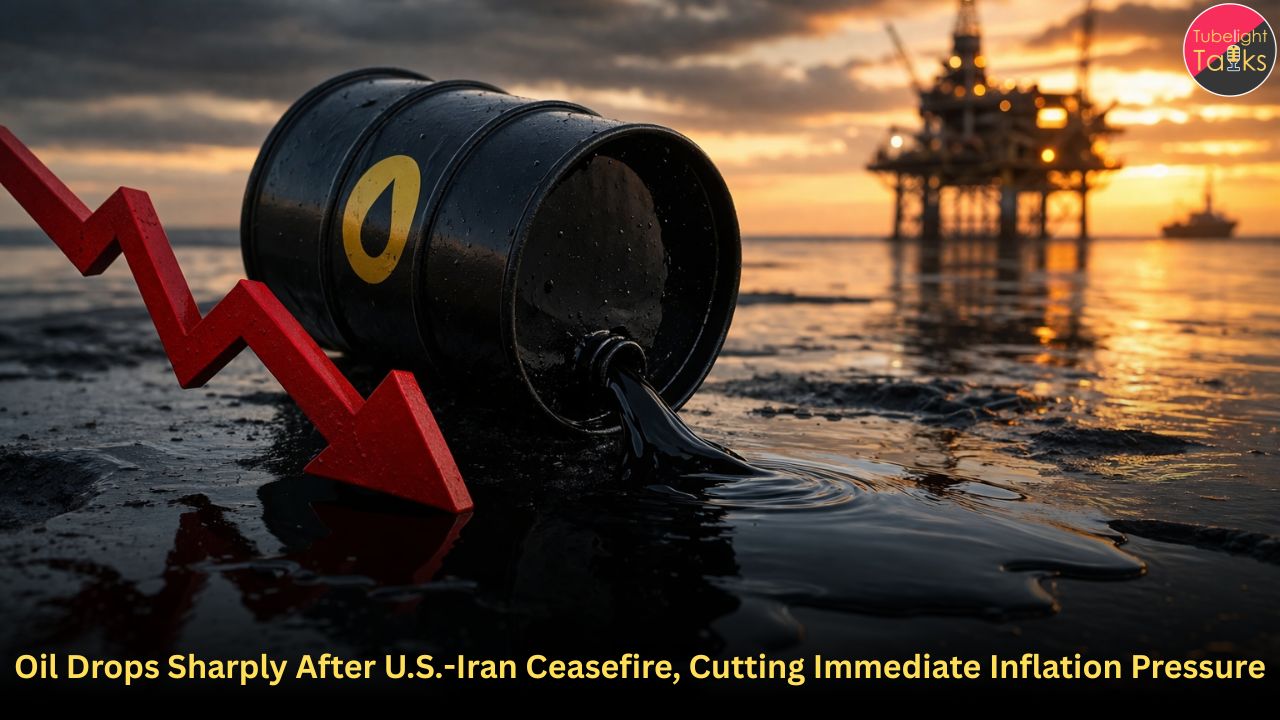
Oil Prices Slide After Ceasefire, Giving Import-Dependent Economies Breathing Space
The U.S.-Iran ceasefire triggered a sharp retreat in global oil prices. Reuters reported that Brent crude dropped 13.8% to $94.25 a barrel, while West Texas Intermediate fell 15.4% to $95.52. That means the market moved decisively lower, though only Brent fell below the $95 line mentioned in the topic.
Why markets reacted so strongly
Markets reacted because the ceasefire reduces the immediate risk of prolonged disruption through the Strait of Hormuz. Reuters and AP both reported that the truce includes reopening the strait to safe passage, which directly affects one of the world’s most sensitive energy corridors.
That matters especially for countries like India, which rely heavily on imported energy. Lower oil prices can reduce near-term pressure on inflation, transport costs and fuel-linked sector stress. This is an inference, but it is strongly supported by the scale of the oil-price move and India’s import dependence.
Also Read: U.S. and Iran Agree to Two-Week Ceasefire, Opening a Narrow Diplomatic Window
Relief, but not certainty
The drop in prices is meaningful, but it does not erase geopolitical risk. Reuters said analysts still see the truce as tentative and warned that a risk premium could persist if the ceasefire proves unstable.
Stability matters most for ordinary people
When oil prices spike, the burden falls first on ordinary households, workers and small businesses. Relief in energy markets therefore matters beyond trading screens. It reflects the wider truth that peace and stability often protect everyday life more than dramatic posturing ever can.
Call to Action
Watch whether Brent holds below $95 and whether shipping through Hormuz normalizes in the coming days. Those two signals will matter most for judging whether this price drop is the start of a durable easing cycle or just a temporary rebound from war fears.
FAQs: Oil Drops Sharply After U.S.-Iran Ceasefire, Cutting Immediate Inflation Pressure
1. Did oil prices really fall below $95?
Brent did, falling to about $94.25; WTI fell to about $95.52.
2. Why did prices drop?
Because the ceasefire reduced immediate fears of disruption through the Strait of Hormuz.
3. Why does this matter for India?
Lower crude prices can ease inflation and import pressure for energy-dependent economies.
Related Stories









Discussion (0)