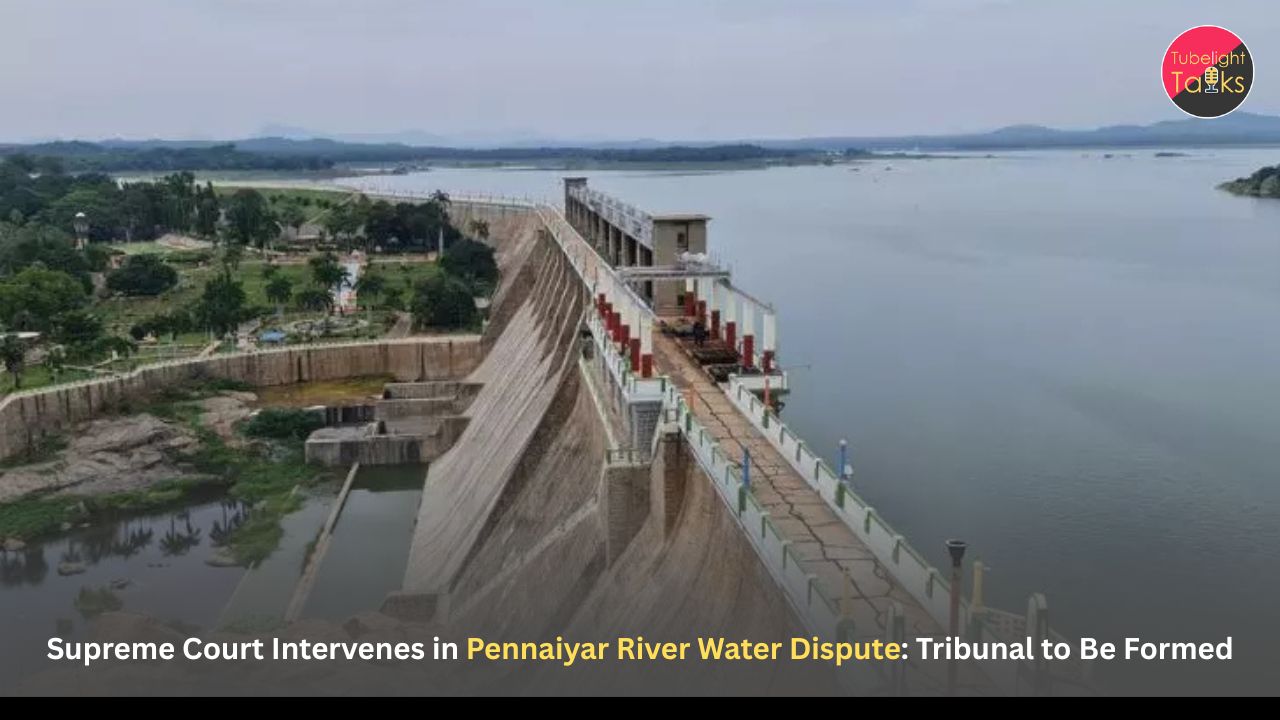
Supreme Court Intervenes in Pennaiyar River Water Dispute: Tribunal to Be Formed
In a crucial development in inter-state water sharing disputes, the Supreme Court of India has directed the Union Government to constitute a tribunal to resolve the Pennaiyar River dispute between Karnataka and Tamil Nadu. This directive revives a decades-old issue over water rights and equitable sharing between the two southern states.
Background: What is the Pennaiyar River Dispute?
The River in Question
The Pennaiyar River (also known as Thenpennai or Ponnaiyar) originates from Nandidurg Hills in Karnataka and flows through Tamil Nadu before entering the Bay of Bengal.
The Dispute
Tamil Nadu has long accused Karnataka of:
- Constructing check dams and diversion projects
- Reducing downstream flow
- Violating riparian rights under historical agreements
Karnataka, on the other hand, argues:
- It is within its rights to utilize water for drinking and irrigation
- There’s no formal tribunal or binding treaty governing Pennaiyar
This standoff has led to simmering tensions, especially during lean monsoon years.
Supreme Court’s Latest Order
What the Court Said
A bench led by Chief Justice D.Y. Chandrachud has instructed the Centre to form a tribunal under the Inter-State River Water Disputes Act, 1956, noting that:
“The matter warrants adjudication through a dedicated tribunal for long-term resolution.”
Why Now?
Tamil Nadu filed a fresh petition earlier this year alleging that Karnataka had undertaken new constructions obstructing the river flow. The court found merit in the claim and emphasized the need for structured legal arbitration.
What Happens Next?
Tribunal Formation
The Centre has 3 months to notify and establish the tribunal, which will:
- Assess water availability
- Consider historical usage
- Determine equitable sharing based on catchment, agriculture, and drinking needs
Interim Measures
The Court has urged both states to refrain from new constructions or altering river flow until the tribunal adjudicates.
Political and Public Reactions
Tamil Nadu
CM M.K. Stalin welcomed the verdict, stating that “justice is finally on course.”
Karnataka
CM Siddaramaiah expressed cautious optimism, saying Karnataka would present scientific data to prove its usage is legitimate and minimal.
Farmers & Citizens
In both states, farmers’ unions have shown mixed reactions—some hopeful, others skeptical, fearing prolonged legal delays.
Inter-State River Disputes in India: A Recurring Theme
The Pennaiyar row echoes other disputes such as:
- Cauvery (Karnataka vs Tamil Nadu)
- Krishna (Maharashtra, Telangana, Andhra Pradesh, Karnataka)
- Yamuna (Uttarakhand, UP, Delhi, Haryana)
Water disputes reflect the fragility of natural resources and political will. With changing climate patterns, resolving such issues legally and ethically is urgent.
Also Read: Yamuna River Nears Warning Level at 204.14 Metres in Delhi | Flood Alert
Ecological Concerns and River Health in Focus
Beyond legal rights and water sharing, the ecological health of the Pennaiyar River has emerged as a shared concern among environmentalists and civil society groups in both states. Unregulated construction, excessive groundwater extraction, and pollution have affected the river’s natural flow and biodiversity.
Experts suggest that the upcoming tribunal should not only resolve allocation disputes but also recommend a joint river basin management framework that includes restoration, afforestation, and pollution control measures. Sustainable river sharing must go hand-in-hand with environmental responsibility.
A Test Case for Cooperative Federalism
The Pennaiyar River dispute now stands as a litmus test for cooperative federalism in India. With several other inter-state river conflicts pending resolution, this case offers an opportunity to set a progressive and precedent-setting example. If handled transparently and fairly, the tribunal can promote a culture of consensus over confrontation, reinforcing trust in constitutional processes.
It also underscores the need for permanent water dispute resolution bodies and data-sharing mechanisms between riparian states to avoid repeated court interventions in future conflicts.
A Higher Perspective: Unity Beyond Borders
Teachings of Sant Rampal Ji Maharaj on Harmony & Resource Sharing
According to the spiritual knowledge shared by Sant Rampal Ji Maharaj, conflicts—whether between individuals or states—arise from ego, greed, and lack of divine understanding.
“The earth and its rivers belong to God. Fighting over them is like brothers fighting over their father’s house.”
Sant Rampal Ji Maharaj teaches that true peace and equality can only be achieved when we:
- Understand that all souls are children of one Supreme God
- Practice true worship (Satbhakti)
- See each other as spiritual siblings, not rivals
He emphasizes that Naam Diksha from a Complete Saint fosters inner peace, which reflects in outer harmony—even between states and nations.
Learn more:
👉 www.jagatgururampalji.org
YouTube: Sant Rampal Ji Maharaj
Call to Action
Water Can Unite, Not Just Divide
Step Towards Unity Through Spiritual Awakening
While the Supreme Court’s decision is a strong legal step, true unity requires a spiritual shift.
Let’s stop seeing borders in rivers
Let’s embrace the oneness of humanity
Begin your inner transformation with the teachings of Sant Rampal Ji Maharaj
“One God, one world, one family—let that be our constitution.”
Start now. Watch spiritual discourses. Take Naam Diksha. Live in peace.
FAQs on the Pennaiyar River Dispute
Q1. What is the Pennaiyar River dispute about?
It’s a conflict between Karnataka and Tamil Nadu over water sharing, dam constructions, and usage rights along the Pennaiyar River.
Q2. What did the Supreme Court order?
The SC directed the Centre to form a tribunal under the Inter-State River Water Disputes Act to adjudicate the dispute.
Q3. Why is this tribunal important?
It provides a structured, legal mechanism for resolving long-standing water conflicts based on data and justice.
Q4. What are the states’ reactions?
Tamil Nadu welcomed the verdict; Karnataka stated it would present data to justify its water usage.
Q5. What is the spiritual message here?
Sant Rampal Ji Maharaj teaches that water is a gift from God meant to unite, not divide. Peace and justice come when we walk the path of Satbhakti.
Related Stories









Discussion (0)