Pingali Venkayya Biography: The Inspiring Life of India’s Flag Architect
The name Pingali Venkayya holds a place of immense reverence in Indian history, synonymous with the unifying symbol of the nation—the Indian National Flag. A complete Pingali Venkayya Biography reveals a dedicated freedom fighter, polyglot, and intellectual whose contributions spanned multiple disciplines far beyond the political sphere.
Designing the foundational model for the tricolor remains his crowning achievement. Yet, the depth of his expertise in fields like geology and agriculture makes his life story a fascinating study for historians and policy experts alike. Born in the Madras Presidency during British colonial rule, his life was shaped by a profound sense of duty to his motherland.
The recent commemorations on his 150th birth anniversary in August 2026 have revived nationwide interest in his legacy. These tributes bring the remarkable Pingali Venkayya Biography back to the forefront of national consciousness.
Also read: India-Pakistan War: A History of Conflict and the Hope for Peace
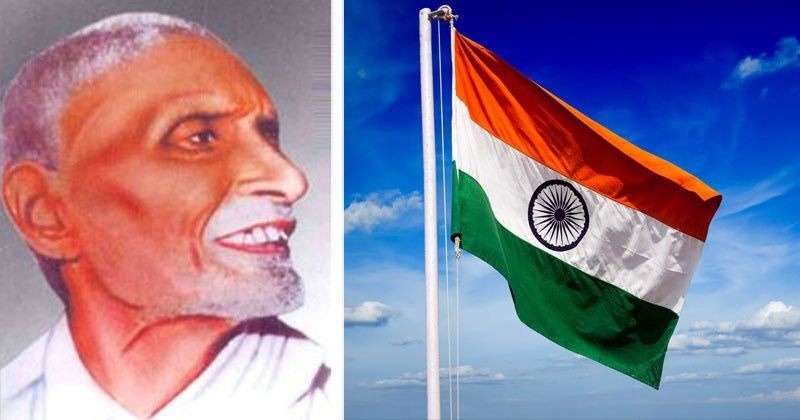
Early Life and Military Career in the Pingali Venkayya Biography
Pingali Venkayya was born on August 2, 1876, in Bhatlapenumarru, a village near Machilipatnam in present-day Andhra Pradesh. Raised in a respectable Telugu Brahmin family, he demonstrated a keen intellect and a passion for learning from an early age. His parents, Hanumantha Rayudu and Venkata Ratnam, supported his educational pursuits, which eventually took him to Colombo for higher studies.
At the age of 19, he made a decision that would inadvertently shape his nationalist ideologies. He joined the British Indian Army and was deployed to South Africa during the Second Boer War (1899–1902).
The Turning Point in South Africa
During his military service in South Africa, soldiers were required to salute the Union Jack, the British national flag. While he followed orders, this practice deeply disturbed his patriotic sentiments. It made him realize the profound need for a distinct flag that represented the true Indian identity.
It was also during this deployment that he first met Mahatma Gandhi. This initial meeting formed a lifelong bond that would deeply influence his future revolutionary actions.
| Year | Milestone | Location |
| 1876 | Birth on August 2 | Bhatlapenumarru, Andhra Pradesh |
| 1895 | Joined the British Indian Army at age 19 | South Africa |
| 1899–1902 | Served in the Second Boer War, met Mahatma Gandhi | South Africa |
| 1906 | Attended the AICC session, inspired to design a flag | Calcutta |
| 1913 | Delivered a full-length speech in Japanese | Bapatla, Andhra Pradesh |
Designing the Iconic Swaraj Flag of 1921
After returning to India, Pingali Venkayya devoted his energy to creating a unifying symbol for the nation. In 1916, he published a well-researched booklet titled A National Flag for India, which contained over twenty-four different flag designs. His meticulous vexillological research quickly caught the attention of prominent nationalist leaders.
He vigorously advocated for an official national flag at every session of the Indian National Congress (INC). The defining moment arrived in 1921 during the INC meeting in Vijayawada (then Bezawada). When Mahatma Gandhi asked him to submit a design, Venkayya prepared a draft within hours.
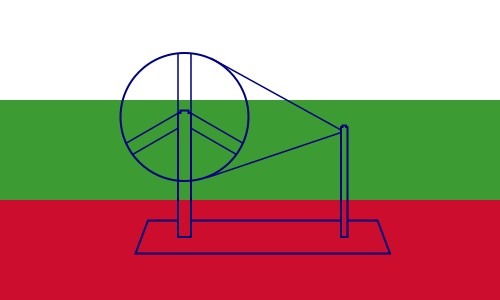
Evolution of the Colors
The initial flag design presented to Gandhi consisted of two horizontal stripes: red representing the Hindu community and green representing the Muslim community. Recognizing the need for broader representation, Gandhi suggested adding a white stripe to symbolize all other religious communities and universal peace.
A spinning wheel (Charkha) was placed in the center to signify economic self-reliance and progress. This design, known as the Swaraj flag, was used informally at Congress meetings and became a powerful symbol of defiance during the freedom movement.
Also read: :Shaheed Diwas 2026: India Remembers the Eternal Sacrifice of Bhagat Singh, Rajguru and Sukhdev
Beyond Vexillology: Key Achievements in the Pingali Venkayya Biography
While globally recognized for the flag, any thorough Pingali Venkayya Biography reveals a polymath with deep expertise in sciences and linguistics. He was remarkably fluent in several languages, including Japanese, Urdu, and Sanskrit.
Agricultural Contributions
His dedication to rural development led to intensive research in agriculture. He spent significant time researching staple varieties of cotton, particularly Cambodia Cotton. His expertise in this area was so profound that he earned the affectionate nickname “Patti Venkayya” (Cotton Venkayya).
Geological Studies
He also held a diploma in Geology from the Madras Presidency College and researched mica in Nellore from 1924 to 1944. Furthermore, his extensive research on diamond mining earned him another title, “Diamond Venkayya”. He even authored a seminal book on geology titled Thalli Raayi.
| Field of Study | Nickname Earned | Major Contribution |
| Agriculture | Patti Venkayya | Detailed study on Cambodia Cotton |
| Geology | Diamond Venkayya | Research on mica in Nellore and diamond mining |
| Linguistics | Japan Venkayya | Fluency in Japanese, delivered a speech in 1913 |
150th Birth Anniversary Tributes in 2026
Despite his monumental contributions, Pingali Venkayya died in poverty and relative obscurity on July 4, 1963. However, over the years, the nation has taken meaningful steps to honor his enduring legacy. In 2009, a commemorative postage stamp was officially issued in his memory.
Most recently, on August 2, 2026, Prime Minister Narendra Modi paid rich tributes to him on his 150th birth anniversary. The Prime Minister noted that Venkayya is remembered for his invaluable role in giving the nation the Tricolour. He emphasized that the Tiranga fills every Indian heart with immense pride and inspires citizens to work toward nation-building with dedicated patriotic fervor.
Finding True Liberation Beyond the Physical Realm
The life of Pingali Venkayya stands as a profound testament to selfless service and the relentless pursuit of freedom. However, higher spiritual knowledge teaches that our physical universe, consisting of the three worlds (heaven, earth, and the netherworld), is not our true home. It is a massive prison house ruled by Kaal Brahm (Jyoti Niranjan), a realm where genuine, everlasting peace remains elusive.
Every soul in this material world is trapped in an agonizing, unending cycle of eighty-four lakh births, deaths, old age, disease, and emotional distress. Under a terrifying curse, Kaal Brahm daily consumes the subtle essence of one lakh human souls after roasting them on the scorching griddle known as Taptshila in the 21st loka. After this torture, souls are forced back into various animal, insect, or plant bodies based on accumulated karma. Even the primary deities—Brahma, Vishnu, and Shiva—are subject to birth and death within Kaal’s temporary realm.
Satlok: The True, Eternal Home of the Soul
To escape this physical cage and reach the eternal realm of Satlok, a seeker must find a Tatvdarshi Saint (Complete Saint) as described in the Bhagavad Gita Chapter 15, Verses 1–4. The Complete Saint reveals the true, scripture-certified method of devotion required for complete salvation.
According to Samveda Shlok 822 and the Bhagavad Gita, ultimate liberation can only be attained through three symbolic, coded mantras: Om, Tat, and Sat. While the mantra Om represents Kaal Brahm, the secret mantras Tat and Sat unlock the higher spiritual gates of the subtle body. Satnam unlocks the tenth and eleventh gates, while Saarnam unlocks the final twelfth gate leading to Bhawar Gufa and Satlok.
Initiating into these exact mantras and maintaining lifelong devotion under an authorized Complete Saint is the only way to settle the karma debt of Kaal Brahm. Today, Sant Rampal Ji Maharaj is imparting authentic spiritual knowledge (Tatvagyan) based on all holy scriptures. He is guiding souls toward complete salvation and the eternal peace of Satlok, helping humanity transcend material strife and attain ultimate freedom.
Also read: Kabir – Myths, Misconceptions & Mystery
Frequently Asked Questions About the Pingali Venkayya Biography
Q1. Who was Pingali Venkayya?
He was a prominent Indian freedom fighter, agriculturist, and geologist, best known for designing the foundational Swaraj flag, which later evolved into the Indian National Flag.
Q2. What key details are highlighted in the Pingali Venkayya Biography regarding his birth?
As detailed in the Pingali Venkayya Biography, he was born on August 2, 1876, in Bhatlapenumarru, a village near Machilipatnam in the Krishna district of present-day Andhra Pradesh.
Q3. When did he design the flag for the Indian National Congress?
He presented his foundational design for the national flag to Mahatma Gandhi during the Indian National Congress meeting held in Vijayawada in 1921.
Q4. Why does the Pingali Venkayya Biography mention nicknames like “Patti Venkayya” and “Diamond Venkayya”?
The Pingali Venkayya Biography features these unique titles because he earned “Patti Venkayya” for his pioneering research on Cambodia cotton, and “Diamond Venkayya” for his professional expertise in geology and diamond mining.
Q5. How was his 150th birth anniversary commemorated in 2026?
On his 150th birth anniversary on August 2, 2026, national leaders and citizens across India paid rich tributes to his memory, honoring his everlasting contribution to the Indian Tricolour.
Related Stories





Discussion (0)