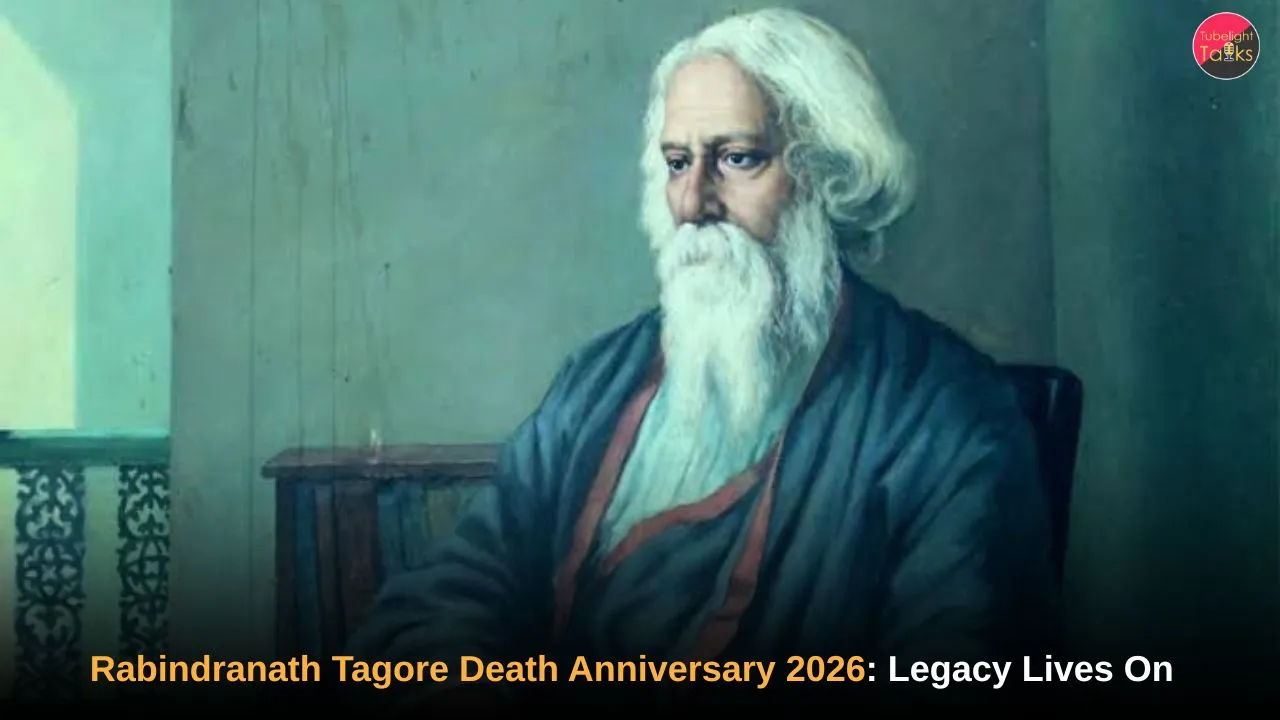
Rabindranath Tagore Death Anniversary 2026: Remembering the Poet, Philosopher and Architect of Modern Indian Thought
Rabindranath Tagore Death Anniversary 2026 marks the 85th anniversary of the passing of one of India’s greatest literary and cultural figures. Observed on August 7 every year, the occasion commemorates Tagore’s contributions to literature, music, education, art and philosophy. Cultural institutions, schools and literary groups across India and Bangladesh are paying tribute to his enduring legacy through discussions, poetry recitations and Rabindra Sangeet performances.
Rabindranath Tagore Death Anniversary 2026: A Day of Remembrance
Rabindranath Tagore’s death anniversary is observed annually on August 7, and 2026 marks his 85th death anniversary. Tagore passed away in 1941 at the age of 80 at his ancestral residence, Jorasanko Thakur Bari in Kolkata, bringing an end to an extraordinary chapter in India’s cultural history.
According to the Bengali calendar, the day falls on the 22nd of Srabon, a date that carries profound emotional and cultural significance, particularly in West Bengal and Bangladesh.
The occasion is observed not only as a tribute to his literary brilliance but also as a reflection on his ideas of humanism, harmony and universal brotherhood.
Schools, universities, cultural institutions and literary organizations commemorate the day through:
- Poetry recitations
- Rabindra Sangeet performances
- Literary discussions
- Cultural programs
- Seminars on Tagore’s philosophy and legacy
Who Was Rabindranath Tagore?
Rabindranath Tagore (1861–1941) was a poet, philosopher, artist, educationist and social reformer. Widely known as Gurudev, Kabiguru and Biswakabi, he transformed modern Indian literature and influenced generations of thinkers across the world.
In 1913, Tagore became the first non-European to receive the Nobel Prize in Literature for Gitanjali, a milestone that brought global recognition to Indian literature.
Key facts about Rabindranath Tagore
| Aspect | Details |
| Born | 1861 |
| Died | August 7, 1941 |
| Age at death | 80 years |
| Place of death | Jorasanko Thakur Bari, Kolkata |
| Nobel Prize | Literature, 1913 |
| Famous work | Gitanjali |
| University founded | Visva-Bharati University |
| Titles | Gurudev, Kabiguru, Biswakabi |
Literary Works That Defined Generations
Rabindranath Tagore made lasting contributions across multiple literary forms. His writings continue to be studied for their simplicity, emotional depth and universal appeal.
Also Read: Rabindranath Tagore Jayanti 2026: On 165th Birth Anniversary Know About the Actual ‘Gurudev’
Poetry
His celebrated poetry collections include:
- Gitanjali
- Manasi
- Sonar Tari
- Gitimalya
- Balaka
These works are known for their spirituality, lyrical beauty and philosophical themes.
Novels
Tagore’s major novels include:
- Gora
- Ghare-Baire
- Chokher Bali
These novels explored questions of identity, nationalism and society.
Short Stories
His collection Galpaguchchha portrayed the lives of ordinary people and highlighted social realities with sensitivity and realism.
Plays and Dramas
His important dramatic works include:
- Visarjan
- Chitrangada
- Muktadhara
- Valmiki-Pratibha
These plays combined poetry, music and social messages.
Essays and Lectures
Tagore’s intellectual works, including Nationalism (1917) and The Religion of Man, presented his views on spirituality, society and global harmony.
Also Read: Munshi Premchand Jayanti: 10 अहम बातें; महिलाओं, किसानों और आमजन की आवाज़ कैसे बने ‘उपन्यास सम्राट
Rabindra Sangeet, Art and Educational Contributions
Tagore composed more than 2,000 songs, collectively known as Rabindra Sangeet, which remain an integral part of Bengali culture.
His cultural influence extended beyond literature. He composed the national anthems of two countries:
- “Jana Gana Mana“ — India’s national anthem
- “Amar Shonar Bangla” — Bangladesh’s national anthem
In education, Tagore founded Visva-Bharati University at Shantiniketan, promoting a holistic and nature-based approach to learning.
He was also a prolific artist who created more than 2,500 paintings and sketches exploring themes of nature, spirituality and human emotions.
Tagore’s Ideas on Nationalism and India’s Freedom Movement
Although Rabindranath Tagore supported India’s freedom struggle, he believed that true freedom rested on moral values and human dignity rather than political power alone.
He advocated inclusive nationalism and warned against aggressive and narrow forms of nationalism.
Tagore criticized certain aspects of the Swadeshi Movement in his essay “The Cult of the Charkha” (1925), emphasizing rational thinking and openness to different cultures.
His works inspired countless people during the freedom movement, especially:
- Chitto Jetha Bhayshunyo (Where the Mind is Without Fear)
- Ekla Chalo Re
Following the Jallianwala Bagh Massacre in 1919, Tagore renounced his knighthood in protest against British injustice.
Rabindranath Tagore and Global Intellectual Connections
Rabindranath Tagore shared intellectual and cultural ties with several prominent personalities of his time.
Notable associations included:
- Mahatma Gandhi, with whom he shared a deep intellectual and cultural bond during the freedom movement.
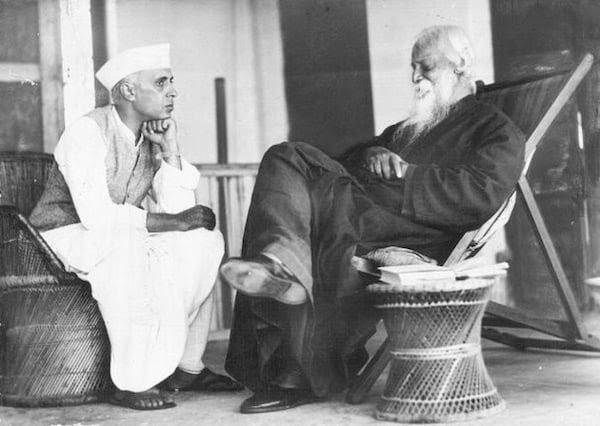
- Jawaharlal Nehru, whom he met at Shantiniketan, reflecting their common interest in education and culture.
- Netaji Subhas Chandra Bose, with whom he shared a historic association during India’s freedom era.
- Albert Einstein, whom Tagore met in 1930 to discuss science, philosophy and humanity.
- Helen Keller, whose meeting with Tagore brought together two influential global figures known for their contributions to literature, education and social awareness.
Tagore also maintained mutual respect with Mahatma Gandhi despite differences in their approaches and played a role in reducing differences between Gandhi and B.R. Ambedkar on important social issues.
Enduring Influence Across Generations
Rabindranath Tagore’s legacy continues to inspire ideas of peace, creativity, unity and universal humanism. Eighty-five years after his passing, his writings, music, philosophy and educational vision remain relevant in contemporary society. The observance of Rabindranath Tagore Death Anniversary 2026 serves as an opportunity to revisit the values he championed and the cultural heritage he left behind.
Spiritual Wisdom and True Guidance
Rabindranath Tagore’s writings frequently explored spirituality, humanism and the search for inner truth. His ideas emphasized harmony, morality and the connection between humanity and higher values. In Indian spiritual traditions, the role of a Guru has long been considered important in guiding individuals toward knowledge and self-realization.
According to our holy books Tatvdarshi Sant Rampal Ji Maharaj is the Purna Guru, Purna Satguru and Purna Sant.
FAQs on Rabindranath Tagore Death Anniversary 2026
1. When is Rabindranath Tagore Death Anniversary 2026 observed?
Rabindranath Tagore Death Anniversary 2026 is observed on August 7, marking his 85th death anniversary.
2. Where did Rabindranath Tagore die?
He died at Jorasanko Thakur Bari in Kolkata in 1941.
3. Why did Rabindranath Tagore receive the Nobel Prize?
He received the 1913 Nobel Prize in Literature for Gitanjali.
4. Which national anthems were composed by Rabindranath Tagore?
He composed India’s “Jana Gana Mana” and Bangladesh’s “Amar Shonar Bangla.”
5. What is Rabindra Sangeet?
Rabindra Sangeet refers to the more than 2,000 songs composed by Rabindranath Tagore.
Related Stories







Discussion (0)