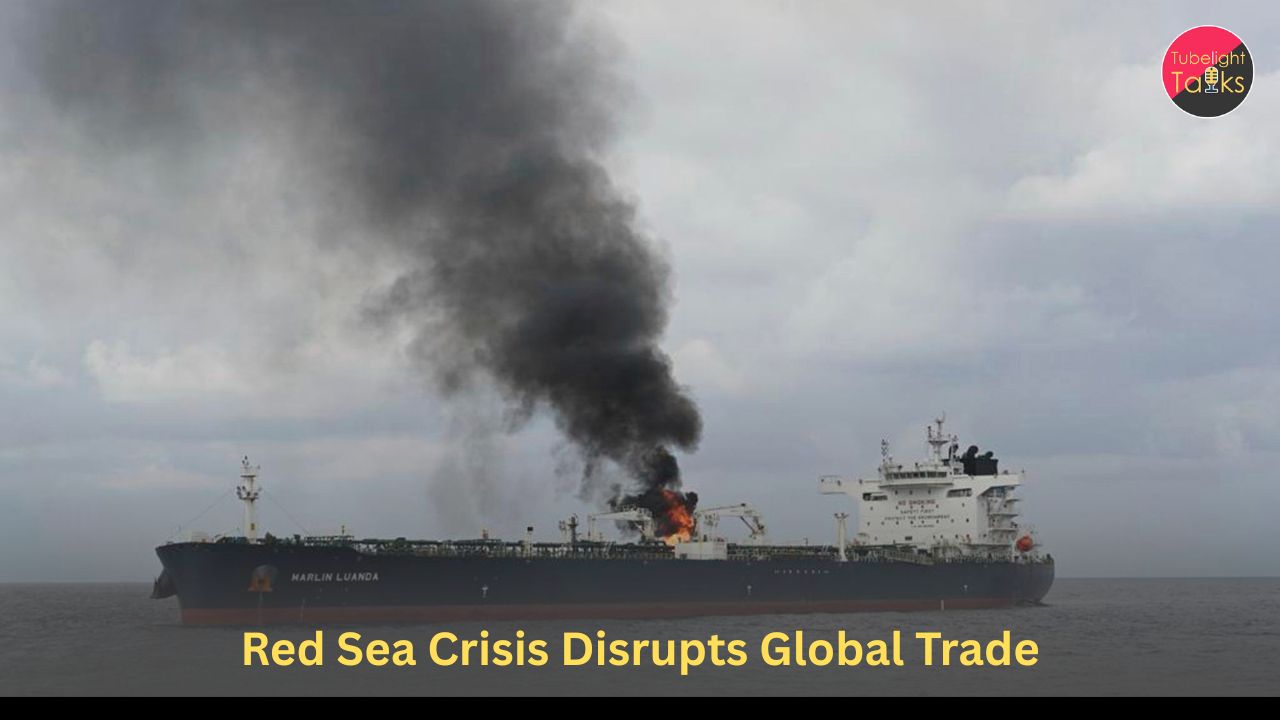
Red Sea Crisis Disrupts Global Trade: How India is Navigating the Shipping Shock
Red Sea Crisis Disrupts Global Trade: Global maritime trade is facing one of its biggest crises in years, as persistent attacks on cargo ships in the Red Sea by Houthi rebels from Yemen have triggered widespread panic among global shipping lines. Over 15% of the world’s seaborne trade, including oil, consumer goods, and food, passes through this critical corridor. As Western vessels reroute via the Cape of Good Hope, India is stepping up with a mix of naval deployment, diplomatic coordination, and port strategy to protect its trade and economy from this external shock.
The Crisis Explained: Why the Red Sea Matters
The Red Sea, particularly near the Bab el-Mandeb Strait, is a crucial artery connecting Europe and Asia via the Suez Canal. The disruption has caused:
- A 4x surge in freight costs to Europe and the US
- Delays of up to 15–20 days on rerouted shipments
- A ripple effect on fuel, electronics, and auto parts prices
- Insurance premiums rising for vessels transiting near Yemen
India, heavily reliant on this corridor for exports to Europe, Gulf nations, and North Africa, is among the most affected non-combatant nations.
Also Read: Houthi Attacks in Red Sea Spark Global Trade Crisis: Oil, Shipping, and Security in Turmoil
India’s Strategic Response: Staying Afloat Amid Crisis
1. Naval Escort Mission ‘Operation Sankalp’ Expanded
The Indian Navy has expanded its existing operation to escort Indian merchant ships through high-risk zones. Warships like INS Kolkata and INS Chennai are now actively patrolling near Djibouti and the Gulf of Aden, responding to distress calls and monitoring hostile zones.
2. Alternate Routes and Diversification
Exporters are being advised to reroute cargo via:
- Cape of Good Hope (longer but safer route)
- Chabahar Port (Iran) for West Asia and Central Asia cargo
- India-Middle East-Europe Economic Corridor (IMEEC) as a long-term strategic pivot
3. Port Buffering and Logistics Control Rooms
Major Indian ports like Mundra, Nhava Sheva (JNPT), and Kochi have been directed to act as buffer zones with real-time cargo status tracking. The government has set up 24×7 logistics war rooms to monitor delays, customs bottlenecks, and alternate vessel availability.
Impact on Indian Economy: Who’s Hurting the Most?
- Exporters in textiles, auto parts, electronics, and pharma report delayed deliveries and strained client relations
- Importers of crude oil and edible oils face increased landed costs
- MSMEs dependent on just-in-time delivery models are seeing inventory mismatches and payment cycles stretched
- Freight rates to Europe have surged from $1,000 to over $4,000 per container
To counter this, the Commerce Ministry is evaluating emergency freight subsidy proposals and strategic fuel stockpiles to cushion domestic supply chains.
Global Diplomacy and India’s Role
India is playing a non-aligned but proactive role in ensuring maritime stability:
- Participating in multilateral naval coordination with the US, France, and regional powers
- Calling for de-escalation at the UN Security Council
- Exploring diplomatic backchannels to safeguard trade flow without taking sides in the Israel-Hamas-Yemen conflict chain
Finding Peace Amid Global Disruption
As global shipping lanes choke under conflict, Sant Rampal Ji Maharaj reminds us that true security does not lie in trade routes, but in the path to God.
“No matter how vast the ocean or how strong the ship—without divine direction, every journey is unstable.”
According to his spiritual teachings:
- Worldly crises are temporary
- Inner peace can be achieved through Satbhakti (true worship)
- By taking Naam Diksha from a Complete Saint and practicing scripture-based devotion, one can anchor the soul amidst worldly turbulence
In the face of global unrest, it’s not just economies that need navigation—but hearts that need direction.
🕊️ Learn More:
👉www.jagatgururampalji.org
📺 YouTube: Sant Rampal Ji Maharaj
Call to Action
Reroute Your Life: From Uncertainty to Spiritual Stability
In a world shaken by global storms—choose inner peace over outer chaos.
India is navigating a global shipping crisis with strategy and strength.
But every individual must navigate the ocean of life, where storms are internal—fear, stress, and confusion.
✅ Take Naam Diksha from Sant Rampal Ji Maharaj
✅ Attend spiritual discourses and awaken higher purpose
✅ Choose peace that no storm can shake
“Anchor your soul in truth—and sail through any crisis.”
FAQs on Red Sea Crisis Disrupts Global Trade
Q1. Why is the Red Sea important for India?
The Red Sea provides access to the Suez Canal, used by over 50% of India’s trade with Europe and West Asia. Disruption here directly affects Indian exports and imports.
Q2. What is India doing to protect ships?
India has expanded Operation Sankalp, deploying naval escorts and maritime surveillance teams to ensure safe passage of Indian vessels.
Q3. How are exporters coping with delays?
Many are rerouting shipments via the Cape of Good Hope or Middle Eastern ports. Government relief measures are under review.
Q4. Will this impact fuel and goods prices in India?
Yes, especially in the short term. Increased logistics costs and delays could raise prices for fuel, food, and imported goods.
Q5. What is the spiritual message in this global crisis?
Sant Rampal Ji Maharaj teaches that real safety lies not in physical infrastructure, but in connecting with the Supreme God through true devotion—which offers peace beyond global turbulence.
Related Stories







Discussion (0)