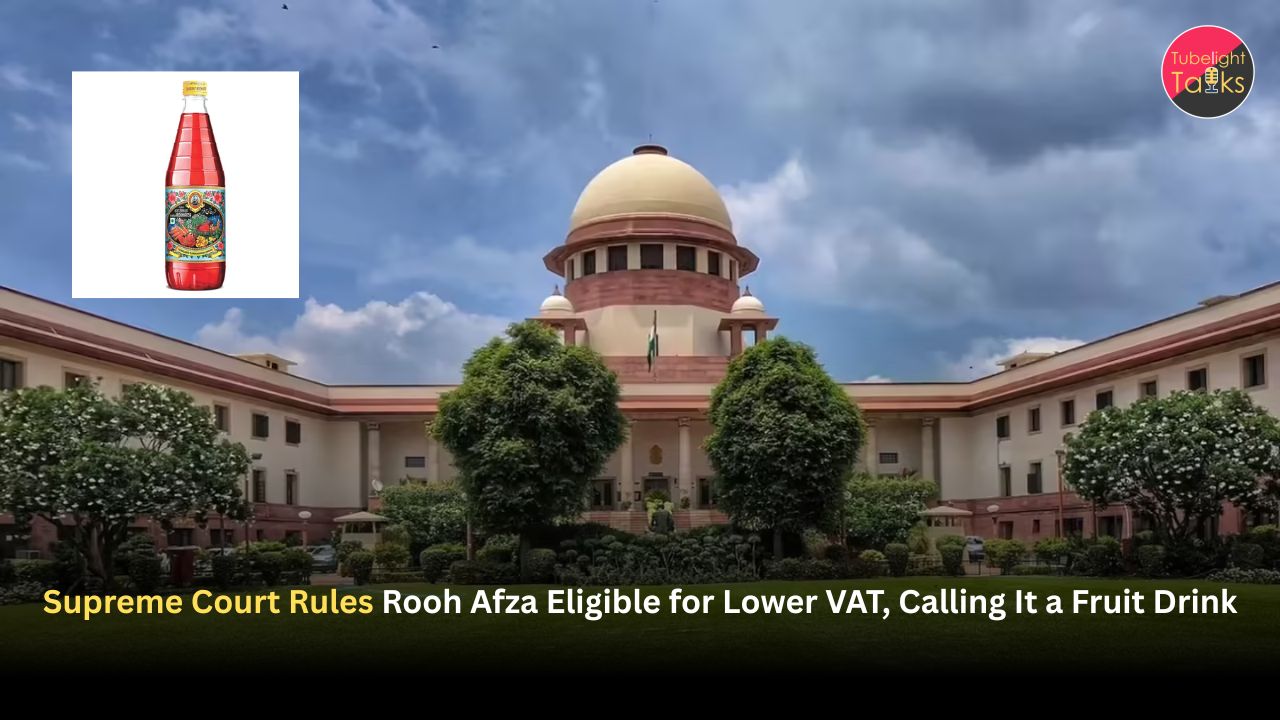
Supreme Court Ruling: Rooh Afza Eligible for Lower VAT
Rooh Afza Eligible for Lower VAT: In a significant ruling that blends law, commerce, and culture, the Supreme Court has classified Rooh Afza as a “fruit drink” rather than a synthetic syrup, making it eligible for a lower Value Added Tax (VAT). The verdict concludes a long-standing dispute over how the iconic beverage should be categorized under tax regulations.
As summer approaches and demand for cooling drinks rises, the decision is expected to bring pricing relief to consumers. Beyond taxation, the ruling also reinforces confidence that traditional, heritage brands can navigate modern regulatory systems successfully.
The Core Issue: Classification Matters
Why tax category is important
Tax laws often classify products differently based on composition and intended use. In beverage taxation, fruit-based drinks generally attract lower VAT rates compared to synthetic syrups or concentrates.
The dispute centered on whether Rooh Afza should be considered a fruit drink- due to its natural ingredients and usage- or treated as a synthetic syrup subject to higher taxation.
Supreme Court’s interpretation
The Supreme Court ruled in favor of classifying Rooh Afza as a fruit drink. This decision not only settles the tax question but also establishes clarity for similar products in the market.
Why This Decision Is Significant
Consumer benefit
Lower VAT can translate into more stable or affordable retail pricing, especially during peak summer season when demand surges.
For a product deeply embedded in Indian households, even minor price adjustments can have broad impact.
A win for legacy brands
Rooh Afza has been part of Indian culinary culture for decades. The ruling demonstrates that heritage brands can successfully defend their identity and formulation in legal and regulatory frameworks.
It reinforces trust in the judicial system’s ability to examine product characteristics objectively.
Also Read: Delhi High Court Stays FSSAI Ban on Sugary ORSL Drinks, Allows ₹180 Crore Stock Sale
Broader Implications for the Food & Beverage Industry
Clearer tax guidelines
The ruling may influence how similar beverages are classified in the future, potentially reducing ambiguity in taxation disputes.
Manufacturers across the sector will likely study the verdict to understand how product composition and labeling affect tax treatment.
Strengthening business confidence
Legal clarity reduces financial uncertainty. When companies can predict tax liabilities accurately, they can plan production, pricing, and expansion strategies more confidently.
Cultural Significance Beyond the Courtroom
Rooh Afza is more than just a beverage; it holds nostalgic value across generations. From Ramadan sharbat to summer coolers, it occupies a distinct place in Indian households.
The verdict has been celebrated not only for economic reasons but also for protecting a culturally rooted product under modern legal standards.
Why the Story Is Trending
This ruling combines three powerful elements:
- A Supreme Court decision
- A beloved national brand
- Direct consumer impact
In an era where economic and legal headlines often feel distant, this verdict connects immediately with everyday households.
Law, Fairness, and Responsibility
Fair classification ensures justice in commerce. When institutions interpret laws with clarity and balance, both consumers and businesses benefit. In spiritual teachings shared by Sant Rampal Ji Maharaj, fairness and truth are emphasized as foundations of social harmony. Just as balanced judgment preserves trust in society, transparent legal decisions strengthen economic confidence.
The Rooh Afza ruling reflects how fairness in governance can ripple positively through markets and communities alike.
FAQs: SCI Rules Rooh Afza Eligible for Lower VAT
What did the Supreme Court decide?
It classified Rooh Afza as a fruit drink rather than a synthetic syrup.
Why is this important?
Fruit drinks are eligible for lower VAT compared to synthetic syrups.
Will this reduce the price of Rooh Afza?
Lower VAT may help stabilize or reduce pricing, especially during summer demand.
How long was the dispute ongoing?
The case involved a prolonged legal battle over product classification.
Does this affect other beverages?
The ruling may influence how similar products are classified under tax laws in the future.
Related Stories








Discussion (0)