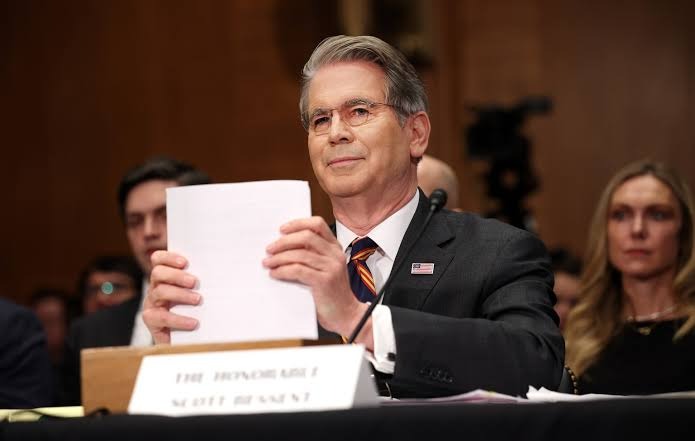
![US Treasury Secretary Scott Bessent discussing foreign exchange and the Japanese Yen intervention.] | [Source: US Treasury Official Feed](https://tubelighttalks.com/wp-content/uploads/2026/08/Scott.webp)
Scott Bessent Blasts Elizabeth Warren With A Crucial Foreign Exchange Warning
US Treasury Secretary Scott Bessent has ignited a massive political and economic firestorm after delivering a scathing rebuke to Senator Elizabeth Warren regarding global currency markets. The intense clash centers around the recent US intervention to stabilize the rapidly fluctuating Japanese Yen. Following intense criticism from Warren regarding the Treasury’s market actions, Scott Bessent fired back by offering what he explicitly termed a “foreign exchange for dummies” tutorial.
This high-profile dispute highlights a deep ideological divide in Washington regarding how foreign currency markets impact domestic financial health. While Warren views the Treasury’s actions as an unnecessary bailout for foreign markets, Scott Bessent argues that ignoring the collapsing Yen would trigger devastating financial consequences for everyday Americans, including surging interest rates and skyrocketing mortgage costs.
The Genesis of the Scott Bessent and Elizabeth Warren Feud
The conflict began when Senator Elizabeth Warren publicly condemned the US Treasury Department for actively intervening in global foreign exchange markets to prop up the Japanese Yen. Warren argued that American taxpayer resources and federal monetary policy should strictly focus on domestic inflation and wage growth, rather than manipulating Asian currency valuations.
Scott Bessent swiftly dismissed Warren’s economic critique as fundamentally flawed and dangerously shortsighted. In a blistering public statement, the Treasury Secretary explained that the global economy operates on an interconnected web of bond yields and currency valuations. He stressed that foreign exchange is not an isolated casino, but a direct driver of American borrowing costs.
To emphasize his point, Scott Bessent offered his political rival a blunt tutorial on international finance. He detailed exactly how a disorderly and collapsing Japanese Yen forces foreign central banks to dump United States Treasury bonds. When foreign nations sell off US debt in massive quantities, bond yields spike, directly forcing the Federal Reserve to maintain or raise domestic interest rates.
Why a Disorderly Japanese Yen Threatens the US Economy
Understanding the economic philosophy championed by Scott Bessent requires a deep dive into the mechanics of the US Treasury market. Japan currently stands as the largest foreign holder of United States government debt. For decades, the Japanese government and institutional investors have purchased trillions of dollars in US bonds, helping keep American borrowing costs artificially low.
However, when the Japanese Yen experiences extreme volatility or depreciation against the US Dollar, Japanese financial institutions face immense pressure. To protect their domestic economy and stabilize their currency, Japanese officials often liquidate their foreign reserves. This means selling off billions in US Treasury bonds on the open market.
Scott Bessent explicitly warned that this massive sell-off creates a supply glut in the US bond market. Consequently, bond prices drop and yields surge. Because US mortgage rates and auto loan rates strictly track Treasury bond yields, a disorderly Yen directly translates to more expensive loans for American consumers.
The Ripple Effect of Currency Intervention
To further clarify the financial stakes that Scott Bessent presented, economists have mapped out the chronological impact of foreign currency collapse on domestic consumer rates. The data reveals exactly why the US Treasury felt compelled to intervene.
| Economic Trigger Event | Market Reaction | Direct Impact on US Consumers | Expected Policy Response |
| Japanese Yen Plummets | Japan sells US Treasuries | Bond yields surge upward | US Treasury intervenes to buy Yen |
| Unchecked Currency Volatility | Global market panic | 30-Year Mortgage rates increase | Federal Reserve halts rate cuts |
| Successful Yen Stabilization | Foreign bond dumping stops | Loan rates stabilize globally | US borrowing costs remain steady |
| Elizabeth Warren’s Proposed Inaction | Massive bond market sell-off | Drastic inflation in borrowing | Imminent US economic slowdown |
Data representation of the macroeconomic principles outlined by Treasury Secretary Scott Bessent regarding the US-Japan financial relationship.
Scott Bessent Defends the US Treasury Strategy
By intervening in the foreign exchange market, Scott Bessent argues that the US Treasury effectively executed a defensive maneuver to protect American citizens. He dismantled the narrative that currency intervention serves only Wall Street elites or foreign governments. Instead, he framed the Treasury’s actions as a crucial shield against imported inflation.
If the Treasury had followed Elizabeth Warren‘s advice and allowed the Yen to enter a freefall, the subsequent spike in US interest rates would have devastated the domestic housing market. Homebuyers would face impossibly high monthly payments, and small businesses would struggle to secure operational loans. Scott Bessent emphasized that ignoring global currency mechanics is a dereliction of economic duty.
Financial analysts and market strategists have largely rallied behind the Treasury Secretary’s technical assessment. Wall Street experts note that while Warren’s populist rhetoric appeals to domestic voters, Scott Bessent operates in the reality of a highly leveraged, hyper-connected global financial system. The “foreign exchange for dummies” tutorial was a stark reminder that American economic isolationism is virtually impossible in the modern era.
Source :ABC news
Future Implications for US Interest Rates
The ongoing debate spearheaded by Scott Bessent has forced market watchers to heavily recalibrate their expectations for the Federal Reserve. Previously, investors broadly anticipated aggressive interest rate cuts throughout the remainder of the year. However, the Treasury Secretary’s stark warnings about the Japanese Yen suggest that global volatility could delay these cuts entirely.
If foreign exchange markets remain disorderly, the Federal Reserve will likely maintain higher rates to offset the international dumping of US Treasury bonds. Scott Bessent has made it abundantly clear that his department will continue monitoring international currency pairs, prioritizing the stability of the US bond market above domestic political appeasement.
As the situation develops, the broader financial community continues to monitor the Treasury’s next moves. Senator Warren has yet to issue a comprehensive technical rebuttal to the tutorial provided by Scott Bessent, though her progressive allies continue to scrutinize the administration’s financial interventions.
Finding True Stability Beyond Global Economic Turmoil
The fierce political clash between Treasury Secretary Scott Bessent and Senator Elizabeth Warren perfectly illustrates the endless instability of the material world. Daily, we witness world leaders, politicians, and economists fighting over wealth, fluctuating currency rates, and financial policies. The stress of inflation, rising interest rates, and global economic fragility leaves ordinary citizens living in constant anxiety about their future survival. This endless cycle of wealth accumulation and economic fear proves that true peace cannot be found in government policies or stock markets.
Spiritual knowledge reveals that all worldly wealth is temporary. We spend our entire lives worrying about money, yet we leave every single penny behind upon death. The true wealth of a human life is spiritual devotion. According to the sacred teachings of Sant Rampal Ji Maharaj, humanity suffers because we have forgotten our original spiritual home, Satlok (the eternal place), and our Creator, Supreme God Kabir Ji.
God Kabir Ji stated that real prosperity and eternal peace only come through true spiritual worship based on our Holy Scriptures. Sant Rampal Ji Maharaj provides the exact, scripture-certified way of worship that not only brings peace and contentment in this current life, alleviating our material anxieties, but also guarantees ultimate salvation from the painful cycle of birth and death. To discover the ultimate truth and attain permanent stability beyond worldly economics, Read to the holy book Gyan Ganga and it is free of cost book and take initiation to begin the journey of true devotion.
FAQs on Scott Bessent
1. Who is Scott Bessent?
Scott Bessent serves as the United States Treasury Secretary. He is responsible for managing federal finances, overseeing the national debt, and directing domestic and international economic policy for the US government.
2. Why did Scott Bessent criticize Elizabeth Warren?
Scott Bessent heavily criticized Senator Elizabeth Warren after she condemned the US Treasury’s intervention in the foreign currency market. He argued she lacked a fundamental understanding of how global foreign exchange impacts the American economy.
3. What was the “foreign exchange for dummies” comment?
In response to Warren’s critiques, Scott Bessent offered a blunt explanation, dubbed a “foreign exchange for dummies” tutorial, to explain how a collapsing foreign currency can directly harm US consumers by driving up borrowing costs.
4. How does the Japanese Yen affect US interest rates?
When the Japanese Yen loses significant value, Japan is forced to sell off its vast holdings of United States Treasury bonds. This massive sell-off causes US bond yields to surge, which consequently drives up domestic interest rates and mortgage costs.
5. Why did the US Treasury intervene in the currency market?
The Treasury intervened to stabilize the Japanese Yen in order to prevent foreign nations from dumping US debt. Scott Bessent authorized this to protect the US bond market and prevent an artificial spike in American interest rates.
Related Stories









Discussion (0)